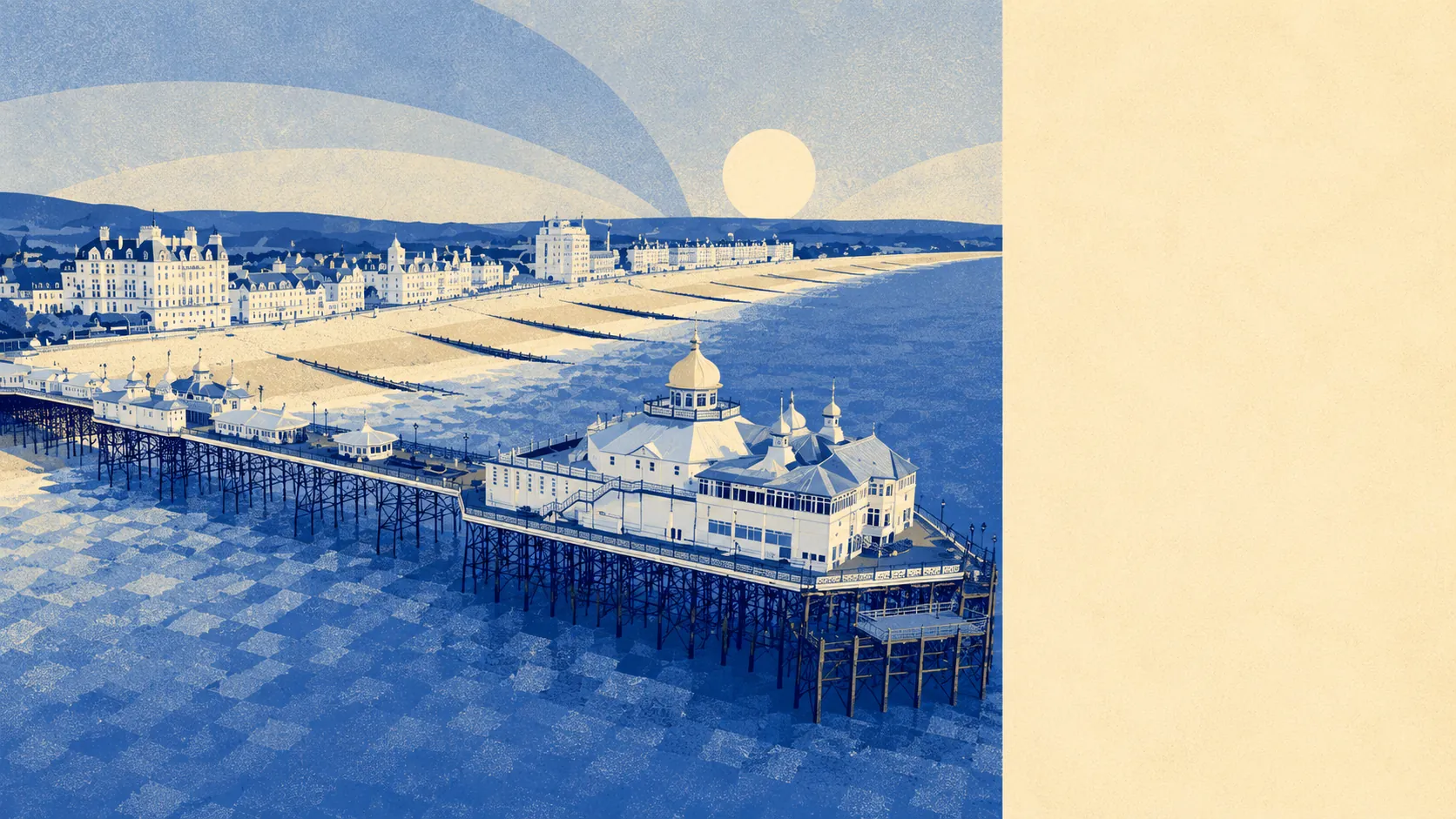
Eastbourne sits at the end of a railway line with no motorway in sight. The trains run direct to London anyway. Around one in forty residents commute by train and one in thirty by bus. A quarter work from home, which compensates for the absent motorway most days of the week. The connection is honest: good rail, decent bus, no motorway, and broadband that does the heavy lifting for everyone who never leaves the postcode.
The rail picture is unusually useful for a coastal town. Eastbourne Rail Station is the line terminus, with direct services up the coast and inland to London. Hampden Park station to the north serves the residential streets above the centre. Polegate sits a little further north for the commuter overflow. The wider catchment is served by Berwick, Pevensey and Westham, Pevensey Bay, and Normans Bay stations on the same corridor. Only around one in forty residents commute by train, which understates the rail option's value because the working-from-home share is high enough to mask the occasional London day. Buses cover the town with 546 separate stops, used by about one in thirty residents for their main commute. The bus network is denser than coastal-town reputations usually suggest.
Broadband is where Eastbourne quietly beats expectations. Gigabit-capable service reaches around 82% of premises. Superfast service reaches roughly 99%. Almost nothing in the town sits below the universal service obligation. For a town that markets itself on a Victorian look, the underlying connectivity is twenty-first-century. Anyone whose work moved online during the past five years can be productive here without thinking about it.
Getting about day-to-day is mostly easy. Around half of working residents drive, around one in nine walks, and most everyday journeys land in single-digit or low-double-digit minutes by car. The town centre is about eleven minutes by car from a typical postcode, twenty by public transport, and forty-two on foot. A primary school sits about eight minutes by car from the typical postcode, a secondary school about nine. The walking and cycling network works because the town is flat where most people live, and steep only when you climb towards the Downs.
No motorway runs to Eastbourne. The trunk-road network is the trunk-road network, and the town is honest about being at the end of it. Anyone whose life depends on being at a London desk by nine every day will find the commute manageable on the right days and slow on the wrong ones. Anyone whose life depends on being in central Brighton by lunchtime will find both rail and road options work. Anyone whose life happens within the town itself will find the connectivity stops being a question after the first month.
Eastbourne scores four out of five on connectivity, which is the honest reading for a coastal town with a direct railway, a dense bus network, and a broadband layer that has quietly modernised what the road network never will. Good rail, good bus, no motorway, and the internet has filled most of the gap.