Yes, as long as you don't need to leave in a hurry. Seven in ten households own their home. More than a third of workers commute as far as the spare room. Hardly anyone takes the train. This is a town that stopped needing to go anywhere, and it's comfortable with that.
The housing is an even mix, and that surprises people who picture a Sussex market town as wall-to-wall cottages. On the council-tax valuation list, which covers every home, detached houses and flats each make up about 27% of the stock. Semis and terraces are about 18% each, with bungalows at about 7%. Only about 16% of homes were built before 1930, so for all the heritage branding, most of what's for sale is post-war and later. That makes it easier to live in than to admire. On energy certificates, about 54% of rated homes reach band C or better, and about 10% sit at E or worse. About 78% of households heat with mains gas and about 10% rely on electric-only heating. Ask which one you're getting before the second viewing, not after completion.
In the Land Registry's twelve months to May 2026, the typical sale price was about £394,000, across 352 sales. That figure is an average of four quite different markets. Flats went for about £230,000 and terraces for about £365,000. Semis were about £447,000 and detached houses about £620,000. The jump from terrace to semi is the price of a side return and a bit of lawn, and East Grinstead charges it without apology. Band D is the most common council-tax band, and only about 16% of homes are in bands A or B. There isn't much cheap stock here, and the valuation list isn't hiding any.
Renting doesn't get you out of it. The typical private rent across the Mid Sussex area was about £1,410 a month as of April 2026, up 3.4% on the year. That's a district-wide figure rather than East Grinstead's own, but it's a fair guide. Landlords here know what the commuter belt pays.
On safety, the published rate for the year to May 2026 was about 62 crimes per 1,000 residents, roughly 2% below the Mid Sussex average. That's level with the district, neither better nor worse. The mix is more telling than the total. Anti-social behaviour made up about 25% of recorded crime, against about 16% nationally. Violence and sexual offences were a smaller share than the national figure. So the town's problems are noise and nuisance more than danger, which fits a place where the loudest complaint is usually about someone else's hedge. Across the whole Sussex Police area, about 10% of crimes led to a charge, below the national rate of about 12%. That's a force-wide figure, not the town's own.
Getting around is where East Grinstead's self-image and its habits part company. East Grinstead station is the end of its line, and Dormans and Lingfield stations are nearby. Even so, about 3% of workers commute by train, about 44% drive and about 37% work from home. The A22 and the A264 share a single-carriageway stretch north of the town centre towards Felbridge, and that stretch causes much of the town's congestion. Locals learn its moods the way coastal towns learn the tides. There are 121 bus stops, and the ones with timetable data average about 60 weekday departures. Broadband is excellent: gigabit is available to about 96% of premises and superfast to all of them. That's the whole working-from-home arrangement, and it holds up. The weak link is hospital access. The Department for Transport's modelled times, from 2019, put the nearest hospital about 36 minutes away by car and about 74 minutes by public transport.
Flooding here comes from surface water, not rivers. On the Environment Agency's river-and-sea flood zones, none of the town's postcodes falls in zones 2 or 3. On a wider measure, which counts postcodes flagged on at least one flood indicator including surface water, about 9% come up high risk and about 19% medium. That's a street-by-street question, and the answer is on a map, not in a brochure. Green space is excellent. The average home is about 185 metres from green space, with about 21 green spaces within a kilometre. The Worth Way and the Forest Way run along old railway lines into the Weald countryside, and a sliver of the High Weald Area of Outstanding Natural Beauty reaches into the town's edge. Nobody here is short of somewhere to walk the dog.
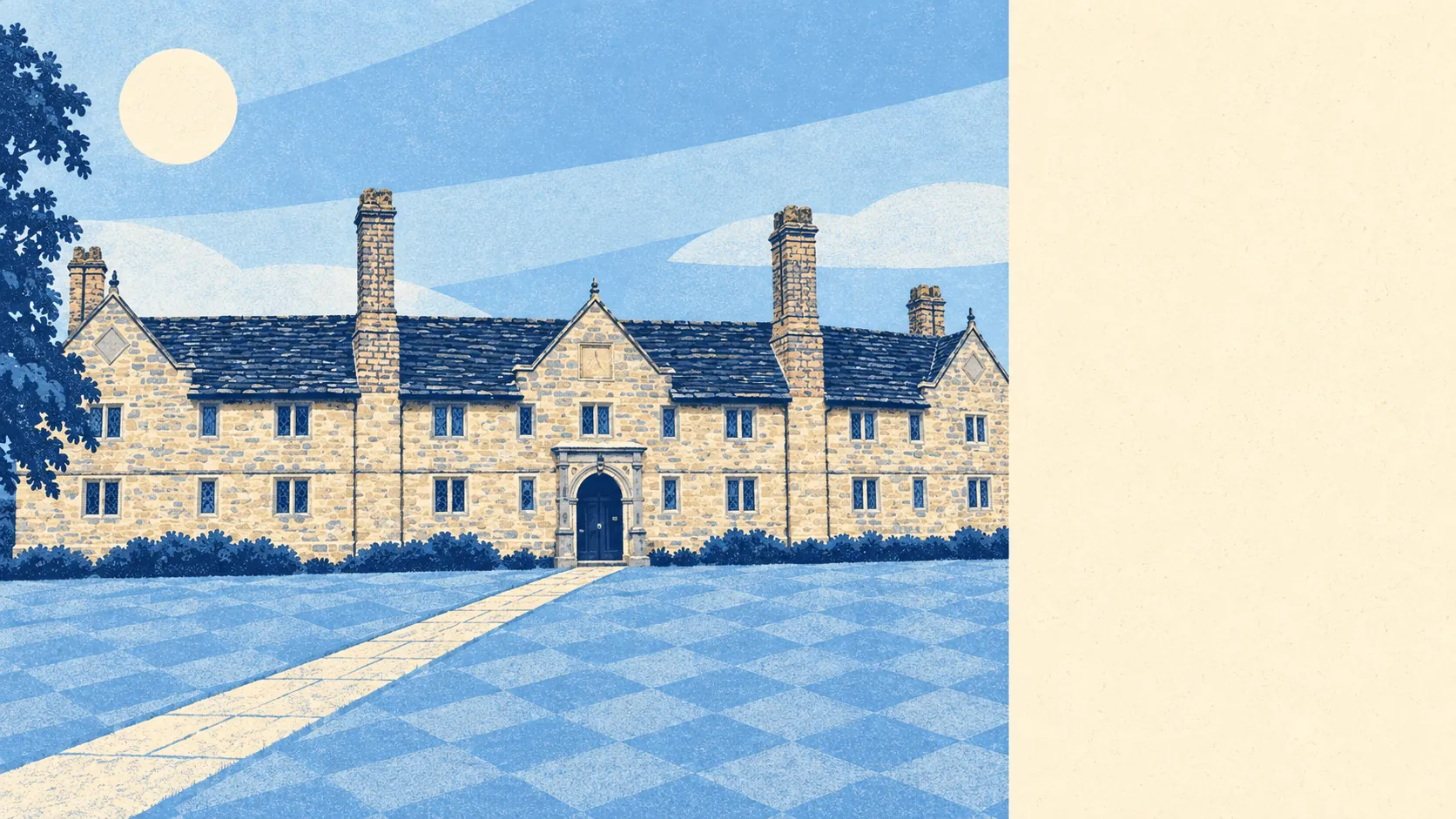
The heritage is real but patchy. There are 87 listed buildings: two at Grade I, six at Grade II star and 79 at Grade II. Sackville College and the Church of St Swithun are among them. There are two conservation areas, East Grinstead itself and Estcots and East Court. If your house is inside one, window frames and extensions get discussed in more detail than most people discuss their pensions. Outside them, the post-war majority of the stock can be extended without much fuss.
The neighbourhood character is the town's strongest card. About 72% of households own their home and the median age is 45. The Office for National Statistics models gross household income at about £68,100 for the financial year to March 2023. Health is good, deprivation is low and unemployment is about 2%. These are people who have finished climbing and want the pavement swept, and the town mostly obliges. This page also covers the villages around the edge: Felbridge, which merges with the town's northern side, Ashurst Wood to the south-east, and West Hoathly and Sharpthorne further out in the High Weald. They are quieter and greener, and the car-dependence is even heavier.
East Grinstead suits people who work from home or drive, want a proper town with its own shops and a station, and would rather have a settled neighbourhood than a lively one. Families who want a semi with a garden and a short walk to green space will find it here, as long as they budget for the semi-detached premium. It also suits downsizers, because the flats are priced like a sensible decision.
It suits the daily London rail commuter less well than the station suggests. Hardly anyone here does that commute, and there are reasons. It also isn't for anyone who needs a hospital close by, or who wants nightlife within walking distance of anything. Crawley is where the bigger town is, and people who need that tend to realise it within a winter.
East Grinstead is a good place to live, and it works best for people who don't need it to be exciting. Its real strength is the local community: settled, prosperous, healthy and staying put. The weak spot is flood risk, specifically surface water, and a buyer should check that street by street, even though the rivers pose no threat. Get the right street and the right heating, and the only thing left to complain about is the A22.