Yes, provided you have already had your fun somewhere else. Three quarters of people here own their homes. Half the households keep two cars or more. A third of the working population works from home. That is not a village on the way up, and it is not a village on the way down. It is a village that arrived, unpacked, and put the kettle on.
The council tax valuation list covers every dwelling rather than only the ones certificated for energy since 2008, and it splits Downton almost evenly four ways: 23% terraced, 24% bungalows, 22% detached, 22% semi-detached, and 7% flats. A bungalow share that close to a quarter is the most honest thing on this page. About 27% of the stock predates 1930, so the old village people picture is genuinely there, sitting alongside a large post-war build that nobody puts on a postcard. Energy ratings land where old and rural usually lands: 49% of certificated homes in bands A to C, 37% in band D, and 14% in band E or worse. Around 66% run on mains gas, and 9% heat on electricity alone, which in a solid-walled cottage is worth knowing before the viewing rather than after the first January bill.
The Land Registry's last twelve months, to May 2026, put the typical sale at £350,000 across 45 transactions. Split by type, the numbers do something strange. Terraced houses came in at £372,500 and detached houses at £375,000. Semi-detached sold at £350,500, and flats at £262,500 on four sales. In most places the detached premium is the whole game. In Downton a terrace in the old centre goes toe to toe with a house that has space around it, which tells you precisely what buyers are paying for, and it is not the garage. Council tax sits at band D for the largest share of homes, with 16% in bands A or B, and a band D bill of about £2,570 a year.
Renting is the thinner market, and the published figure is not the village's own. Typical private rent across the Wiltshire area runs at about £1,060 a month, up about 7% over the year. The same area series puts a two-bedroom at about £950 and a three-bedroom at about £1,190.
Recorded crime runs at about 45 offences per 1,000 residents in the year to May 2026, against about 62 across Wiltshire, roughly 28% below the local authority average. That is the published neighbourhood rate from police.uk, not something worked out from a headcount. What the money buys is not the absence of crime. It is a change of genre.
Downton Church of England Primary School and The Trafalgar School at Downton mean a child can do the entire run to sixteen without the family ever building a life around a school run. Key stage two maths across the two schools in the district averages about 107. At key stage four, the secondary records an Attainment 8 score of about 44. Ofsted has graded 128 settings across Wiltshire, of which 106 are good or better and six outstanding, with 20 requiring improvement and two rated inadequate. Modelled walking times put the primary at about 17 minutes and the secondary at about 19, which is the sort of number that quietly decides where a family buys.
Gigabit broadband reaches 85% of premises and superfast reaches all of them, with none below the universal service minimum. Every property gets a mobile signal from at least one operator, and 98% from all of them. Then you step outside. About 54% drive to work, 33% work from home, 6% walk, 1% take a bus and 1% cycle, and rail accounts for under one percent of commutes. The village has 20 bus stops, 16 of them with published timetable data, averaging about 29 weekday departures each and about two an hour at peak, and every one of those stops has a weekend service. Department for Transport modelling puts the nearest town centre at about 17 minutes by car and about 29 by public transport, and a hospital at about 17 minutes by car, though that modelling dates from 2019 and rural bus times have not improved anywhere since. Public charging is one rapid point with six connections, which is a plan for one household.
Flood risk comes in two measures that get mixed up constantly. On the postcode indicators, which include surface water, about 9% of Downton's postcodes carry a high rating on at least one, and about 37% carry a low one. In the Environment Agency's river and sea flood zones, about 4% of the place sits in zone 3 and about 7% in zone 2. One event is on the formal record, in 1959, when the main river ran out of channel. The Avon is the reason the village exists and the reason a surveyor will ask about it. Green space is the compensation: about 130 metres to the nearest on average, about 13 within a kilometre, and water closer still at roughly 220 metres. None of it is nationally designated, with no national landscape, no site of special scientific interest and no ancient woodland, so the countryside here is lovely and legally ordinary. Every postcode also sits within reach of road noise at 65 decibels or above, topping out at 75, because the A338 runs down the western side and has no interest in why you moved.
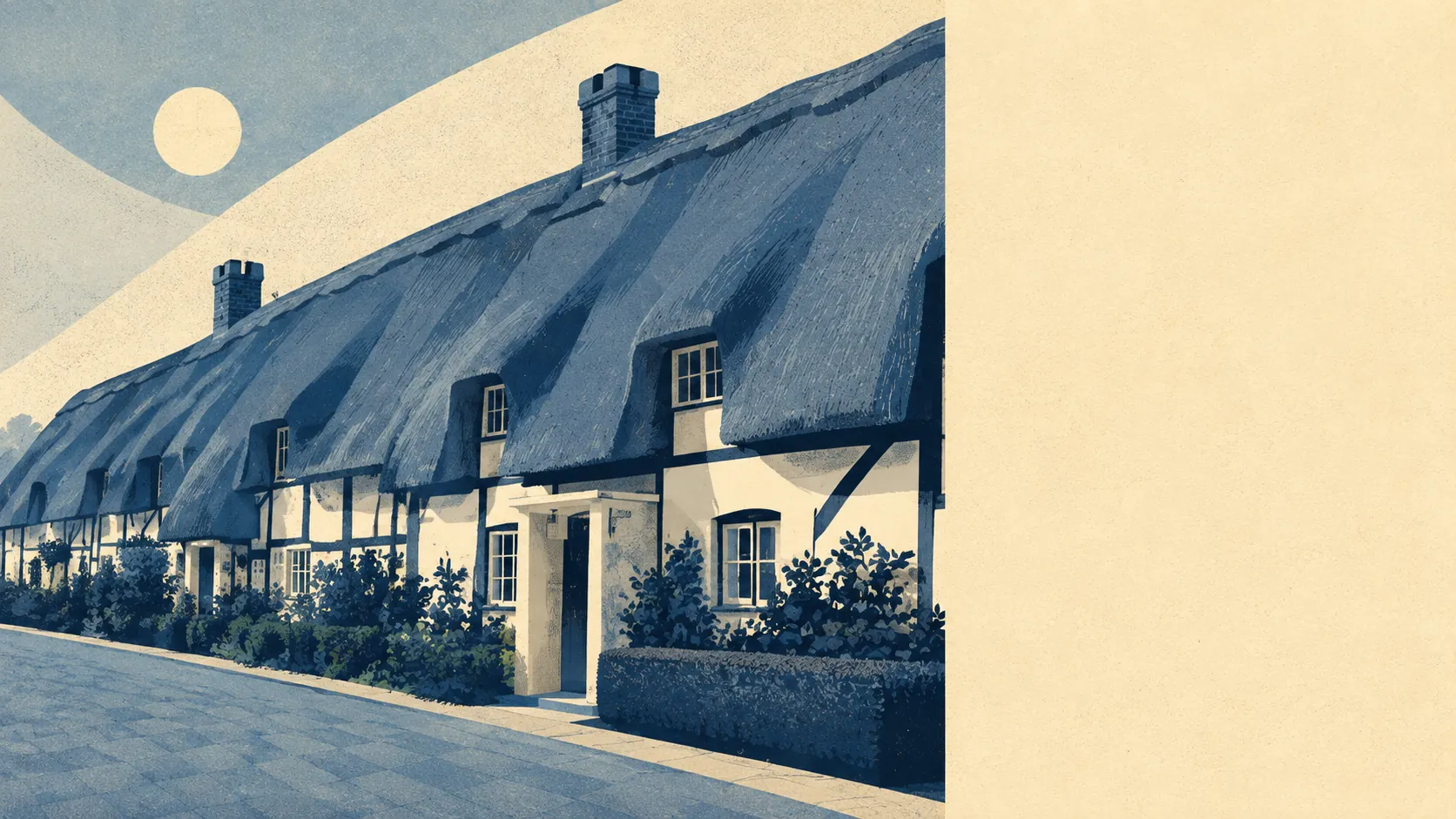
There are 112 listed buildings, with 106 at Grade Two, three at Grade Two star, and three at Grade One, including Trafalgar House and The Manor House. One conservation area covers Downton itself, and three scheduled monuments sit within the surrounding area. Listed status means consent for alterations, and the alterations that need it are rarely the ones buyers assume. Windows, mostly.
About 73% own their homes and a quarter rent, split 15% privately and 10% socially. The median age is 49. Household income runs at about £70,500 gross in the financial year to March 2023, or about £47,900 once tax has been taken. Around 29% of households are one person and 17% are a pensioner living alone, against 18% that are a couple with children, and 38% hold a degree. It is a settled place, and settled places have opinions about change.
Buy here if you want a house with room around it, a village that runs its own schools, countryside that starts at the end of the road, and enough broadband to earn a living without ever seeing a colleague. It suits people at the point where quiet has stopped feeling like a punishment.
Do not buy here if you need a train, a night bus, or anything open past nine. And if a bungalow at the top of the market is where your search keeps landing, take the hint about who is bidding against you.
Downton is a good place to live, comfortably above average, and its best and worst features are the same geography read from opposite ends. The real strength is where it sits: green space almost on the doorstep, water nearer than most villages manage, and a setting doing more for daily life than any amount of housing stock could. The weak spot is transport and connectivity, where the broadband is excellent and everything else depends on you owning a car and meaning it. That is not a trade-off you talk yourself into over time. It is a bus timetable.