Green, hilly and never far from the sea. Open space is a couple of minutes' walk from most front doors. Water is a short stroll beyond that. Two long-distance footpaths start in town. The town gets the headlines, but the ground around it has earned them.
The average home in Dover is about 140 metres from public green space, with 21 green spaces within a kilometre. That's parks, playing fields, cliff tops and the grassed-over military earthworks on the Western Heights. For a town known mostly for its port, the amount of grass is the surprise.
Water sits about 400 metres from the typical home, with about 30 bodies of water within a kilometre: the sea, the harbour basins and the little River Dour running through the valley. Most people here are near the sea without being on top of it, which keeps the view and avoids most of the salt.
The National Cycle Network is about 1,040 metres from the average home, and about 22% of postcodes are close to a route. Two routes start in Dover itself. On foot, the Saxon Shore Way and the North Downs Way both begin here, and the cliff-top paths run from the town centre out towards South Foreland Lighthouse and St Margaret's Bay. There's no ancient woodland in the area. The landscape here is chalk and open grass, not old forest.
The rated-premises data counts 374 shops, 45 pubs and 33 restaurants. That's a working town's high street: plenty of places to buy things, a respectable number of places to drink, and a restaurant count that suggests people eat out here when there's something to celebrate rather than because it's Thursday.
Fine-particle air pollution across the Dover council area measured about 6.6 micrograms per cubic metre in 2024. That's a figure for the whole council area, not any particular street.
About 2% of the area falls within the Kent Downs Area of Outstanding Natural Beauty, a sliver on the rural fringe rather than something the town sits inside. There are no sites of special scientific interest and no ancient woodland. That tells you what the landscape is: open chalk downland and coast that is walked, grazed and built on, not a reserve fenced off for its rarity.
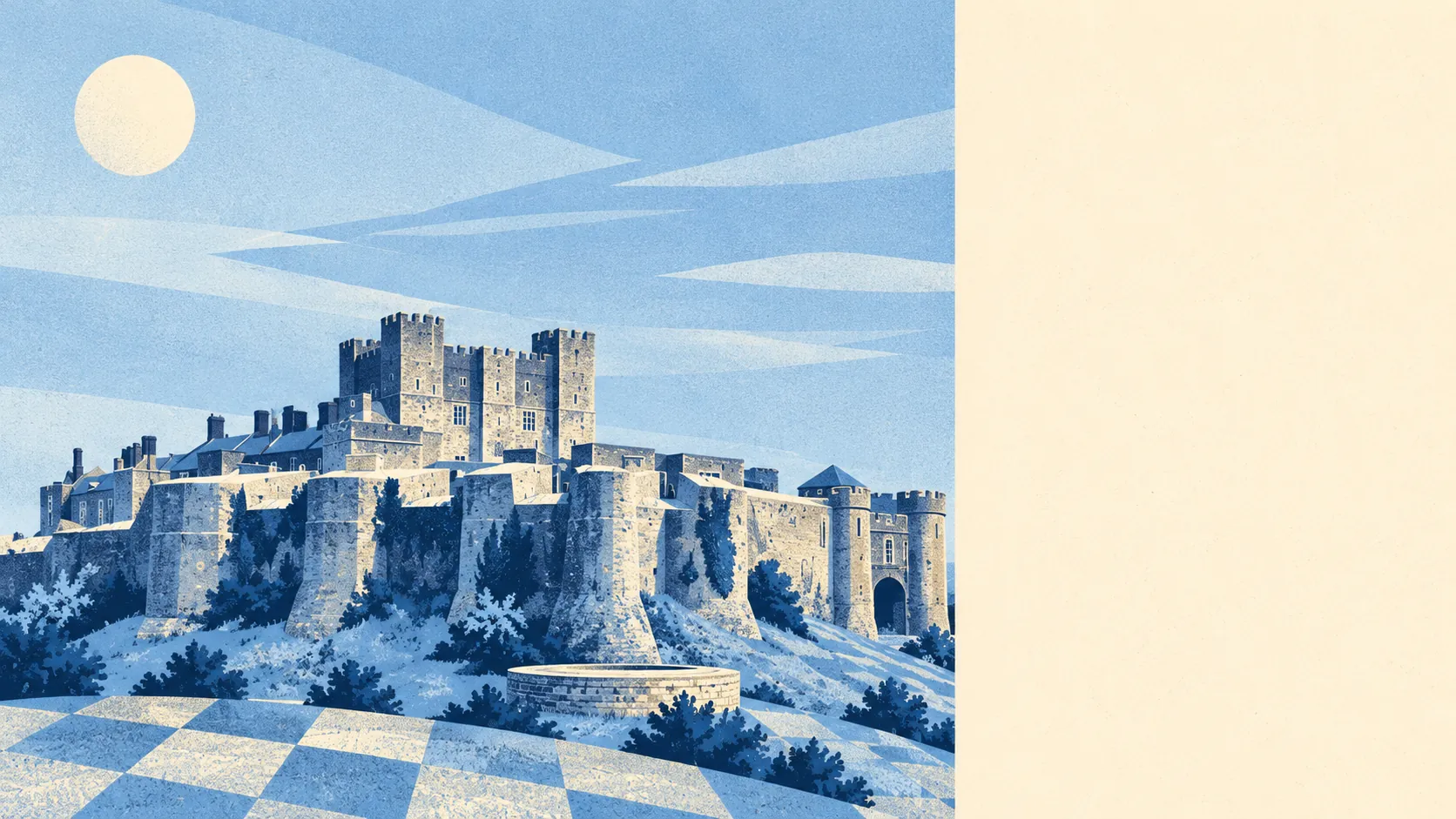
The character comes from the named places. Dover Castle and the Roman Pharos look down from one hill and the Western Heights from the other, with the town squeezed into the valley between. Kearsney Court's gardens and Crabble Mill sit on the northern side towards River and Temple Ewell, while Guston, Alkham and St Margaret's at Cliffe turn quickly into farmland and cliff top. Few towns have a castle as their most dependable landmark and a ferry terminal as their second.
Private gardens are more generous than the terraces suggest. The area has about 84,000 square metres of garden per 1,000 residents, so the typical house has a real patch of its own rather than a yard with ambitions.
The valuation list holds 1,133 rateable premises, with shops and offices the two largest groups. These are premises on the list, not a count of businesses trading this week, so the high street may look a little thinner than the register does.
Of the 313 food outlets with a hygiene rating, about 77% hold the top score and about 3% sit at the bottom end. Eating out in Dover is a safe bet, whatever it lacks in variety.
The setting is where Dover wins outright. Few towns put this much open ground, sea and cliff this close to ordinary front doors.