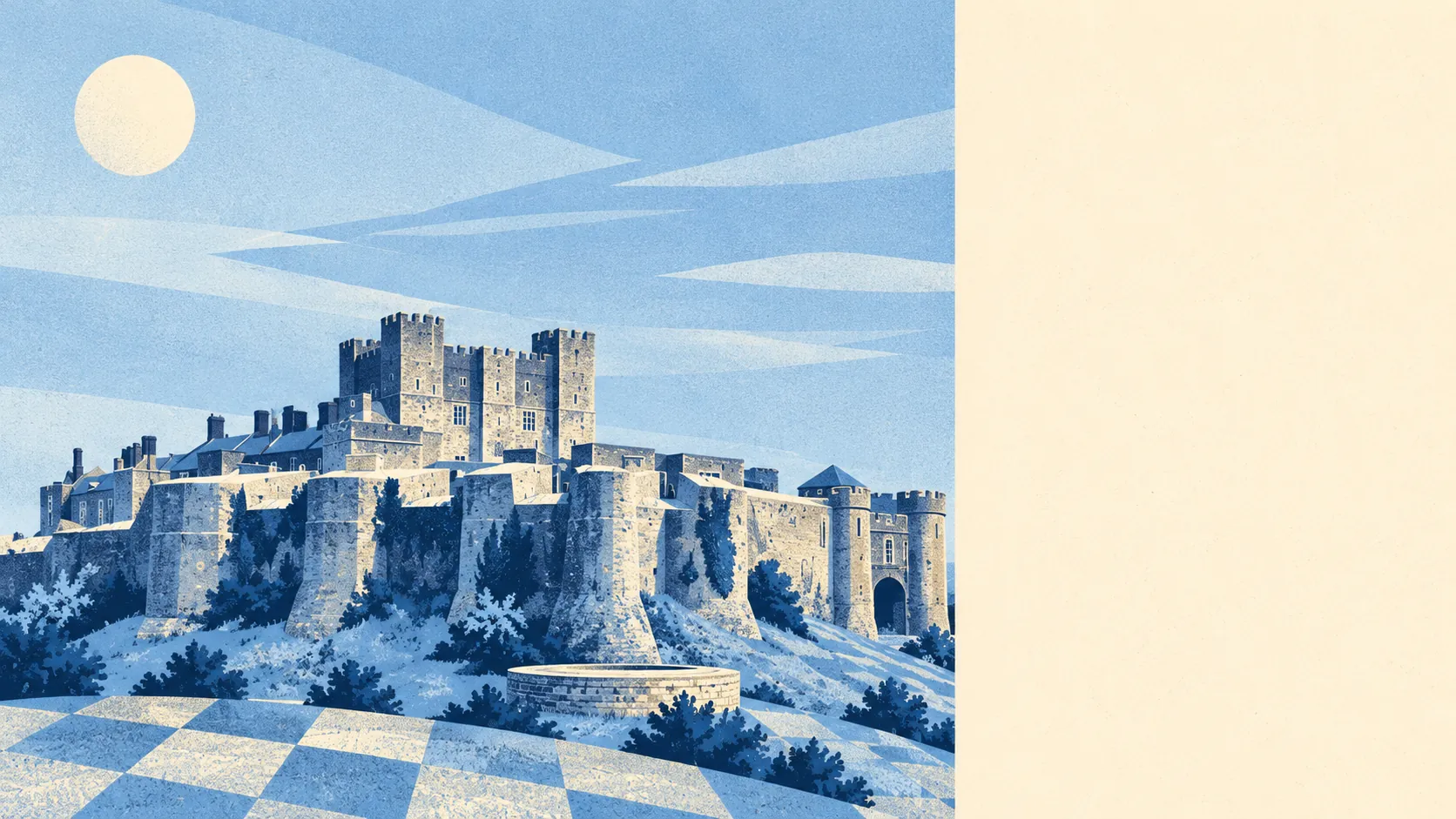
Dover sells castle views at terraced-house prices. Most homes are old terraces. About half the town rents. Recorded crime runs well above the rest of the district. The price is honest, and so is the reason for it.
Terraces run this town. On the council-tax list, which counts every dwelling, about 42% of homes are terraced and 29% are flats. Semi-detached houses make up 16%, detached houses 7% and bungalows 5%. Around 43% were built before 1930, so expect solid walls, draughty sashes and a surveyor who clears their throat before most sentences. Among homes with an energy certificate, 48% rate C or better, 41% sit in band D and 11% are E or worse. About 77% of households heat with mains gas. The 9% on electric-only heating are the ones to ask about before the viewing rather than after the first winter bill. If you came for a detached house with a drive, there aren't many, and everyone else looking has already noticed.
The Land Registry's twelve months to May 2026 recorded 347 sales at a typical price of £220,000. A flat went for about £133,000, a terrace about £201,000, a semi £285,000 and a detached house around £392,000. Band B is the most common council-tax band, and 62% of homes fall in bands A or B. That is the tax system quietly confirming what the asking prices already told you.
Typical private rent across the Dover area is about £980 a month as of April 2026. That is an Office for National Statistics figure for the whole local authority, so it blends the town with Deal and the surrounding villages, and a flat near the port and a house in River won't land on the same number. Landlords will treat it as a floor. Tenants should treat it as where the negotiation starts.
Safety is the weak spot, and there's no point dressing it up. Police figures for the year to May 2026 put recorded crime in Dover at about 146 per 1,000 residents, roughly 63% above the average for the Dover district. Anti-social behaviour makes up a fifth of the count, a little above its share nationally. A town with the shops, the pubs and the port was always going to outscore villages like Alkham, where the hedges do most of the misbehaving. On the other side of the ledger, Kent Police charges someone in about 16% of cases against 12% nationally, although that is a force-wide statistic rather than Dover's own. Nobody should move here expecting the calm of a cathedral close.
Dover Priory is the town's main station. Kearsney serves the northern edge, with Martin Mill and Shepherds Well out towards the villages. At the 2021 census only 2% of workers commuted by train, 52% drove and 19% worked from home, so the London line is something people use rather than something they plan a career around. There are 246 bus stops, each averaging about 71 weekday departures, and 95% of them have a weekend service. Gigabit broadband reaches 78% of premises and superfast 98%. Department for Transport modelling from 2019 puts the nearest hospital about 32 minutes away by car and about 50 by public transport. Worth knowing before you need it.
On the Environment Agency's river-and-sea flood zones, about 3% of the area sits in zone 3 and 5% in zone 2. The wider measure, which counts postcodes on at least one flood indicator including surface water, puts 13% at high risk and 17% at medium. The shoreline management plan's policy here is to hold the line for the next hundred years. Radon is the one buyers forget: about 98% of postcodes sit in band 3 or higher, so a test kit belongs on the moving-in list. Green space is the town's quiet strength. The average home is about 140 metres from green space, with 21 green spaces within a kilometre, the sea is around 400 metres away, and a sliver of the Kent Downs reaches into the area. Some of the best walks cross the old fortifications on the Western Heights, which is the only military spending in history to have aged into a dog walk.
There are 178 listed buildings: 4 at Grade I, 15 at Grade II* and 159 at Grade II. Add 14 scheduled monuments, including the Roman Pharos, the Painted House and Fort Burgoyne. No conservation areas are recorded here, so most people buying an ordinary terrace face fewer planning constraints than the skyline suggests. The few who buy something listed will need consent for almost any change, and the colour of the front door becomes a matter for a committee.
About 54% of households own their home, the median resident is 40, and modelled gross household income averaged about £50,000 in the financial year to March 2023. Around 29% of households have no car. This is a working town, not somewhere people come to retire and admire a view. It's too busy with the port for that.
The page also covers the places around the town. River and Temple Ewell sit to the north and feel like Dover's quieter suburbs. St Margaret's at Cliffe is on the coast road towards Deal, and Guston is close by. Alkham, Lydden, Eythorne and Sibertswold are inland villages, where the trade is space and quiet for a longer drive to everything else.
Dover suits buyers who want a period house near the sea without coastal-resort money. It suits people who work locally or from home, and walkers who want the cliffs and the Downs on the doorstep. It works for first-time buyers who would rather own a terrace here than rent a flat somewhere with better press.
It doesn't suit anyone who counts crime figures before counting bedrooms, or anyone who needs a fast daily commute and a detached house with a drive. If a quiet street matters more than a view, the inland villages are a better fit than the town centre.
Dover is an average place to live with better surroundings than its reputation suggests. Its real strength is the setting: green space, the sea and the Downs sit a short walk from almost every front door. The weak spot is safety, and the numbers aren't shy about it. You get castle views at terraced prices, and you pay for them in the crime figures.