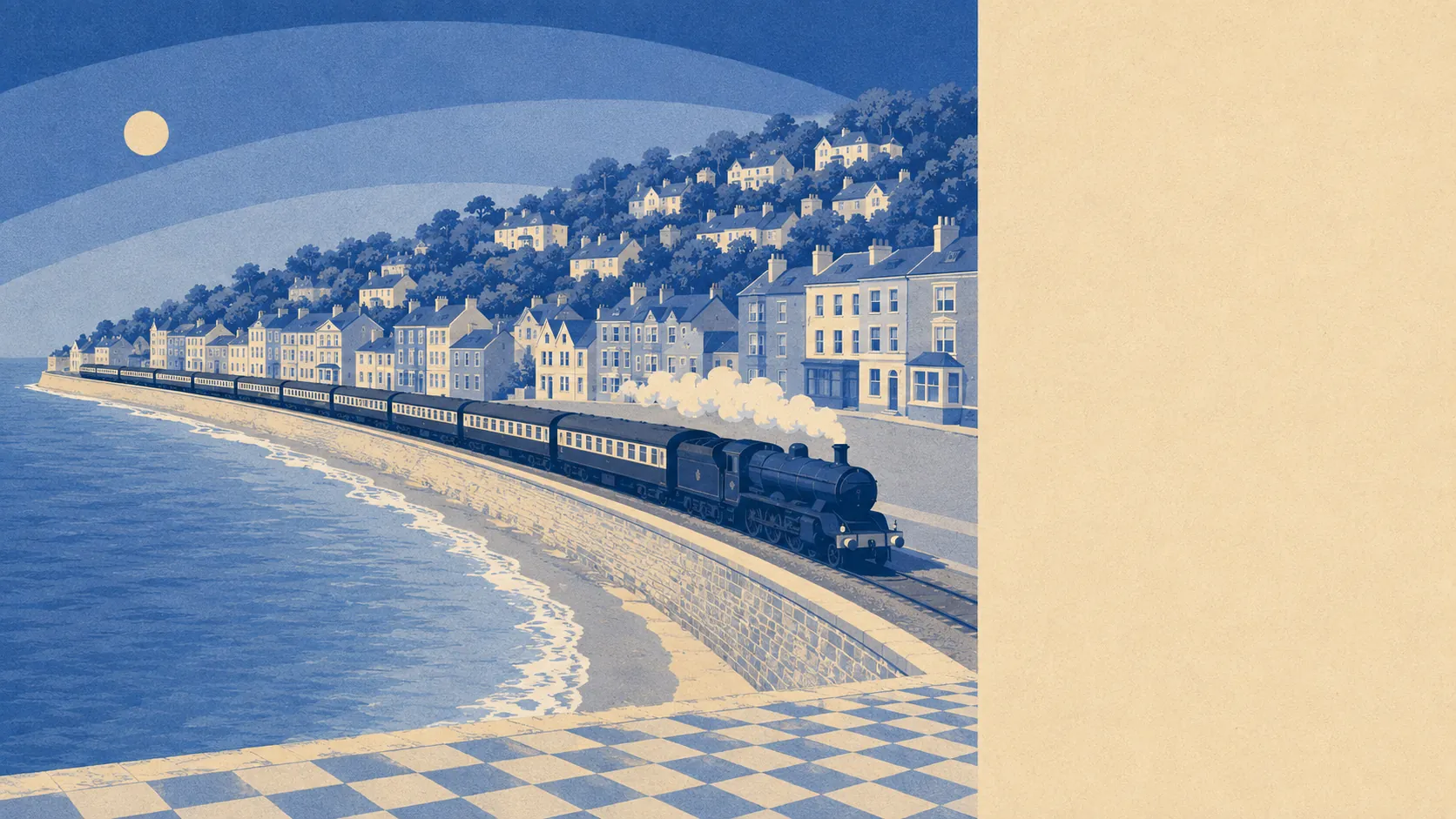
The surroundings are the strongest argument for living here. Water on one side, and very little standing between you and it. Green space starts before most streets end. The neighbouring villages sit along the estuary a few minutes up the line. None of it carries an official beauty designation, which has not stopped it being the best thing about the place.
Green space access is close to as good as this measure gets. The average front door in the area sits about 135 metres from the nearest green space, with about 16 sites within a kilometre. That is not a park you drive to at weekends, it is a park you end up in because you turned left instead of right.
Water is nearer still in practical terms, with the nearest blue space averaging about 260 metres and about 50 within a kilometre. Coast, estuary and the stream running through the town all count, and the combined effect is a town where you can hear or see water from a surprising number of ordinary residential streets.
The National Cycle Network sits about 900 metres away on average, and about 17% of postcodes are close to it. That is a network you can reach rather than one you live on, which is the honest version of what most towns mean when they advertise cycling.
The high street is built on small premises rather than big ones. The rating list carries 103 shop premises, 16 pubs and 5 restaurant premises across the area. A town with that many pubs and that few restaurants is telling you what people here do in the evening, and it is not tasting menus.
Air quality is measured at council-area level, where fine-particle pollution averaged about 5.2 micrograms per cubic metre in 2024. That is the figure for the wider council area rather than any particular road.
Character comes from the string of places along the water. Dawlish Warren sits out on the spit, Starcross and Cockwood face the estuary, Cofton and the smaller settlements sit behind, and Teignmouth anchors the other end of the line. Inland, the registered historic parkland at Luscombe Castle and Mamhead Park gives the area a designed landscape most seaside towns never had. The result is that the interesting walking is in three different directions rather than only along the front.
Private outdoor space is genuinely generous, which the usual public-park measures never show. Across the nine neighbourhood areas measured, gardens run to about 128,000 square metres per 1,000 residents. People here have their own outside, not just access to somebody else's.
The wider business picture is 406 rateable premises across the area, including 28 office premises and 89 holiday lets. That last figure is the shape of the local economy in one number, and it explains why the town has more life in August than a resident population would suggest. These are premises on the valuation list rather than a directory of shops currently trading, so the count describes the buildings, not the businesses in them this week.
Eating out is safe enough to be boring. Of 99 rated food premises, about 94% hold the top hygiene score and none sit at the bottom of the scale. Nothing in the town is currently embarrassing itself in that particular way.
Worth being straight about the paperwork: no area of outstanding natural beauty overlaps the area, there is no site of special scientific interest, and no ancient woodland. The quality here is not certified by anybody. It is just there, in the ordinary form of coast, estuary, parkland and a lot of gardens.
For surroundings, Dawlish is close to unbeatable at this price point: water and green space within a couple of minutes of almost every home, historic parkland inland, and enough private garden to make the public parks a bonus rather than a necessity.