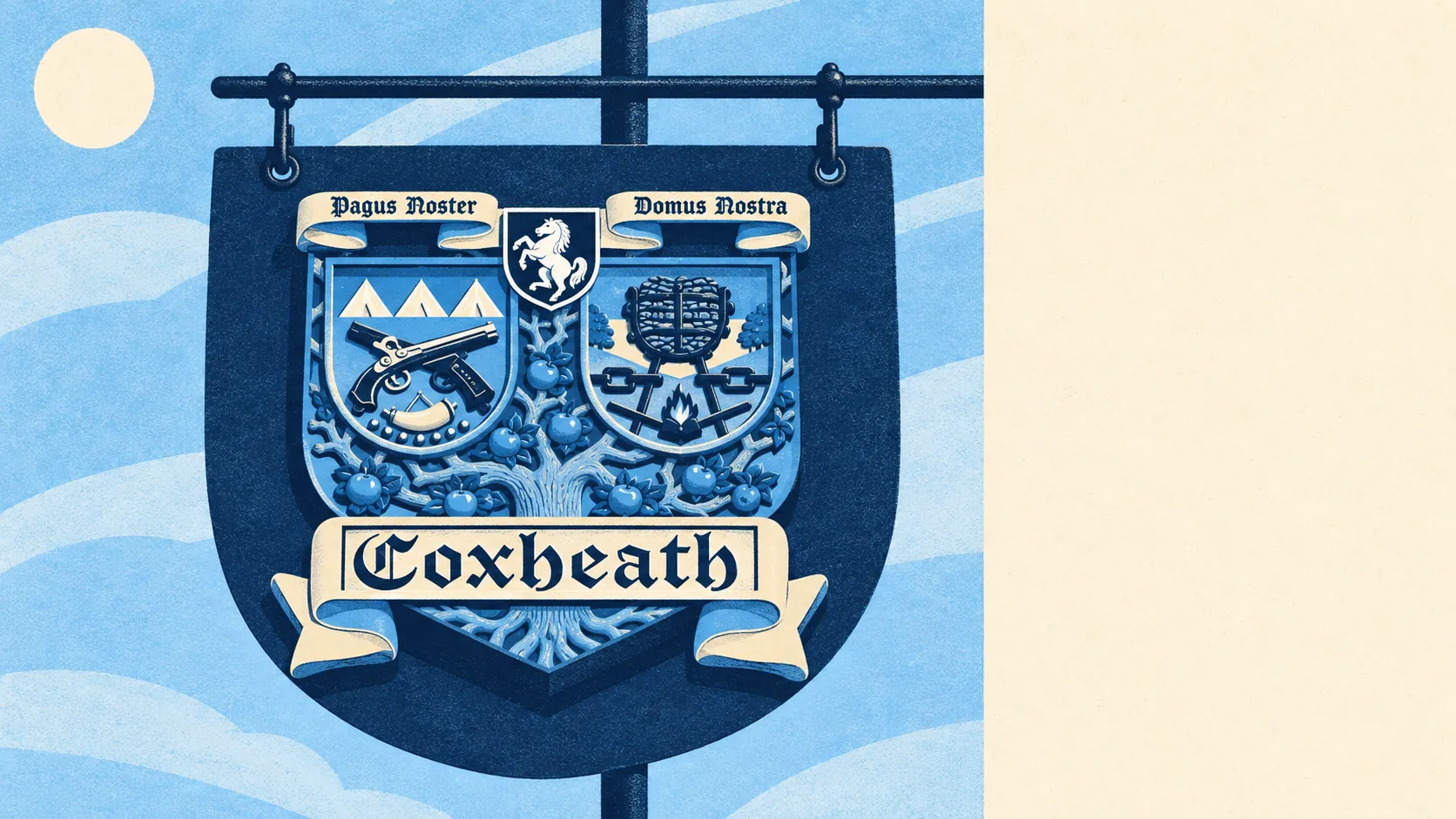
Coxheath is good, as long as you drive. Three in four households own their home. Half run two cars or more. Crime sits well below the Maidstone average. It's a village that works well right up until the car goes into the garage.
Coxheath is a semi-detached village. Of every home on the council tax list, about 36% are semis, 22% detached, 17% terraced, 14% bungalows and only 9% flats. Only 17% were built before 1930. Among homes with an energy certificate, post-war building dominates, and that shows in the ratings: about 64% sit in bands A to C, 28% in band D and 8% in E or below. Around 78% of homes heat with mains gas, and only about 5% rely on electric heating alone. Buyers hunting for sash windows and a draughty inglenook will run out of options by lunchtime. What's left is a village of cavity walls and sensible gutters, which beats period charm every January.
The Land Registry recorded 83 sales in the twelve months to February 2026, at a median of £375,000. Detached houses went for around £434,000, semis for £365,000 and terraces for £300,000. Only four flats sold, at a median of £164,000, which is too few to tell you anything beyond the fact that flats barely come up here. Band D is the most common council tax band, and only about 11% of homes sit in bands A or B. The tax band is the council's polite way of calling the place comfortably middling, and for once the council has it about right.
Renting here is a small-scale business. About 21% of households rent, split between roughly 10% renting privately and 12% in social housing. Coxheath has no rent figure of its own, so the nearest guide is the typical private rent across the Maidstone area, about £1,290 a month as of April 2026. Landlords here keep a rental or two on the side. Nobody has built an empire.
On safety, Coxheath's published crime rate for the year to May 2026 was about 68 crimes per 1,000 residents, roughly 27% below the Maidstone-wide rate of about 94. For most of the eighteenth century the heath was known for highwaymen and duels. Both have moved on, and nobody has applied for the vacancy.
Getting anywhere without a car is where it falls apart. Coxheath has no railway station. The nearest is East Farleigh on the Medway Valley Line, and London trains mean getting to Maidstone East. About 58% of working residents drive to work, 28% work from home, and only about 1% take the train and 1% the bus. Thirteen bus stops serve the village, and the nine with timetable data average about 25 weekday departures each, around two an hour at peak, with weekend buses at all nine. The Department for Transport's 2019 modelling puts Maidstone town centre about 34 minutes away by public transport and about 16 by car, and the bus figure has probably got worse since. Broadband does better. Superfast is available to about 99% of premises and gigabit to about 72%. Every mobile operator covers about 98% of the area. The answer to the station question never changes: drive to one.
Height helps Coxheath with flooding. The village sits on the southern edge of the greensand ridge, and none of it falls in the Environment Agency's river-and-sea flood zones 2 or 3. Surface water is a different matter. Counting postcodes flagged on at least one flood indicator, surface water included, about 7% are high risk, 8% medium and 20% low. The river belongs to the villages in the valley. The rain is still yours. Green space is close by. The average home is about 190 metres from the nearest green space, with about 10 within a kilometre, and the nearest water is roughly 420 metres away.
Heritage rules barely apply here. Coxheath has seven listed buildings, all Grade II, and no conservation areas. If you want a loft conversion or a side extension, the planners will judge it on its merits. The neighbours will judge it on everything else.
Most people here own their home, about 76% of households. The median age is 43, and the Office for National Statistics models gross household income at around £67,000 for the financial year to March 2023. This page also covers East Farleigh, on the south bank of the Medway, which shares the same Maidstone orbit with a river instead of a ridge.
Coxheath suits people with two cars and a good reason to use both. Families wanting a village primary within walking distance (Coxheath Primary School sits in the middle of things), safe streets and a semi with a garden will find prices well short of the ones they'd expect closer to London. People working from home who need decent broadband and a field to look at will also do well. The village gives them what they came for and doesn't ask for more.
It suits people less if they want to commute by rail, don't drive, or want a pub-and-bookshop high street. Heath Road is a road with a village along it, not a high street, and the nearest train is always someone else's. If your week depends on public transport, you'll spend it waiting at bus stops.
Coxheath has a history bigger than the village. In 1778 George III came to review the troops camped on the heath, and before he left he knighted the Mayor of Maidstone, William Bishop, which is one way to smooth over rows about who got to discipline drunk soldiers. Cricket was played on the heath until 1789. Later on Hugh Kennard was born here. He flew in the Battle of Britain and after the war owned a number of airlines, which is one way to solve Coxheath's transport problem.
Coxheath is a good place to live if you accept the deal. Its real strength is its surroundings: green space within a short walk of almost every front door, no river flood zone, and crime well below the Maidstone average. The weak spot is getting anywhere without a car, because there's no station and the bus runs about twice an hour at best. Buy the semi, keep both cars on the drive, and the village holds up its end.