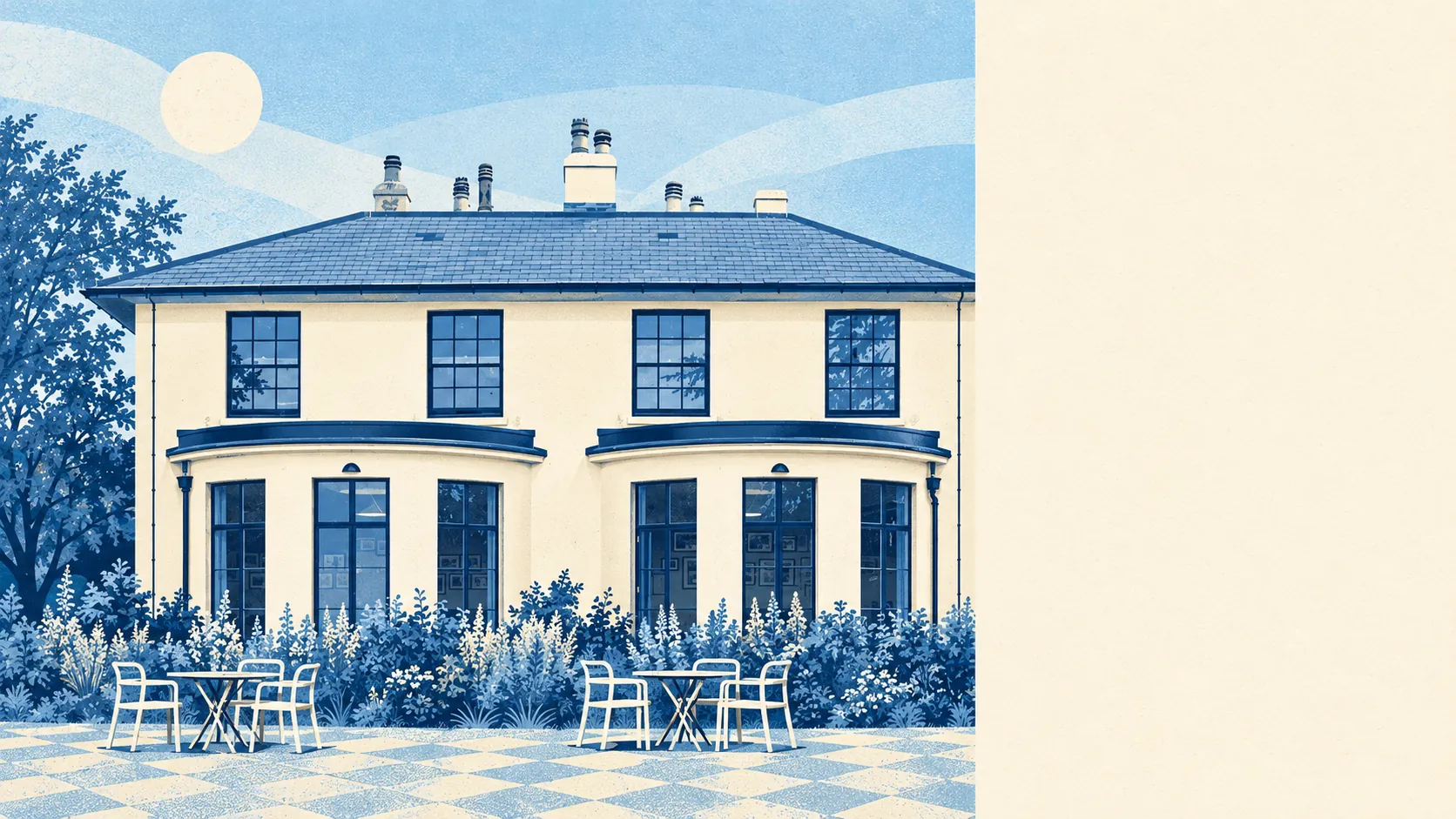
Clapton is a middling bet for a buyer, and the reason starts with the neighbours: only about one household in four owns the home it lives in. Most of the rest rent from a social landlord. Most of its streets rank among the more deprived in England, and that ranking has barely moved in years. Buying here means paying inner-London money to join a street where the people next door mostly hold a tenancy, with a park at the end of it.
The census puts home ownership at 27%, with 42% of households in social housing and 29% renting privately. The median resident is 33. The Office for National Statistics models gross household income across the area at about £70,000 a year for the financial year to March 2023. That average blends some very different payslips. A buyer here is paying for the flat and also for a neighbourhood whose direction is set mostly by landlords, housing associations and the council, and a mortgage gives you no vote on any of that.
Flood risk depends on which measure you read. About 35% of postcodes here carry a high rating on at least one flood indicator, surface water included, and about a third carry a medium one. The Environment Agency's river-and-sea flood zones show a much smaller picture: about 4% of postcodes in zone 3 and 6% in zone 2. On the Agency's own count of properties at risk from rivers and the sea, one home is rated high. The last river flood on record came in 1947, when the channel overtopped with no raised defences in place. Whichever figure a seller quotes, expect it to be the one that rounds to four.
Clapton has 133 listed buildings, eight of them grade II* and 125 grade II. Ten conservation areas fall in and around it, including Clapton Pond, Clapton Square, Clapton Common and Lea Bridge. Eleven entries on Historic England's Heritage at Risk register fall in the same stretch. Anyone planning to swap the sash windows for something easier will find Hackney's planners have a view before the glazier does.
Nearby stations include Clapton, Rectory Road, Hackney Downs and Lea Bridge, though only about 5% of working residents took the train to work at the 2021 census. Buses carried 13%, cyclists 9% and drivers 11%. Another 42% worked from home, in a year when much of London had stopped travelling at all. The 135 bus stops average about 387 weekday departures each and around 20 an hour at peak, and every one has a weekend service. About six in ten households have no car, and with that bus timetable it is hard to argue with them. Gigabit broadband reaches about 85% of premises. The Department for Transport's 2019 model puts the town centre about 14 minutes away by public transport, a figure that is now seven years old.
The published police figures give Clapton a crime rate of about 137 per 1,000 residents in the year to May 2026, roughly 11% below the Hackney average of about 154. The mix is unusual. Theft from the person makes up about 8% of recorded crime here against 2% nationally, and anti-social behaviour 22% against 16%. Violence and sexual offences are lower than the national share, at 23% against 35%. The Metropolitan Police charged in about 10% of cases over the same year, below the national 12%, which places it 33rd of 42 forces. That charge rate covers the whole force, so Clapton inherits it the same way a flat inherits the building's service charge.
The Land Registry recorded 221 sales in the twelve months to May 2026, with a median of about £590,000. The 155 flats went for about £485,000 and the 65 terraced houses for about £1,230,000, which is usually where buyers decide they prefer flats. The house price index shows the average price almost unchanged over the year to May 2026. Band C is the most common council tax band, and about a third of homes are in bands A or B.
For renters, Hackney as a whole had a typical private rent of about £2,620 a month in April 2026, up 3% on a year earlier, measured by the Office for National Statistics' index across the borough. Around seven in ten households here rent, so that borough figure matters to far more people on the street than the sale prices do.
Flats make up about 76% of every dwelling on the council tax list, with terraces at 23% and semis under 1%. Detached houses are a tenth of one per cent, so you will be sharing a wall. About 44% of homes were built before 1930. Of the properties with energy certificates, about 61% are rated A to C and 7% E or worse. About 71% of homes heat on mains gas, and about 12% rely on electric heating alone, which costs more to run in an old flat with tall ceilings than in a new one.
Green space is where Clapton does well. The average home is about 90 metres from a green space, with about 52 within a kilometre. Water is about 350 metres away on average, and Springfield Park and Hackney Marsh are close enough for a lunchtime walk. In a neighbourhood made mostly of flats, the park is the garden most people have. Stamford Hill, which shares the E5 postcode, is covered by this page as well and has the same easy reach to the open ground.
Clapton has produced a fair number of performers. Eileen Atkins and Fenella Fielding are among the actors linked to the place, Stefflon Don among the musicians, and Mandeville Primary School counts Anthony Newley as a former pupil. The same school turned its old caretaker's house into the Hackney School of Food, won a Civic Trust Award for it in 2021, and had the French illustrator Jean Jullien paint a mural across it, which is more attention than most caretakers' houses get.
Clapton is right for a buyer who wants a flat, cycles or takes the bus, and plans to spend weekends on the marshes. It is the wrong choice for anyone who needs a driveway, a detached house, or a street full of fellow owners to share the cost of a new roof.
The neighbourhood is the hard part. Owning here means being in the minority on a street where deprivation runs deep and most decisions about the buildings sit with landlords and the council, so the area around your flat will change at someone else's pace. The open ground is the easy part: it is close, it is free, and nobody needs a deed to use it. Overall, Clapton is an average buy, better for the park at the end of the road than for the community you would be buying into.