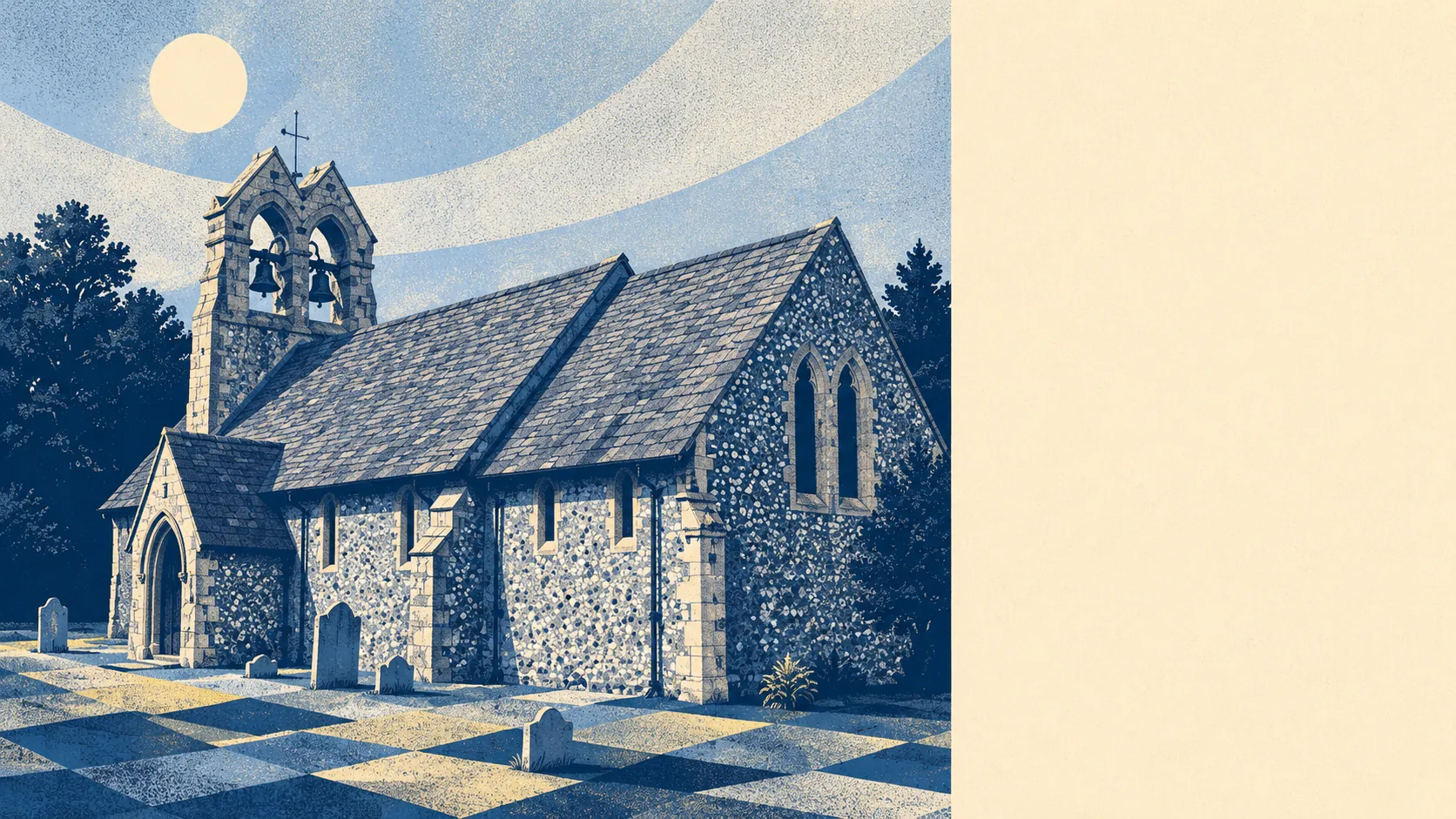
Clanfield is a good place to live, as long as you have made your peace with a car. This is South Downs commuter country: green, quiet, comfortable, and built almost entirely for people who wanted a Hampshire market town and settled for the village that could afford them. The schools hold up. The air is clean. What you buy here is a calm, well-kept village with a National Park for a neighbour, and what you pay for it is a life lived largely from the driver's seat.
About seven in ten homes are houses, with roughly one in six a bungalow and only around one in ten a flat, which is the housing profile of a place that grew up after the war and never had much interest in going upwards. Most of the stock dates from the post-war decades, and it behaves like it. Around six in ten properties sit in the upper energy-efficiency bands, about three in ten land in the middle, and fewer than one in ten scrape the bottom. Translated, the average Clanfield house is warmer than a Victorian terrace and duller to look at, which is a trade most owners here made on purpose.
A typical home changes hands for about £400,000, though that headline flattens a real spread. A detached house runs to roughly £515,000, a semi-detached to about £377,000, a terrace to around £310,000, and a flat to about £177,000, so the figure you pay depends entirely on how much building you actually want. Most homes sit in council tax band D, and only about one in ten fall into the two cheapest bands. Nobody moves to Clanfield to save on the council tax.
Renting is thinner on the ground, this being owner-occupier territory, but the typical private rent across the wider East Hampshire area runs at about £1,260 a month. That is the district figure rather than the village's own, and Clanfield sits at the greener, pricier end of the district, so treat it as a floor rather than a promise.
On crime, the published rate is about thirty-two recorded offences per thousand people a year, which lands roughly thirty-six percent below the East Hampshire average. In plain terms, this is one of the calmer corners of an already calm district. The kind of place where the local drama is a planning notice, not a police cordon.
Schooling is a genuine draw. Clanfield Junior School anchors the primary offer, and the area's eleven-year-olds post maths results a touch above the national benchmark, the sort of quiet outperformance that shows up on a spreadsheet before it shows up in an estate agent's window. Secondary-age children generally head down the corridor to the larger schools serving the wider catchment. It is not a village short of a good classroom.
Here is the catch, and it is a real one. Barely anyone commutes by train, because there is no station in the village. The nearest platforms are at Petersfield and Rowlands Castle, both a drive away, which is why about half the working population gets in the car and roughly four in ten skip the problem entirely by working from home. Broadband softens the blow. Around two-thirds of properties can get gigabit-grade speeds, about nine in ten can get superfast, and almost none are stuck below the basic universal minimum. You can work from Clanfield in comfort. Getting anywhere from Clanfield is the part they leave off the brochure.
The setting is the whole pitch. Green space is essentially on the doorstep, with the average home about two hundred metres from a patch of it and something like eight separate green spaces within a mile. Flood risk is low, with none of the area sitting in the highest river-flood zone and only a small share of postcodes carrying any meaningful surface-water risk. When your back fence opens onto a National Park, the view tends to hold its value better than anything you can build in front of it.
For anyone planning to knock things about, the constraints are light but not absent. The area carries around twenty-five listed buildings, a few of them in the higher grades, and one conservation area over at Chalton. Most Clanfield homes are ordinary post-war stock well clear of any of that, so the average extension answers to the planners on its merits rather than to a heritage officer with strong feelings about window frames.
The neighbourhood reads exactly as you would guess. Around eight in ten homes are owner-occupied, the typical resident is about forty-five, and the typical household pulls in something close to £69,000 a year. This is settled, mortgaged, middle-aged commuter-belt Hampshire, and it is entirely comfortable being that. Nobody here is pretending to be edgy.
It suits a particular buyer very well. If you want a house with a garden, a good primary school within reach, air you would happily breathe, and a National Park for a neighbour, Clanfield hands you all of it without asking you to compromise on safety or space.
It suits others badly. If you need a train you can walk to, a night out you can stagger home from, or the energy of somewhere that does more than one thing after nine in the evening, this is not your village, and no amount of scenery will fix that. Buyers in that mood tend to wash up in Horndean telling themselves it is basically the same thing, or in Waterlooville, which does exactly what it says on the tin.
Overall Clanfield rates as an above-average place to live, and the shape of that score is honest about itself. Its strongest suit by a distance is the community and the settled, low-friction quality of daily life, which score as good as it gets. Its weakest, just as plainly, is getting out: transport and connectivity are the thing you agree to tolerate, not the thing you enjoy. Buy here if you wanted Petersfield's countryside on a smaller budget and you have already made friends with the car. Skip it if the missing station is going to nag at you every single morning.