Chiddingfold is good, and it invoices accordingly. Three in four households own their home. Half the working residents never commute. The whole village sits inside protected hills. It's a lovely place to live if you turn up already sorted.
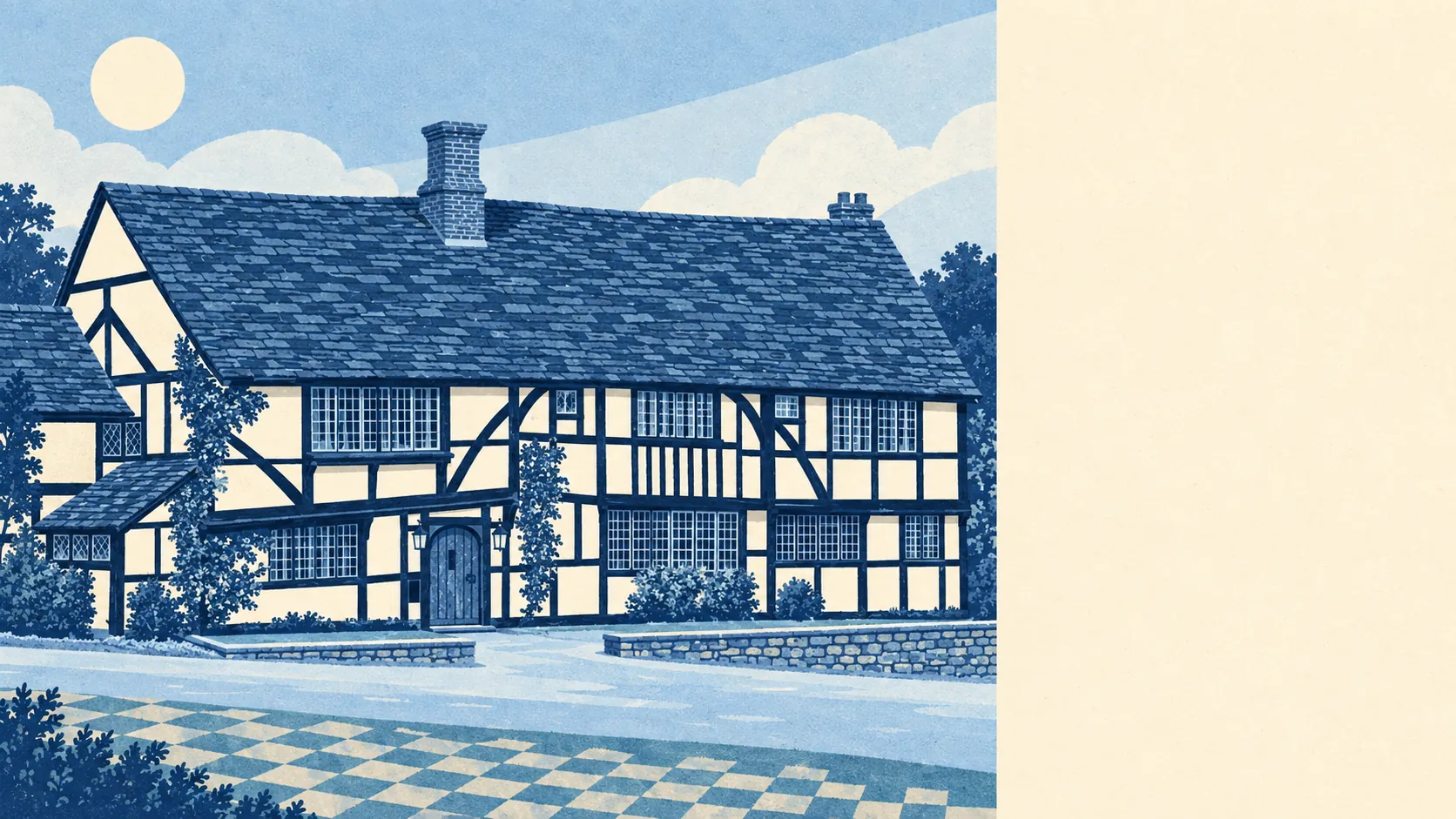
The housing is detached country house first, and everything else a long way behind. On the council-tax valuation list, about 37% of Chiddingfold's homes are detached, 32% semi-detached, 13% bungalows, 8% terraced and 8% flats. Around 40% were built before 1930. That's where the heritage charm comes from, and also the draughts. Of the homes with an energy certificate, about 41% are rated A to C, 40% sit at D and 19% are E or worse. Around 74% heat with mains gas, and electric-only heating is rare at about 3%. So the running-cost worry here isn't a storage heater. It's a big old house with thick walls that takes a lot of gas to warm. With 44% of households on four bedrooms or more, the second bathroom is standard and the heating bill is too.
The typical sale price is about £660,000, going by the Land Registry's figures for the year to May 2026, and that comes from only 25 sales. With so few, the median moves around from year to year. By type, the nine detached sales had a median of about £1,280,000, the 13 semi-detached sales about £625,000 and the three terraced sales about £575,000. The council-tax list says the same thing more bluntly. Band D is the most common band, and only 4% of homes are in bands A or B. At Waverley's rates a Band D bill is about £2,600 a year. There's no cheap corner of Chiddingfold. There's the less expensive semi, which is still about £625,000.
Renting doesn't get you in any cheaper. The typical private rent across the Waverley area was about £1,440 a month in April 2026. That's a district-wide figure, not Chiddingfold's own, and a four-bedroom house in a village like this will sit well above the district average. The Waverley average for four-bed-plus homes was about £2,340. Renters are a small minority here anyway, which tells you the village is built for owners.
Crime is low, and it's low even for a borough that's already quiet. In the year to May 2026, Chiddingfold's published crime rate was about 28 per 1,000 residents, roughly 39% below the Waverley average. There are 113 recorded crimes in total, and with numbers that small a handful of incidents moves the category shares a lot. Burglary and other theft make up a larger share than they do nationally. That's worth knowing, and it's no reason to panic. Detached houses on quiet lanes with good cars on the drive attract a certain kind of professional interest.
Across Surrey, Ofsted has graded 147 of its 159 inspected settings good or outstanding, 30 of them outstanding. That's the county backdrop, not a map of Chiddingfold's gates. Closer to home, the one primary in the area with published results had an average key stage 2 maths score of 105. The nearest primary is about 25 minutes' walk or 9 minutes by car. Secondary school is a car or bus job: about 16 minutes' drive, around 31 by public transport, and an hour and a half on foot. The walking figure is there to be ignored.
Commuting is something Chiddingfold mostly chose to stop doing. About 53% of working residents work from home, 37% drive, and only 2% take the train, even with Witley and Milford (Surrey) stations in reach. The village has nine bus stops. The eight with timetable data average about 15 weekday departures, around one bus an hour at peak, and all eight have weekend services. The Department for Transport's modelled times put the nearest town centre about 15 minutes away by car and about 31 by public transport. Those figures date from 2019, and rural bus times age quickly. Full-fibre-class gigabit broadband reaches about 77% of premises and superfast about 97%. At least one mobile operator covers everywhere, and all operators cover about 97%. In a village where half the workforce works from the spare room, those are the figures that decide the commute.
The countryside is the point. The whole village sits inside the Surrey Hills Area of Outstanding Natural Beauty. The nearest green space is about 190 metres away on average, with about ten within a kilometre, and water is rarely more than a short walk off. Flooding needs more care than that postcard suggests. About 27% of postcodes carry a high rating on at least one flood indicator, and that includes surface water, which is what a clay parish in the Weald does in a wet winter. The Environment Agency's river-and-sea flood zones cover far less: about 3% of postcodes in Zone 2 and 4% in Zone 3. Its rivers-and-sea register puts 19 properties at high risk. Six flood events are on record, the most recent from a main river in December 1979. Check the exact address. Don't assume the whole village is either safe or at risk.
Chiddingfold has 42 listed buildings: one Grade I, two Grade II* and 39 Grade II, including the Church of St Mary and the Crown Inn. It also has two conservation areas, Chiddingfold and Northbridge, Chiddingfold. In practice that means windows, extensions and the colour of your front door can need consent before you touch them. People who buy a listed cottage for the character and then want an open-plan glass box on the back tend to find out about that the hard way.
Around 77% of households own their home, and the typical resident is about 44. Modelled gross household income was about £65,000 in the financial year to March 2023. That's an average for the wider area, not any one street. Half the adults hold a degree, and about 62% of households run two or more cars. A second car here isn't a luxury. It's how you get to the secondary school.
Chiddingfold suits a household with equity, a job that doesn't need an office five days a week, and children young enough that a short walk to primary matters. It suits people who want a pub, a church and a green inside a protected landscape, and who read "listed" as a feature, not a threat.
It doesn't suit a first-time buyer, a non-driver, or anyone whose job means a train at 7am. It also doesn't suit anyone who hears "period property" and thinks cheap to heat, easy to extend and nothing to check on the flood map. None of those three is true here.
The village has more history than its size suggests. It shows up on Ignazio Danti's 1565 map of the British Isles, which now hangs in the Palazzo Vecchio in Florence. From the 19th century into the early 20th it had a tile and brick works digging the clay under the parish, the same clay that now worries the surface-water modellers. In 1887 a Bonfire Night mob attacked the village policeman's house, and he was later moved elsewhere. The economist and ecological writer David Fleming was born here in 1940, the son of the crime writer Joan Margaret Fleming, who won the Gold Dagger. A village that produced both a crime novelist and a mob that went after its own constable has since calmed down a great deal.
Chiddingfold is a good place to live if the money is already in place. Its real strength is its surroundings: protected hills, green space on the doorstep, low crime and water nearby. The weak spot is price and value. Nothing here is cheap to buy, rent or heat, and there's no bargain end of the market. Come for the landscape, check the flood map for the exact address, and keep enough money back for the listed-building consent.