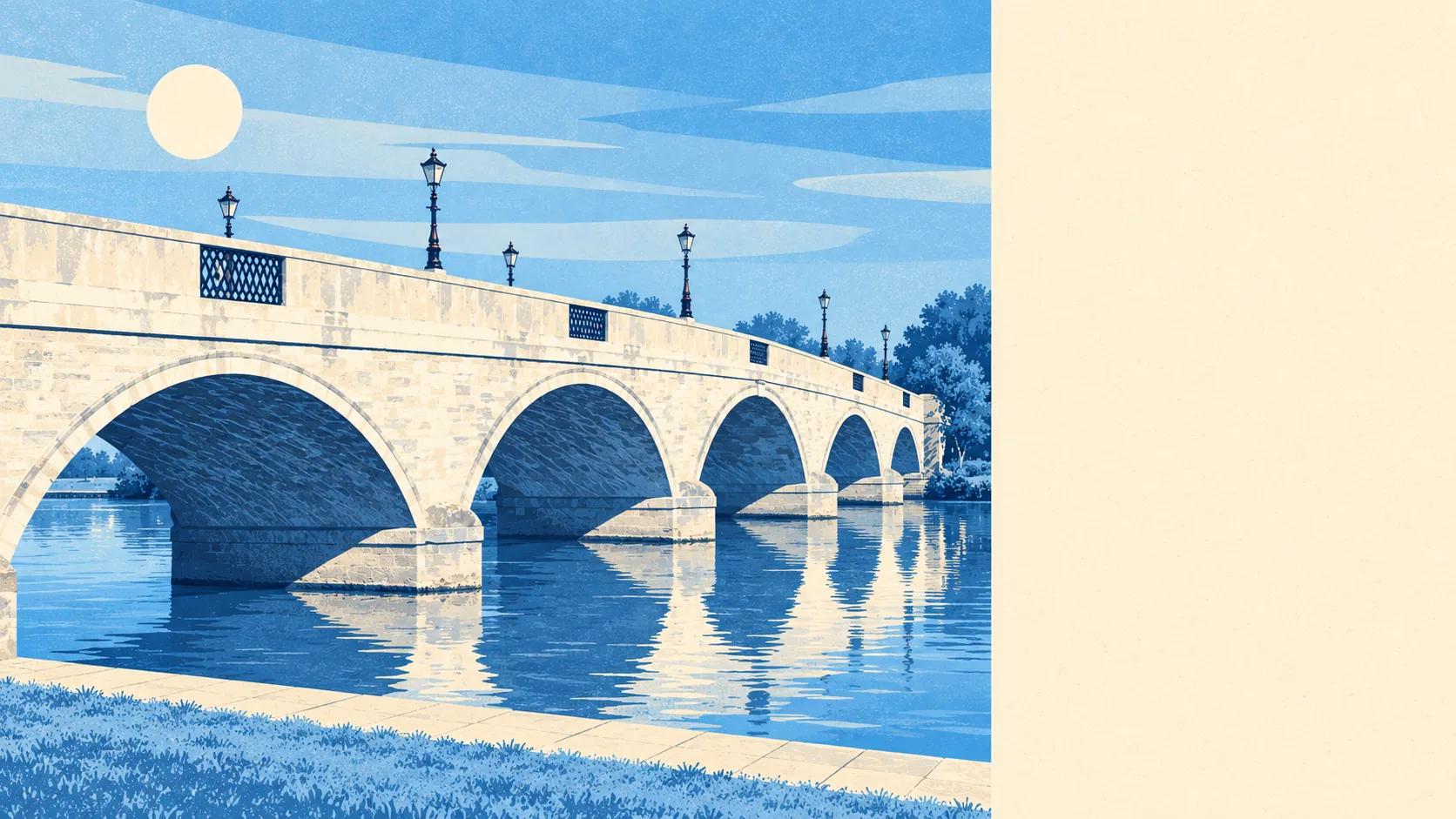
Chertsey is a good place to live for anyone who reads the flood map first. A park is a few minutes' walk from almost every front door. About a quarter of the town is in the highest river flood zone. A third of workers did their commute without leaving home. The monks who founded the place dug fishponds, and after heavy rain the town still gets them back for free.
The housing is a mix of flats and semis with a small old core. The council-tax valuation list puts about 29% of Chertsey's homes as flats, 22% semi-detached, 20% terraced, 12% detached and 9% bungalows, and only about 15% were built before 1930. The town centre's 16th and 17th-century buildings are therefore a thin crust on a lot of post-war and later building. About 72% of homes heat on mains gas and about 15% on electricity alone. Of the homes with an energy certificate, about 61% are rated A to C and about 10% are E or worse. An electric-only flat and a gas-heated semi cost very different amounts to keep warm, and the photographs look the same either way.
The Land Registry recorded 165 sales in Chertsey in the twelve months to May 2026, and the typical price was about £426,000. Type moves that figure a long way: flats went for about £256,000, terraced houses about £408,000, semis about £485,000 and detached houses about £700,000. Council-tax band D is the most common band in Chertsey, with only about 12% of homes in bands A or B, and Runnymede's band D bill comes to about £2,490 a year. The cheap end of the council-tax list is close to empty here.
Runnymede as a whole had a typical private rent of about £1,570 a month in April 2026, according to the Office for National Statistics' rental index, 3% lower than a year earlier, and that borough average takes in Egham and Virginia Water along with Chertsey. By size the borough figure runs from about £1,070 for a one-bed to about £1,380 for a two-bed and about £1,660 for three bedrooms. Any landlord still quoting last spring's rent is quoting a market that has moved.
Police.uk records put Chertsey's crime rate at about 103 per 1,000 residents for the year from June 2025 to May 2026, about 18% above the Runnymede average. Violence and sexual offences made up about 44% of that, against 35% across England and Wales, though the category is a broad legal grouping that includes common assault without injury. Surrey Police charged about 11% of cases across the force in the same year, a shade below the national 12%. The town's most celebrated public-order episode is still the legend of King John and Blanche Heriot, and she got a bronze statue by the bridge for it.
Chertsey Rail Station is in the town on a branch line, with Weybridge and Addlestone stations nearby, yet only about 3% of workers took the train at the 2021 census. Almost half drove and about 35% worked from home. The station is in the middle of town and the motorway junction won the argument anyway. Chertsey has 53 bus stops, averaging about 32 weekday departures each and roughly two an hour at peak, and every one has a weekend service. Gigabit broadband reaches about 84% of premises and superfast about 99%, which suits the third who never left the house.
The town was built on a gravel terrace between the River Thames and the Bourne, and both rivers keep a claim on it. In the Environment Agency's river-and-sea flood zones, about 26% of Chertsey's postcodes are in zone 3 and about 18% in zone 2. Counting postcodes on at least one flood indicator, surface water included, about 20% carry a high rating, and about a quarter have a recorded flood history. Put the exact address into the Environment Agency's long-term flood risk service and get an insurance quote while the survey is still being booked. The other side of all that water is how much green and river there is: the nearest green space averages about 190 metres away, there are about 20 within a kilometre, open water is about 150 metres off and the National Cycle Network about 230 metres.
Chertsey has 120 listed buildings, eight of them Grade II* and 112 Grade II, and one conservation area covering the town centre. Owning one means listed building consent for most alterations, and inside the conservation area even unlisted homes face tighter rules on changes. Chertsey Bridge is both a scheduled monument and Grade II*, which is a great deal of protection for a crossing that lorries are told to avoid.
About 64% of households own their homes, with about 19% renting privately and about 17% from a social landlord. The typical resident is 40. The Office for National Statistics models average gross household income across the area at about £66,500 for the financial year to March 2023. That spread of tenure means the conservation-area streets and the post-war estates are a short walk apart, and nobody has priced one out of the other.
This page also covers the villages of Lyne and Longcross and the riverside at Penton Hook, which share Chertsey's postcodes and most of its errands.
Chertsey suits a buyer who wants a real small-town centre, a station within walking distance and the Thames Path across the bridge, and who works from home often enough that the motorway is an option. Families have Chertsey High School and the Salesian School in the town, and couples who want a semi at well under the price of the detached end will find most of the stock pitched at them.
It suits less well anyone who needs a fast daily train into London, since almost nobody here commutes that way, or anyone who would rather pay extra for a postcode with no flood history. Buyers looking for a period house will find that most of the town was built after the period.
Charles James Fox lived here and asked to be buried in Chertsey, and the nation put him in Westminster Abbey instead, a rare case of a resident being upgraded against his wishes. The poet Abraham Cowley died at Cowley House in the town, the painter Charles Cooper Henderson was born at Abbey House, and Keith Moon and Mike Rutherford are both on the list of people linked to the town.
Chertsey comes out average overall. Its strength is what surrounds it: river, green space and cycle routes within a few minutes of nearly every home. Its weak spot is flood risk, which a quarter of the town shares and which has to be checked address by address. Buy on high ground and the place works well, which is roughly what the monks worked out in 666.