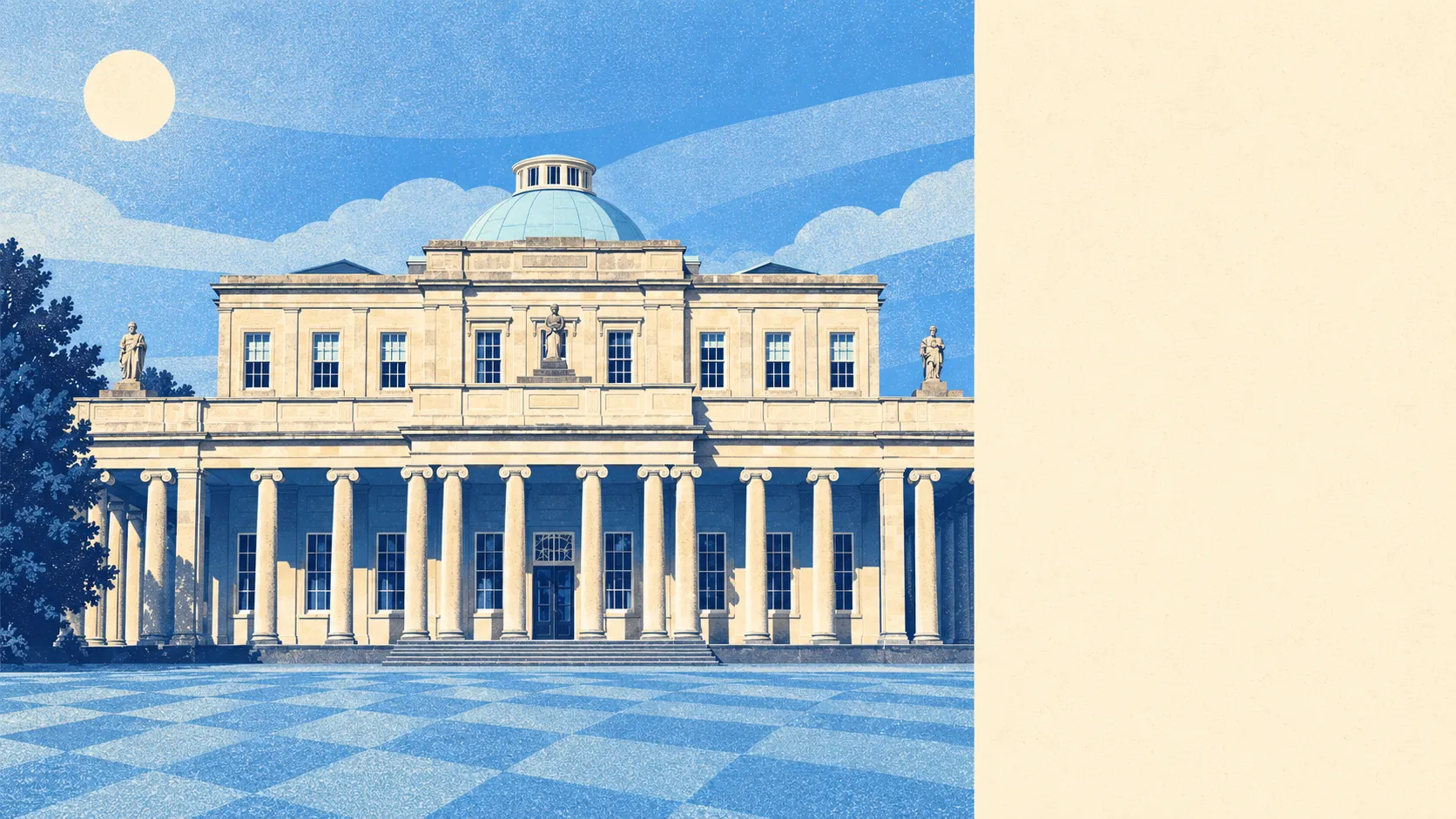
Cheltenham has 1,169 listed buildings, and every one of them comes with an opinion about your windows. The Regency terraces that make the town worth looking at also make extending one a negotiation. Buy here for the hills, the parks and the stucco, then expect the paperwork that comes with a house worth protecting.
That figure covers five Grade I buildings, 60 at Grade II* and 1,104 at Grade II, spread through seven conservation areas: Central, The Poets, St Mary's, Prestbury, Bafford, Cudnall Street and Swindon Village. A listed building needs consent for almost any change to its character, inside or out, and a conservation area trims the alterations you could otherwise make without asking. Whole terraces are protected down to the ironwork. Lansdown Place is listed together with its attached railings, so the thing you chain a bike to has more legal protection than the bike.
Getting in costs less than the architecture suggests. The Land Registry's sales for the year to May 2026 put the typical Cheltenham price at about £325,000. Flats sold for around £205,000, terraces for about £305,000, semis for about £368,000 and detached houses for about £610,000. The most common council-tax band is C, and about 40% of homes are in bands A or B, so the bills are a good deal plainer than the facades.
Renting is no bargain. The Office for National Statistics puts the typical private rent across Cheltenham borough at about £1,240 a month as of April 2026, an average for the whole borough that covers Montpellier and the outer estates alike.
The stock is more mixed than the postcards. On the council-tax valuation list, which counts every home, flats make up 28%, semis 25%, terraces 23%, detached houses 15% and bungalows 7%. Only 28% were built before 1930, and the energy certificates show the post-war decades as the biggest single building period. About half the certificated homes rate C or better, and about 11% are E or worse. Most homes, 79%, are on mains gas, and about 10% heat on electricity alone. The cream stucco that makes Montpellier look like a wedding cake keeps the heat in about as well as one does.
Police.uk records about 70 crimes per 1,000 residents in the year to May 2026, roughly 2% below the average for Cheltenham borough. The town and the borough cover very nearly the same people, so that figure is mostly the place agreeing with itself. It is middling, and nobody gets to call it either a fortress or a warning.
The people are settled and comfortable. About 63% own their home, the median age is 40, and the Office for National Statistics models gross household income at about £56,500 a year in the financial year to March 2023. For a town built for the gentry to take the waters in, that is a solidly salaried crowd. Cheltenham Ladies' College and Cheltenham College set the tone the town likes to be judged by, and the mortgages pay for most of it.
Cheltenham Spa Rail Station is on the Bristol to Birmingham main line, and trains to London go via Gloucester first, a detour the town has taken personally for years. Most people drive or stay home anyway. At the 2021 Census, 39% drove to work and 37% worked from home. Buses cover the gap, with 738 stops across the area and weekend services at about 92% of the stops with timetable data. Gigabit broadband reaches about 92% of premises, which is why working from home caught on so well.
Flood is where buyers need to read the label. On the postcode flood indicators, which include surface water, about 24% of Cheltenham's postcodes carry a high reading on at least one measure. The Environment Agency's river-and-sea flood zones draw a much tighter line, with about 4% of the area in zone 3 and about 2% in zone 2. The most recent recorded flood, in July 2007, came from a main river overtopping its defences. The River Chelt runs under much of the town, which is a good way for a river to be forgotten until the drains are full.
Step outside and the town does well. The nearest green space is about 160 metres from the average front door, and water is about 380 metres away. Pittville Park is a registered landscape, the Cotswolds Area of Outstanding Natural Beauty starts at the edge of town, and Cleeve Hill, the highest point in Gloucestershire, looks down on the lot. This page covers the town itself, from Montpellier, Lansdown and Alstone to Charlton Kings, Up Hatherley and the private Battledown estate. It also covers a ring of villages: Southam, Shurdington, Staverton, Uckington, Elmstone Hardwicke and Stoke Orchard on the near side, and up into the hills at Cleeve Hill, Coberley, Cowley, Elkstone, Syde, Colesbourne, Dowdeswell, Andoversford, Shipton, Sevenhampton, Brockhampton, Salperton, Hawling and Guiting Power. In most of them, getting out of the car is the hard part of reaching open country.
Cheltenham is right for buyers who want a handsome, grown-up town with proper hills at the end of the road and who will happily live with the house the way they bought it. Anyone whose plan is a loft conversion, new sash windows and a glass box on the back should start with the post-war streets, because in a listed Regency terrace each of those becomes a request someone else gets to answer. The paperwork is the price of the facades and the view of Cleeve Hill. For most buyers that is a fair trade, and it makes Cheltenham a better-than-average place to live.