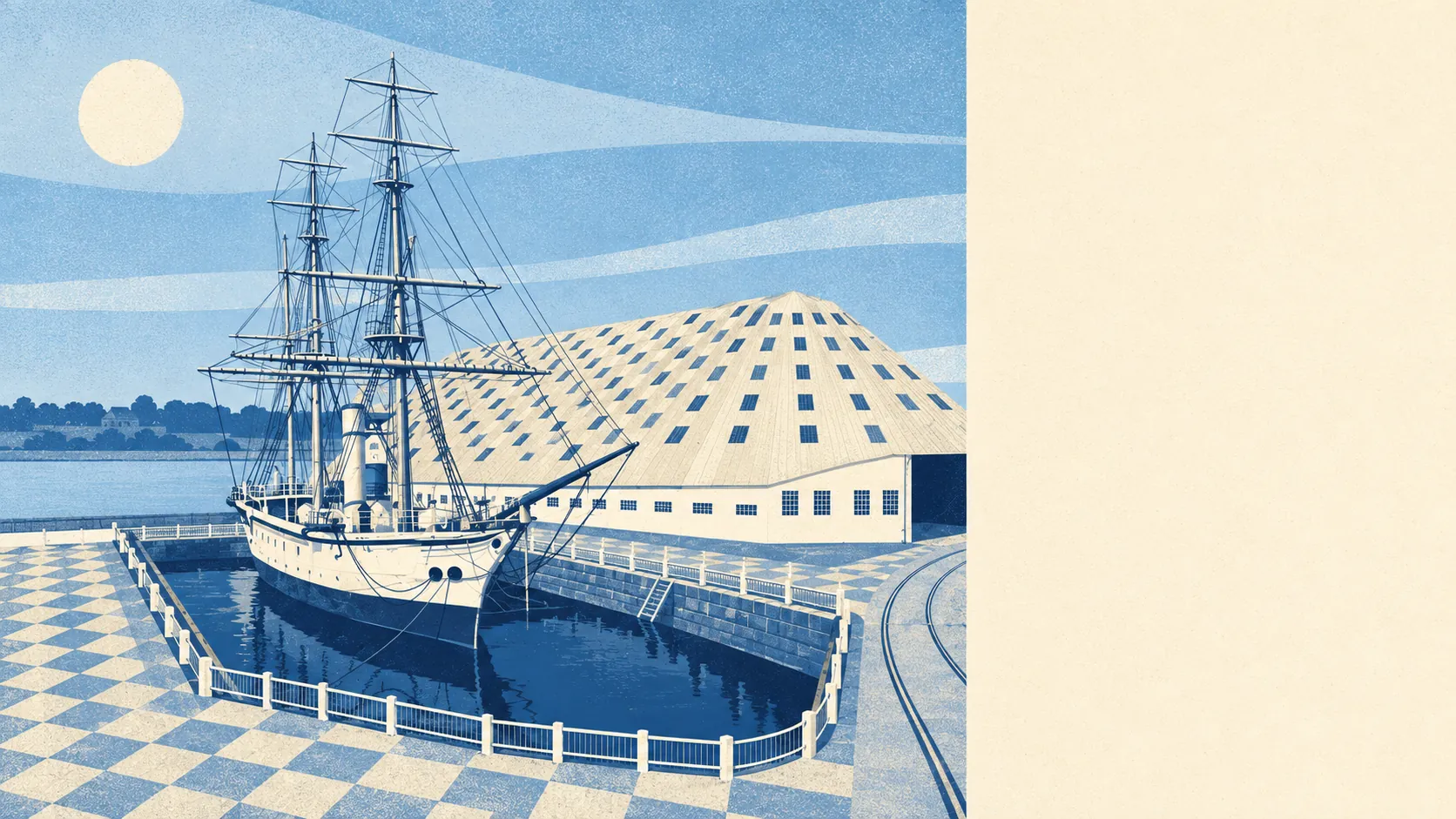
Chatham is Medway's engine room, never redecorated. A typical house costs well under three hundred grand. About four in ten households rent. Crime runs ahead of the rest of Medway, and most front doors are a few minutes from a park. It's a good place to live if you judge a town by what it does, not by how it photographs.
Chatham is a terrace town. Across every home on the council-tax list, 43% are terraced, 21% are flats, 19% semis, 10% detached and 7% bungalows. About a fifth were built before 1930. The Victorian streets between the High Street and Luton went up to house the dockyard's workforce, and they still look as if they're waiting for the shift whistle. Up the hill in Walderslade and Lordswood the dockyard history thins out and the housing gets younger. Among homes with an energy certificate, post-war is the biggest single build era. About half of those rate C or better, 40% sit in band D and about 9% in E or worse. Eight in ten homes are on mains gas, so heating an old terrace here costs the normal amount, not the exotic one.
The Land Registry recorded 719 sales in the twelve months to May 2026, at a typical £290,000. The prices climb the ladder in tidy steps: flats around £160,000, terraces around £270,000, semis around £320,000 and detached houses around £440,000. The official house price index has the average down by less than 1% over the year to May 2026, so nobody is buying here on momentum. Band B is the most common council-tax band, and about 46% of homes sit in A or B. In council-tax terms that's a sensible haircut.
For renters, the typical private rent across the Medway area was about £1,240 a month as of April 2026, up about 4% on a year earlier. That figure comes from the Office for National Statistics and covers the whole of Medway. It's an average, not a quote for any particular street, so a flat near the station and a four-bed in Walderslade will both disagree with it, in opposite directions.
Chatham's reputation comes from its safety figures. Police records for June 2025 to May 2026 put the town at around 132 crimes per 1,000 residents, roughly 23% above the Medway average. Most categories look ordinary except one. Anti-social behaviour makes up about 22% of recorded incidents, against 16% nationally, which points to nuisance more than danger. Across the whole force, Kent Police charge about 16% of cases, ahead of the national 12%. That's a force figure, not Chatham's own, but it suggests somebody is at least answering the phone.
The schools are where the reputation falls apart. Ofsted has graded 40 schools in and around the town, and 37 came out good or better, four of them outstanding. At the end of primary, pupils across 25 schools average a maths score of about 104. At secondary, the average Attainment 8 score across 10 schools is about 43. The secondary list includes Chatham Grammar, Fort Pitt Grammar School, Walderslade School, Brompton Academy and The Victory Academy. The modelled walk is about seven minutes to a primary and about 18 to a secondary. Parents who wrote Chatham off on the crime figures tend to go quiet once they read the inspection results.
Chatham Rail Station sits where the North Kent line meets the Chatham Main Line, and its routes include high-speed services into St Pancras. Most people drive anyway. About 54% of working residents commute by car, roughly 4% by train and 3% by bus, and about a quarter work from home. The town owns a railway junction rather than uses one. There are 449 bus stops, and about 89% of the stops with timetable data get a weekend service. The Department for Transport's 2019 modelling puts the town centre about 12 minutes away by car and about 25 by public transport. Broadband is strong: gigabit-capable connections reach about 86% of premises and superfast about 98%.
The land around the town is its best asset. The average home is about 200 metres from public green space, with around 20 green spaces within a kilometre. The Great Lines ridge and the chalk grassland of the Darland Banks sit on the town's edge, so a dog walk here comes with a view. Flood exposure is modest. About 9% of postcodes are high-risk on at least one flood indicator, surface water included. Only about 2% fall in the Environment Agency's highest-risk river-and-sea flood zone, and about 1% in the next one down. The ground has one catch: about 97% of postcodes sit in an elevated radon band, so put a radon test on the survey list.
The history comes with paperwork. In and around the town there are 289 listed buildings, 19 of them Grade I and 47 Grade II*, plus 50 scheduled monuments. There are 13 conservation areas, including Brompton Lines, Chatham Historic Dockyard, New Road Chatham and Maidstone Road Chatham. If your house is listed or inside one of those boundaries, new windows, extensions and changes to the front all need consent. The conservation officer will have views on your plastic windows before you do. Brompton, squeezed between the dockyard and Gillingham, has the barracks and the Lines on its doorstep, and the rules that come with them.
About 61% of households own their home, and the typical resident is 37. The Office for National Statistics models median household income at about £57,000 before tax for the financial year to March 2023. It's a working town's profile: mostly owners, plenty of renters, and nobody retiring here for the sea air.
Chatham suits buyers who want a house with stairs and a garden on a budget that would buy a flat in plenty of Kent towns. It also suits families who look at the inspection grades before the reputation, and anyone who wants green space close by without paying village prices.
It doesn't suit anyone who wants quiet streets near the town centre after dark, or who plans to gut a period terrace in a conservation area without a planning conversation. If you choose a town mainly on its looks, Chatham won't win you over, and it isn't trying to.
Charles Dickens spent part of his boyhood here, living in The Brook and in Ordnance Terrace, and called it the happiest period of his childhood. Queen Elizabeth I founded the Royal Dockyard in 1568, and it closed in 1984. One of the town's largest employers is now Vanquis Bank. Four centuries of shipbuilding ended with the town's biggest payroll moving from building warships to lending money.
Chatham is a decent place to live that photographs badly. Its real strength is the surrounding land: green space a short walk from most doors, with chalk grassland and the Great Lines on the edge of town. The weak spot is the freedom to change your home, because in the historic core the paperwork arrives before the builder does. Buy here for the house prices and the schools, not the scenery, and the town holds up its end of the deal.