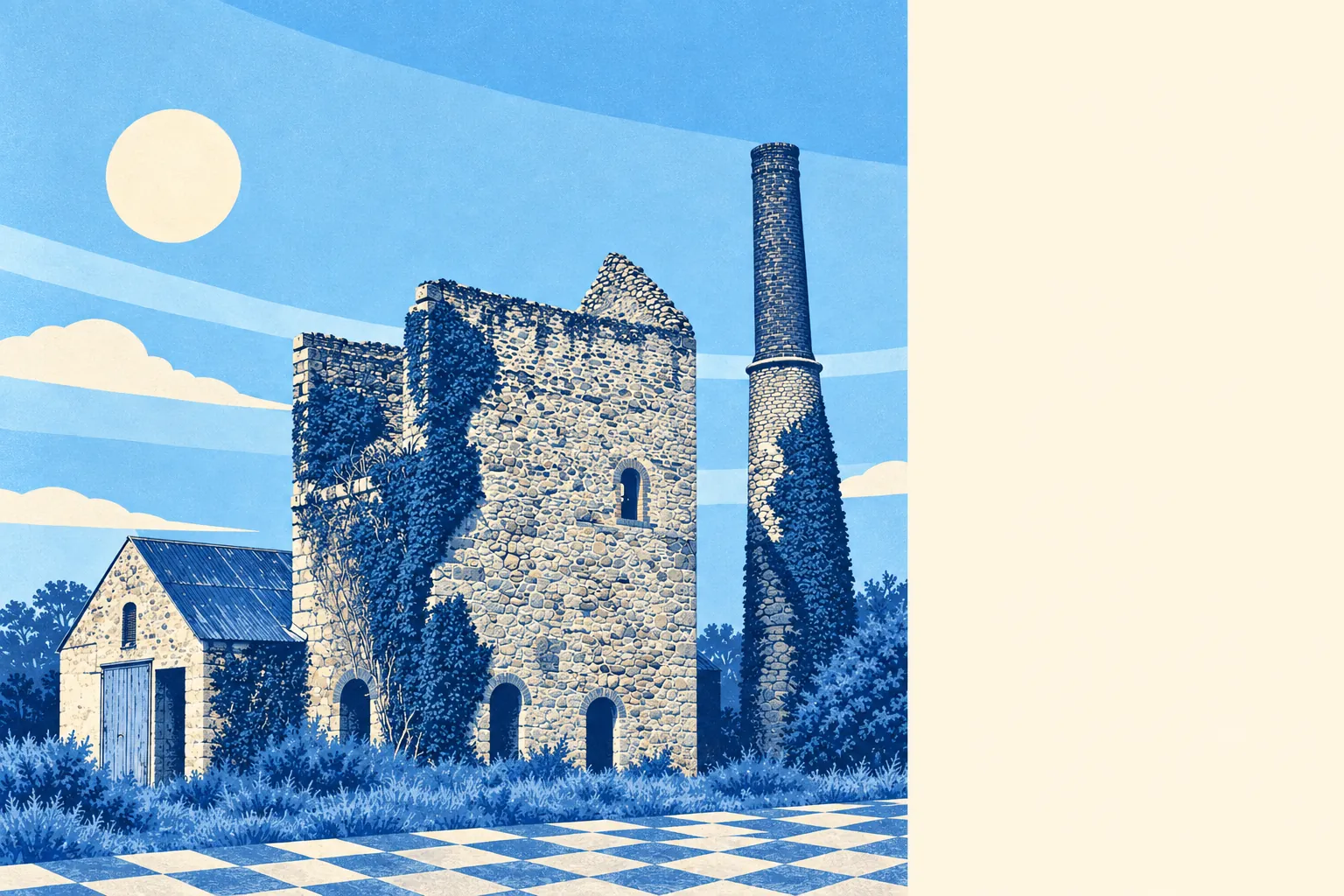
Green, open and close at hand, which is the whole point of it. Open space starts more or less at the end of the street. Water is about the same distance again. The surrounding villages answer to names like Vogue, Twelveheads and Jolly's Bottom. This is countryside you walk into rather than drive to.
On green space, an average postcode here has about 5 open spaces within a kilometre, with the nearest around 170 metres away. That is a two-minute proposition rather than a weekend outing, and it is the single strongest fact about living here.
Water is just as accessible. Blue space sits about 180 metres from the average postcode, with roughly 7 within a kilometre. In a village that has no coast within walking reach, having that much inland water on the doorstep is not the usual arrangement.
The National Cycle Network is further out, about 2 kilometres from the average postcode, and no postcodes count as close to it. Ancient woodland does not feature here at all. The walking is local and informal rather than signposted and national.
The commercial picture across the surrounding area runs to 34 shop premises, 12 pubs and 4 restaurants. It also runs to 178 holiday lets, which tells a truer story about this part of Cornwall than any number of shops does.
Air quality is good. Fine particle levels across Cornwall averaged about 5 micrograms per cubic metre in 2024, which is the sort of figure rural counties post and cities do not.
The character comes from the scatter of settlements rather than from Chacewater alone. Blackwater, Scorrier, Carharrack, Wheal Rose and Twelveheads sit within easy reach, along with Bissoe, Crofthandy and Todpool, and the old mining ground at Gwennap Pit and Wheal Busy is part of the surrounding furniture. It is a landscape of small places close together, each too small to be self-sufficient and collectively adding up to somewhere.
Private outdoor space is generous in a way public figures usually hide. Gardens here work out at roughly 327,000 square metres per 1,000 residents, which in plain terms means houses with real gardens rather than yards. Anyone moving from a terrace with a strip of paving will notice within a week.
Locally, the valuation list carries 25 rateable non-domestic premises in the area. Those are premises rather than trading businesses, so the list describes the shape of what exists rather than what is open on a Tuesday, and it confirms what the eye would tell you: this is a small village with a handful of commercial addresses, not a retail centre.
Eating out is a short list with a decent record. Of the 6 rated food premises, about 67% hold the top food hygiene score and none sit in the bottom band. Six places is not a scene, but nothing in the ratings is a reason to stay home.
Worth saying plainly: no area of outstanding natural beauty overlaps here, no site of special scientific interest, and no ancient woodland. This is working countryside rather than designated landscape, which means fewer protections over what happens to the fields and fewer visitors looking for a view.
The surroundings are the best thing Chacewater has: open space and water both within a couple of minutes, gardens with proper size to them, and clean air over the lot. The countryside here has no official title, and it does not appear to need one.