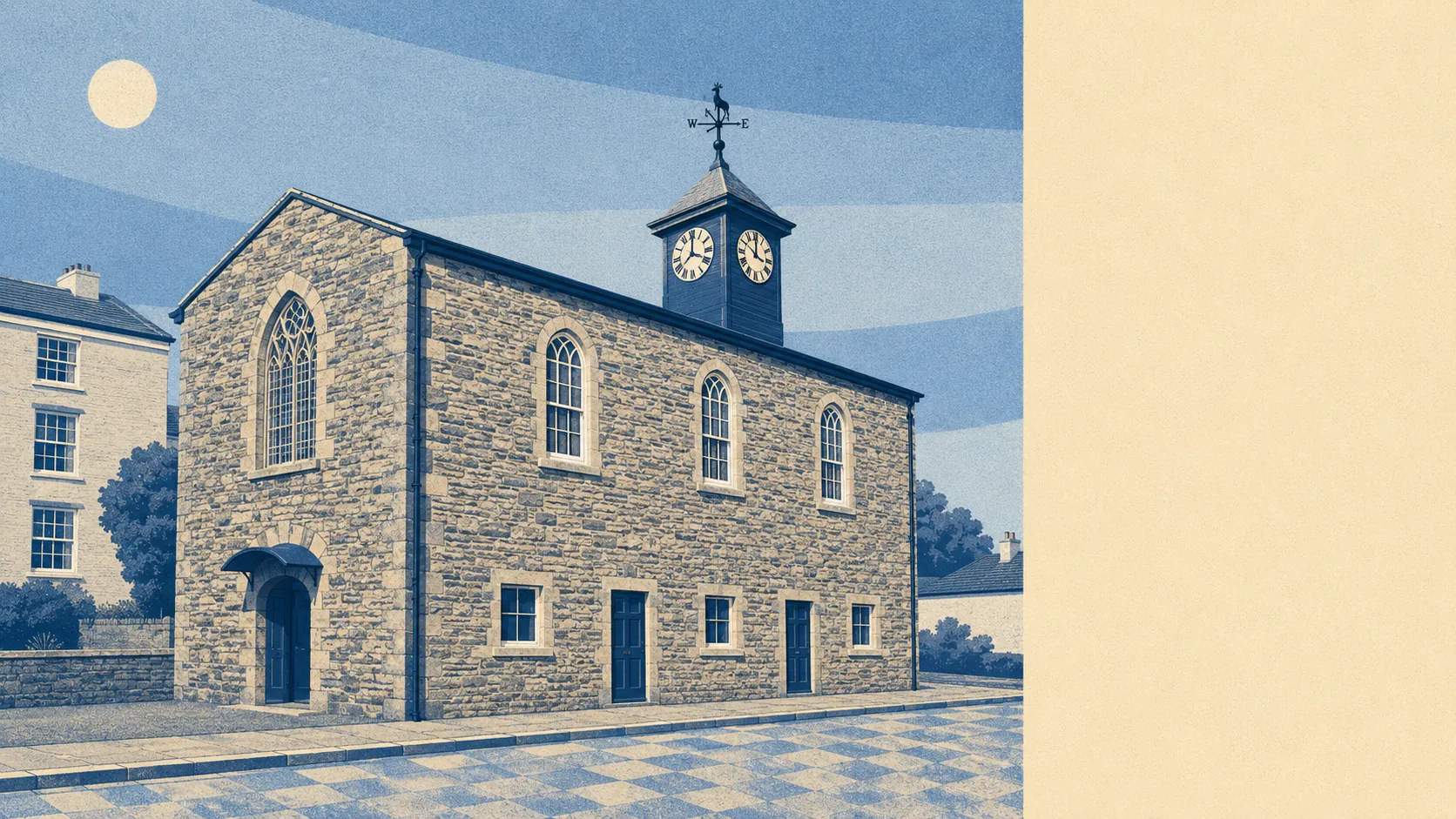
Yes, and you will be asking permission far more often than you would in an ordinary town. The area carries nearly 300 listed buildings. It carries two conservation areas and dozens of scheduled monuments. Applications still go in every month, so people plainly manage it. What is scarce here is not the ability to build. It is the ability to build without asking first.
Start with the listings, because the volume is the point. There are 291 listed buildings across the area: 3 at Grade I, 15 at Grade II star, and 273 at Grade II. In a small patch of north Cornwall that is not a handful of special cases, it is close to a default setting for anything old and stone-built. If your house is one of them, listed building consent applies to alterations that affect its character, inside as well as out, and that includes the things people assume are cosmetic. Windows, internal walls, render, roof coverings. Doing the work first and applying afterwards is not a shortcut, because listed building consent is one of the few areas of planning where the offence is criminal rather than merely expensive.
Two conservation areas sit within the area, covering Camelford and Boscastle. Inside a conservation area the ordinary permitted development freedoms are narrower than elsewhere, demolition and works to trees come with their own consents, and the appearance of what faces the street carries weight it does not carry a mile up the road. The house need not be listed for any of that to apply.
There are also 84 scheduled monuments in the area, which is the strictest protection tier in the system and applies to the ground rather than to buildings. Most homeowners will never touch one. Anyone buying land on the moorland fringe, where prehistoric sites are thick on the ground, should establish early whether a monument sits inside the boundary, because scheduled monument consent is a different and slower process from planning permission.
None of which stops people. Planning records show 126 applications across the area between April 2024 and June 2026, with 50 of those in the most recent twelve months. That is a steady flow of extensions, alterations and conversions from neighbours who worked through the same constraints. The system here is demanding rather than closed.
On ground conditions, the mining legacy is light by Cornish standards. About 2% of postcodes have a recorded working within 500 metres, and none sit directly over one, with the nearest recorded working about 190 metres from any postcode centre. In practice that means a mining search on purchase, occasionally a specialist report, and the possibility that a lender or insurer asks a question or two before proceeding. It is a paperwork issue rather than a structural verdict on any particular house.
The practical upshot is that permitted development is worth checking rather than assuming. An unlisted house outside a conservation area retains the usual national rights, which is a decent number of homes here. Anything listed, anything inside the conservation boundaries, and anything near a monument moves straight into consent territory, and the sequence that saves money is always the same: establish the designations on the specific address before you pay an architect to draw something that cannot be built.
Freedom to alter your own home is the one area where Camelford scores badly, and it is a genuine cost rather than a technicality: the heritage that makes the place worth looking at is the same heritage that turns a rear extension into a project with a case officer attached.