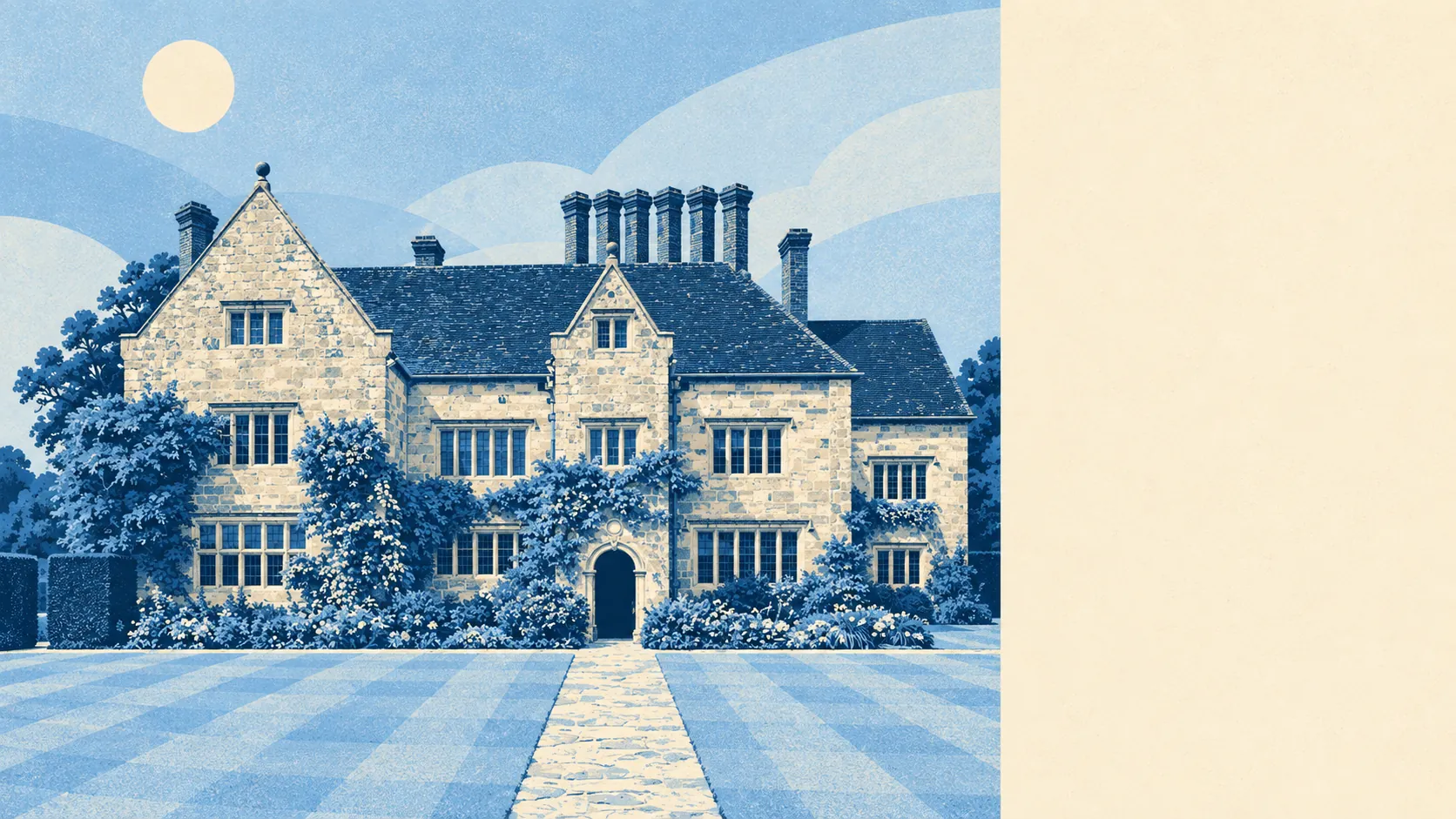
Burwash is good if you made your money somewhere else first. Three in four own their home. The typical resident is in their mid-fifties. Almost nobody takes the train. It suits the second half of a career far better than the first.
The houses don't follow the chocolate-box script. On the Valuation Office Agency's council-tax list the stock splits almost evenly: about 28% detached, 24% semi-detached, 25% terraced, 14% bungalows and only 8% flats. Around 41% was built before 1930. Wealden cottages were built to keep out highwaymen, not draughts, and the energy certificates show it. Of the homes with a certificate, nearly half sit in band D, 37% make it into A to C, and 16% are E or worse. About 58% of homes are on mains gas, so a large minority heat with something else, and around 8% run on electric-only heating. In a pre-war cottage, ask how it's heated at the first viewing, before you fall for the beams.
Prices come with a small-sample warning. The Land Registry recorded 10 sales in the twelve months to May 2026, at a median of about £407,000. Ten sales make a village, not a market, so treat that median as a mood rather than a price list. Three detached houses sold at a median of around £660,000, and four terraces at about £306,000. Council tax band C is the most common, and only about 9% of homes sit in bands A or B. Cheap Burwash exists mainly in the imagination of people browsing from further up the train line.
Renting is harder to pin down. The typical private rent across the Rother area was about £1,160 a month as of April 2026. That figure covers the whole district, not Burwash. Only about 13% of households here rent privately, so at any given moment the choice is a handful of listings and a lot of refreshing.
Crime is low and stays that way. Police figures put Burwash at about 30 recorded crimes per 1,000 residents in the year to May 2026, around 59% below the Rother average of roughly 73. The road through the village was once a notorious spot for highwaymen, and nothing since has beaten that for drama.
Transport is where the charm meets the invoice. Around 1% of working residents commute by train, about 48% drive and 42% work from home. The nearest stations are Etchingham and Stonegate, and neither is in Burwash, which goes a long way to explaining that 1%. There are 8 bus stops. The ones with timetable data average about 12 weekday departures each, roughly one bus an hour at peak, and all of them run at weekends. The Department for Transport's modelled journey times from 2019 put the nearest town centre 18 minutes away by car and 26 by public transport. A GP is about 10 minutes' walk and a food shop about 8. The hospital is 31 minutes by car and 85 by public transport, and that second number is the one to read before you give up the car. Broadband is better than the bus service: every postcode gets superfast, and gigabit reaches about 59%. At least one mobile operator covers everywhere with 4G or 5G.
The surroundings are why people come. None of Burwash lies in the Environment Agency's river-and-sea flood zones. On the postcode flood indicators, which include surface water, no postcode is at high risk, about 7% are at medium and 18% at low. The whole village sits inside the High Weald Area of Outstanding Natural Beauty. The average home is about 188 metres from green space, with nearly five green spaces within a kilometre, and water, including the River Dudwell, is around 309 metres away. Nobody moves here for the nightlife. They move here for the view from the back door.
Heritage is the other thing you'll be living with. Historic England lists 72 buildings here, 5 of them Grade II* including St Bartholomew's Church, and 67 Grade II. Rother District Council has designated the High Street a conservation area, specifically to control building there. If the house you want is on it, new windows start as a conversation with the council and end, eventually, as windows.
Money and ownership shape the place. About 74% of households own their home, the median age is 54, and the Office for National Statistics models median gross household income at about £59,000 for the financial year to March 2023. Most homes are family-sized: around 42% have three bedrooms and 28% four or more. The couple who bought the four-bed for the grandchildren' visits is a recognised local species.
This page also covers Etchingham, a short way along the A265, which has the station Burwash doesn't and an equally quiet way of making do without much else.
Burwash suits people whose work sits on a laptop or whose commute is behind them. It suits walkers, anyone who wants low crime without a gated estate, and buyers happy to own an old house on its own terms. It suits people who consider a weekday bus timetable a formality.
It doesn't suit anyone who needs a daily train, a big rental market, or a spare £400,000 that goes a long way. Young renters and first-time buyers will find the numbers talk them out of it long before the estate agent does. Neither will households who want new-build efficiency, because most of the stock pre-dates double glazing.
Burwash has always attracted people who arrived with a reputation already made. Kipling lived at Bateman's, now a National Trust property, and entertained Sir Henry Rider Haggard and his cousin Stanley Baldwin, later Prime Minister. Kingsley Amis visited while preparing a tribute to Kipling, but his father had got there first and lived in Burwash in the 1960s. James Callaghan, a former Prime Minister, lived just outside the village, which is about as close to the High Street as anyone gets without a listing officer being told. Even the village got its start with a royal favour, when Henry III granted it a weekly market in 1252.
So yes, Burwash is a good place to live, and it's better than the village average suggests. Its real strength is the surrounding area and green space: the High Weald on every side, low crime and no river flooding. Its weak spot is value, because the houses cost Weald money, the energy bills come at period-cottage rates, and the car is compulsory. Bring the career with you, already finished, and Burwash will hand you the quiet you paid for.