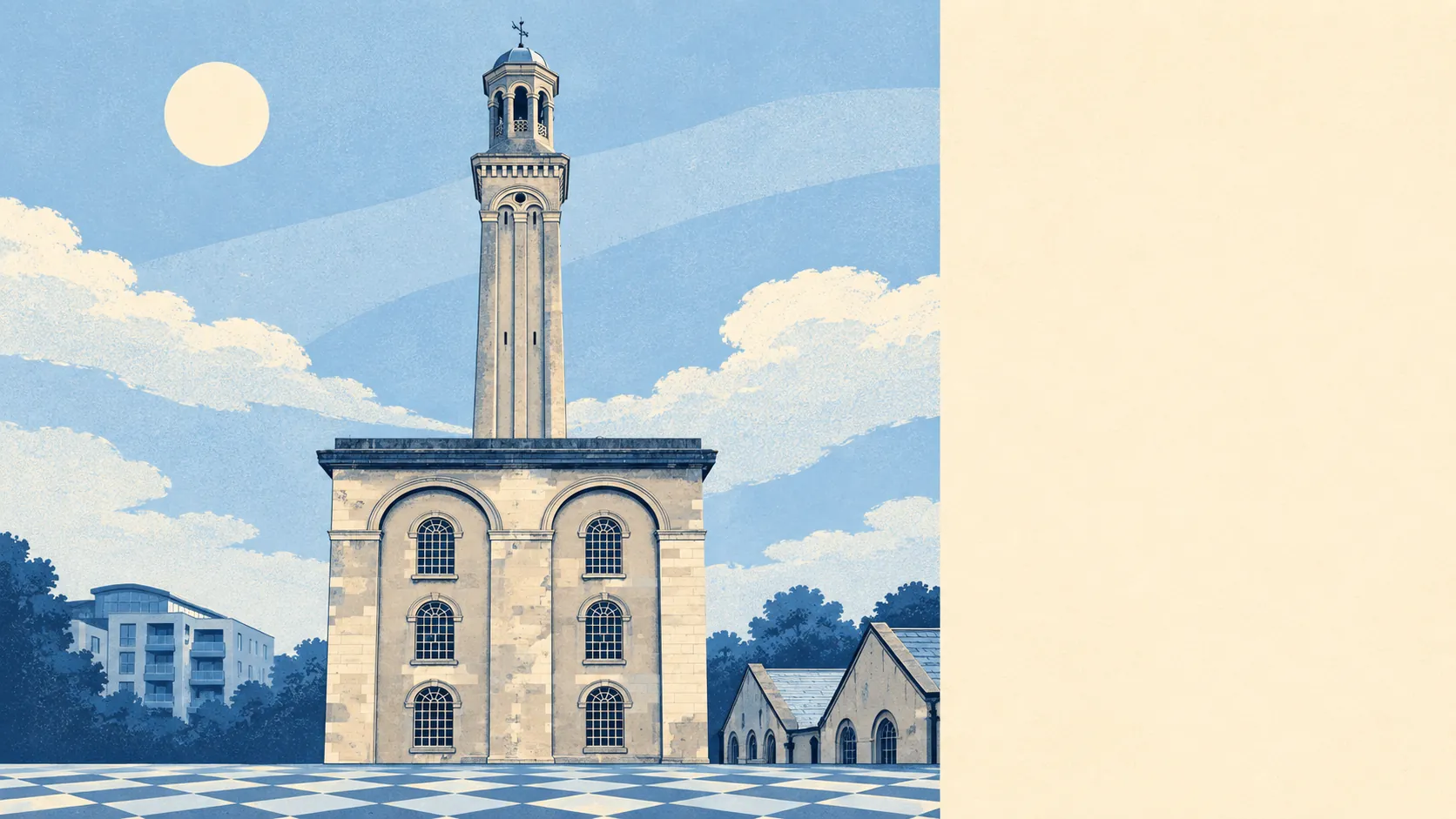
Yes, if you can do river life in a flat. Seven in ten homes are flats. About six in ten households rent. A park is a couple of minutes' walk from most front doors. Two rivers meet here, and everything else is fitted in around them.
Flats make up about 70% of every home on Brentford's council-tax list. Terraces account for about 19%, semis about 9% and detached houses about 1%, so the detached house is close to extinct in TW8. About 24% of homes were built before 1930, and the rest arrived in waves that are easy to read from the street. The energy certificates look healthy, with 78% of certificated homes rated A to C, 18% at D and about 4% at E or worse. That is what a lot of recent flats do for an average. Heating is split. About 52% of homes are on mains gas and about 24% rely on electric-only heating. Ask what heats a flat at the viewing, because a balcony over the water does nothing for the electricity bill.
The Land Registry recorded 200 sales in Brentford in the year to May 2026, at a median of about £458,000. Flats made up most of that, with 145 sales at a median of £420,000. Terraces went for about £693,000 and semis about £733,000. Detached houses fetched £795,000, but only three sold all year, so that figure is closer to gossip than a market price. The most common council-tax band is D, and only about 10% of homes are in bands A or B. Very little in Brentford is cheap to own.
For renters, the Hounslow area's typical private rent was about £1,920 a month as of April 2026, measured across the whole borough. The same index puts a one-bed at about £1,560 and a two-bed at about £1,920 across Hounslow. Those are borough averages, and a new-build flat with a river view is not trying to be average.
Police.uk recorded 125 crimes per 1,000 residents in Brentford between June 2025 and May 2026, about 7% above the Hounslow average. Anti-social behaviour made up 21% of incidents, against 16% across England and Wales. Vehicle crime made up 10%, against 5% nationally. The Metropolitan Police charged someone in about 10% of cases over the same period, against a national rate of about 12%. That is a force-wide figure for all of London and says nothing particular about Brentford. About four in ten households here have no car, and they get to ignore one of the bigger lines on that list.
The four primaries in the district average about 107 in Key Stage 2 maths. The two secondaries average about 58 on Attainment 8. Across Hounslow, Ofsted has graded 39 schools and every one is good or outstanding, eight of them outstanding. That is a borough-wide record, and no individual school has been checked against it here. Local names include Green Dragon Primary School, Lionel Primary School, St Paul's CofE Primary School and Our Lady and St John's Catholic Primary School. At secondary there are Brentford School for Girls and Gunnersbury Catholic School. Two local schools have closed recently, so any school map from a few years ago is out of date.
Brentford, Kew Bridge and Syon Lane stations all serve the area. Even so, only about 4% of working residents took the train to work at the 2021 census, with 10% on the bus and 22% driving. About 43% worked from home. There are 119 bus stops, averaging about 348 weekday departures each and about 19 an hour at peak, and every stop has a weekend service. Gigabit broadband reaches about 87% of premises and superfast about 96%. For the biggest group of commuters, the busiest route out of Brentford ran through the router.
The Environment Agency puts about 15% of Brentford's postcodes in the highest river-and-sea flood zone and about 6% in the zone below it. On a wider measure that includes surface water, about 11% of postcodes are at high risk on at least one flood indicator and about 18% at medium risk. The upside of the geography is easy to reach. The nearest green space is on average about 137 metres away, there are about 33 within a kilometre, and open water is about 250 metres off. Traffic is the cost. About 98% of postcodes are near road noise of 65 decibels or more. "Riverside" is a lovely word on a brochure, and the Environment Agency uses less lovely ones.
Brentford has 194 listed buildings, 13 of them Grade I and 17 Grade II*. Its surroundings take in 14 conservation areas, including The Butts, St Paul's Brentford and Grand Union Canal and Boston Manor. Seven listed buildings are on Historic England's Heritage at Risk register. In practice, new windows, a front extension or a loft conversion can need consent that the same work in an ordinary suburban street would not. Boston Manor House has kept its plasterwork ceilings since 1622, and the conservation officers would like the town's sash windows to last as well.
About 38% of households own their home, the median resident is 37, and gross household income averaged about £86,000 in the financial year to March 2023. That income figure is an Office for National Statistics model for the middle-layer areas, averaged across them. It is a young, renting, well-paid population that moves on often. Even so, the Brentford Festival has been held every September since 1900, so some people here clearly stay.
Brentford suits renters and first buyers who want a modern flat, don't need a car, and would like the Thames, the canal and a park within a short walk. It suits people who work from home and need fast broadband more than a fast train. Buyers who walk for pleasure will make more use of the place than the train timetable suggests.
It suits families who want a house with a garden less well, because there are few houses and they go quickly at prices well above the flats. It is also hard going for anyone planning to extend, rebuild or replace windows inside a conservation area, and for light sleepers in a home facing a main road.
Brentford is a good place to live for the right buyer, and better than average overall. Its real strength is the surroundings: green space close to almost every door, and two rivers and a canal on the doorstep. The weak spot is the freedom to change your home, with heritage controls, a conservation area round most corners and a housing stock that is mostly flats. Come for the water, and expect the house to stay as it is.