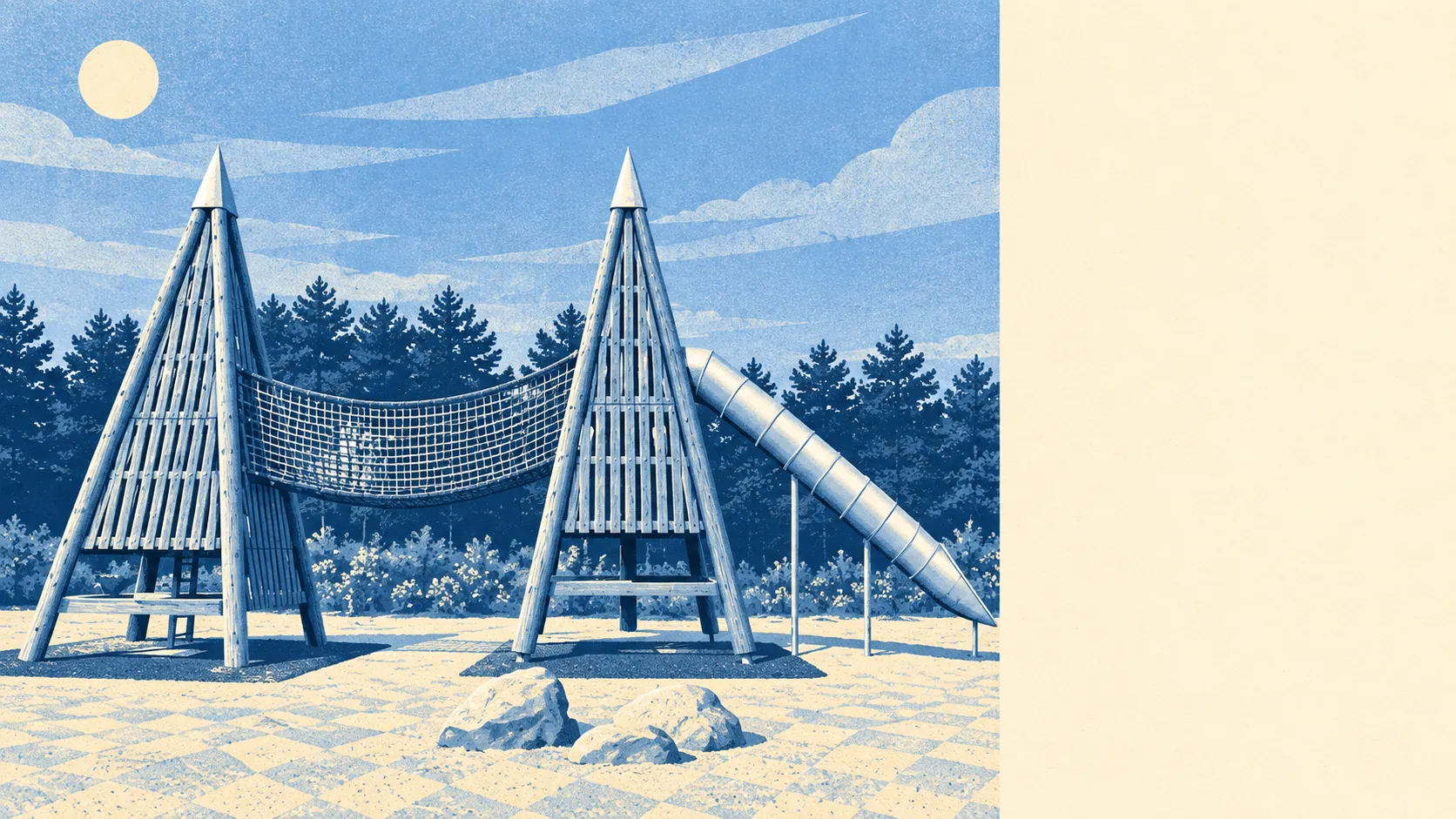
The area around Bordon is forest and heath with a town in the middle. Green space is a couple of minutes from most front doors. Water is barely further. The army used the woods for target practice for a century. Nobody here needs to drive anywhere for a walk.
The average home in Bordon is about 140 metres from public green space, with around 25 green spaces within a kilometre. That is closer than most people's nearest bus stop, and the choice is wide enough that dog walkers can go a fortnight without repeating a route.
Water is almost as close. The average home is about 275 metres from blue space, meaning ponds, streams and rivers, with around 36 of them within a kilometre. Headley Mill and the aqueducts carrying the River Wey near Bramshott Court and Headley Park point to where the river runs.
The National Cycle Network is on average about 480 metres from home, and about 54% of postcodes sit close to it. So the bike can get out into the countryside without going on the car roof first.
The high street is modest. The rated-premises data counts 136 shops, 8 pubs and 3 restaurants. That is a town where you can do the weekly shop and have a pint, but a special dinner out will probably mean a drive.
Fine-particle air pollution across East Hampshire averaged about 6 micrograms per cubic metre in 2024. That is a council-area figure, not a reading for any particular street.
The feel of the place comes from what surrounds it. Bordon lies within a royal forest, with the wooded Woolmer Ranges rising between the town and the main London to Portsmouth road, and the Longmoor Army Ranges, a forest firing range, to the south. The villages of Lindford, Standford, Hollywater and Kingsley sit close by, and Headley Down is bounded on two sides by National Trust heathland. The history runs deeper than the barracks. Bronze Age barrows are scattered across Woolmer Down and Long Down, and one of the protected monuments is a gun emplacement at the former Bordon Camp. The landscape here has been used for burials and for artillery, and now it's used for walking the dog.
Homes have room outside too. Bordon has about 76,600 square metres of private garden for every 1,000 residents, which is the fairer measure of outdoor space than the share of land covered by gardens. It fits a housing stock of post-war and later houses built on plots with space behind them.
The valuation list records 332 rateable business premises, with shop premises the largest group and 87 offices after that, followed by industrial and warehouse units. These are premises on the list, not a count of businesses trading today, so an empty unit counts the same as a busy one.
Of the 44 food outlets with a hygiene rating, about 80% hold the top score of five, and none rate at the low end. That doesn't tell you whether the food is any good, only that the kitchens are clean.
For all the forest, none of the area overlaps an area of outstanding natural beauty or a site of special scientific interest, and none of it is ancient woodland. This landscape was shaped by the army and by heathland management rather than protected as scenery, and it is none the worse to live beside for that.
The surroundings are Bordon's greatest strength: forest, heath, water and cycle routes start at the garden gate, which few towns anywhere can match.