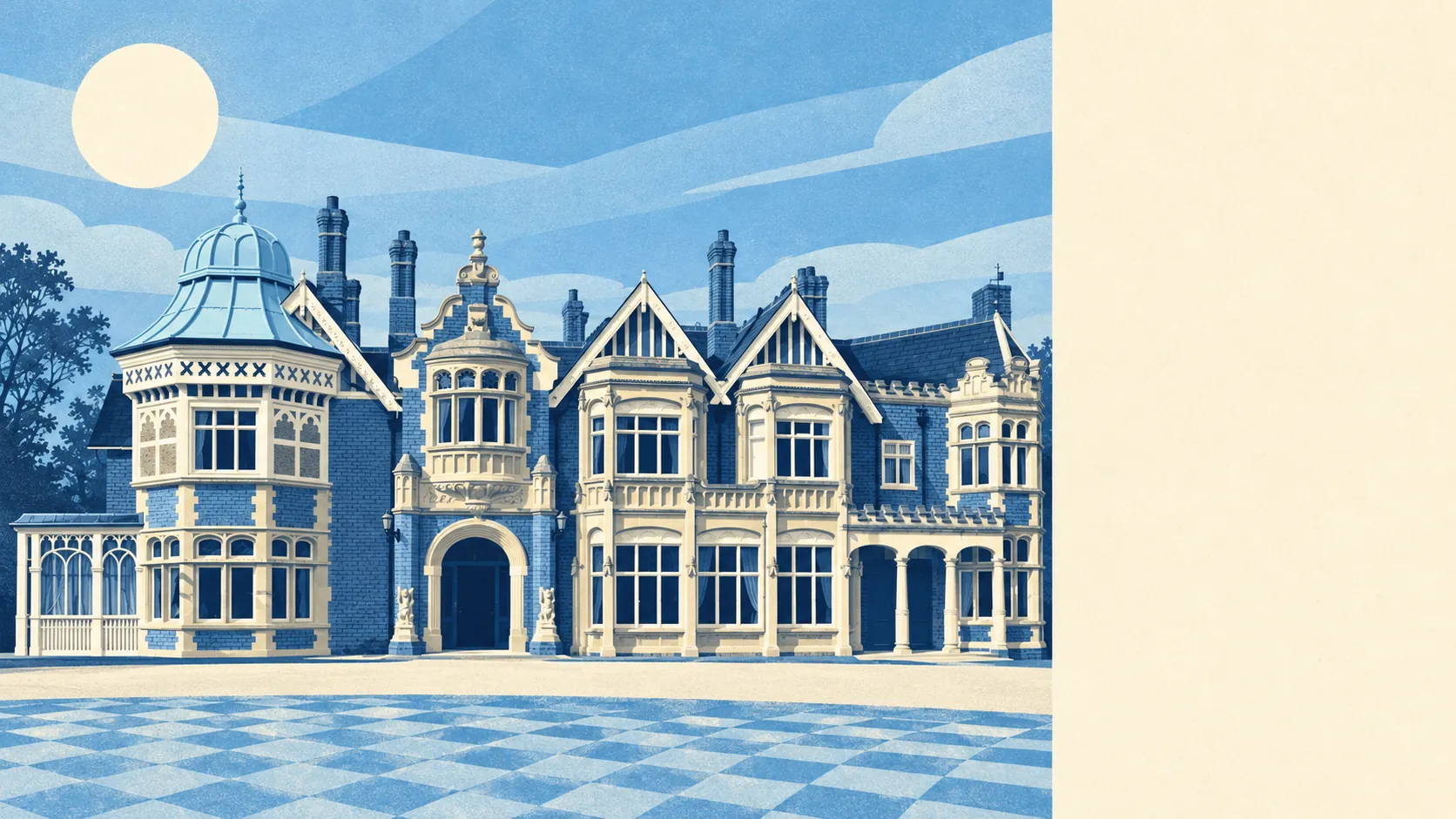
Bletchley is a town of working households in early middle age, most of them homeowners and few of them well off or hard up. About six in ten own their home. Around a fifth rent from the council or a housing association. The typical resident is in their late thirties. Plenty have degrees and plenty have no qualifications at all, so it is a broad mix with no single type at either end.
The 2021 Census is the source for every population figure on this page. It found about 59% of Bletchley's households owning their home, about 17% renting privately and about 21% renting from a council or housing association. Social landlords house more Bletchley households than private ones do, which is unusual in a town where the typical house sells for a family price.
The typical resident is 38, and about 29% of people are aged 25 to 44. That age group is big enough to set the tone of most estates on a weekday morning.
Office for National Statistics modelling puts gross household income, before tax, at about £59,000 on average across Bletchley for the financial year to March 2023. That figure is an average over nine statistical areas, so it smooths over the gap between a detached house in Newton Leys and a flat in Fenny Stratford, and no national figure is given here to compare it with.
Families are a large part of the picture without taking it over. About 20% of households are couples with children, and about 15% are lone parents with children. Between them they fill a good share of the three-bedroom houses that make up most of the stock.
Living alone is common too. About 25% of households are one person, and within that group about 12% of all households are a single pensioner. So the semi-detached street with a scooter on every drive also has an older resident living alone two doors down.
Qualifications vary just as widely. About 27% of residents hold a degree, about 21% have no formal qualifications, and only about 2% are full-time students. Neither the graduates nor the people who left school early make up most of the town.
About 82% of residents described their health as good or very good in the Census. For the wider Milton Keynes authority, the rate of deaths that could have been prevented is similar to the England figure, and so is smoking, at about 11% of adults. Both are city-wide measures set against England, and neither describes Bletchley's residents in particular.
Bletchley's population is about as ordinary as Milton Keynes gets, a mixed town that sits close to the middle on nearly every measure. A buyer who wants to fit in will find it easy here, and anyone hoping to stand out will find little to measure against.