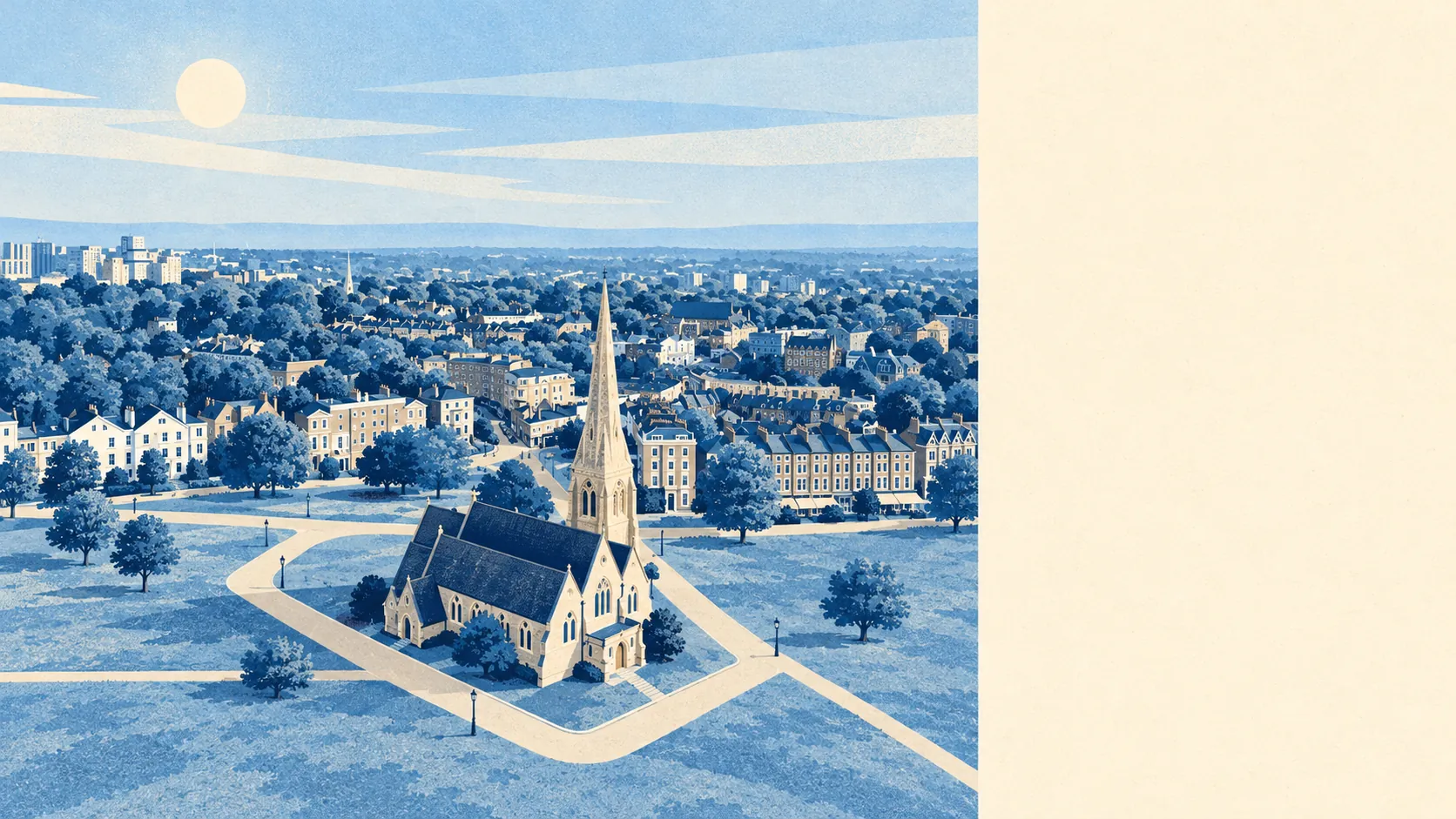
Blackheath comes out above average, and it does it by putting a vast open common at the end of most roads, a thing the rest of inner south-east London mostly had to give up. Day to day it is a commuter place in the week and a Georgian postcard at the weekend, with about half the homes owned and half rented. It is right for people who want central London within reach and grass within sight, and who can live with somebody else having a say over their windows.
That point about windows is meant literally. There are 375 listed buildings around Blackheath, 19 of them Grade I and 27 Grade II*, and two conservation areas. Historic England has 10 of those listed buildings on its Heritage at Risk register, so even the grand stock has some patients. Swapping sash windows, changing a front door or adding a rear extension here can mean listed building consent or a conservation officer, and a loft conversion that would pass without comment in an ordinary suburb gets read closely. Vanbrugh Castle and Morden College set the standard, and the extension you had in mind gets judged against them.
Getting about is easy. Blackheath station and Westcombe Park both run National Rail services into central London, and Lewisham, Lee and Kidbrooke stations are close at the edges. On the bus side, 197 stops average about 396 departures each on a weekday and 21 an hour at peak. With that many buses, waiting mostly means choosing one. The Department for Transport's 2019 model put the nearest town centre 11 minutes away by public transport. That was before working life changed: at the 2021 census, 53% of working residents here worked from home, 9% took the train, 6% the bus and 16% drove. Gigabit broadband reaches 71% of premises and superfast 99%, and every postcode gets a 4G or 5G signal from at least one operator.
Flood risk is Blackheath's weak spot, and mostly from water arriving from above. Of the area's postcodes, 24% are rated high on at least one flood indicator and 22% medium, and those indicators include surface water. The Environment Agency's river-and-sea flood zones cover far less: about 2% of postcodes are in Zone 3 and 3% in Zone 2. The agency has recorded 22 flood events, the most recent in 1968, when a main river overflowed its channel. Being on high ground is a comfort that the drains don't always get to share.
Schools are one of Blackheath's best points. The seven primaries in the district average a maths score of 107 at the end of primary school, and the five secondaries average an Attainment 8 score of about 48. Ofsted rates 37 of the 40 graded settings here good or better, 11 of them outstanding. The John Roan School and Thomas Tallis School are the local secondaries, and All Saints' Church of England Primary School Blackheath is among the primaries. For a family, schools are the main reason to pay the mortgage.
On safety, the Metropolitan Police recorded about 107 crimes per 1,000 residents in the year to May 2026. That is about 9% below the Greenwich average of 118. Vehicle crime makes up 7% of the total against 5% nationally, so it is car owners who get the slightly worse end of it.
The Land Registry puts the typical sale price at about £540,000 over the twelve months to May 2026. Flats went for around £450,000, terraces about £646,000 and semis £720,000. Detached houses reached £1,400,000, from just 15 sales, so each one is close to a local event. The most common council tax band is C, and 14% of homes are in bands A or B.
Renting costs about £1,950 a month across the Greenwich area as of April 2026, up about 4% on a year earlier. That figure is an Office for National Statistics average for the whole borough, so homes facing the heath are unlikely to come cheaper.
The council-tax valuation list shows what the housing is really like: 55% flats, 27% terraced, 12% semi-detached and 4% detached, with 30% built before 1930. The postcard is Georgian, but more than half the front doors here open onto a shared hallway. About 73% of homes heat with mains gas and 9% are electric-only. On energy certificates, 59% of rated homes reach band A to C.
About 50% of households own their home. The median age is 38, old enough to have a pension and young enough to still be renting. Modelled gross household income averaged about £81,000 in the financial year to March 2023, which helps explain the price of a terrace.
The surroundings are where Blackheath beats almost anywhere this close to central London. The average home is about 110 metres from green space, and water is about 580 metres away. The heath runs straight into Greenwich Park, the Long Pond is by the park gate, and people have flown kites on the heath for long enough that on a good afternoon it looks like half of south-east London has come to keep the tradition going.
Blackheath is worth buying into for anyone who wants the heath and Greenwich Park as a back garden, a good school nearby and a train into town, and who will put up with planning officers looking over their shoulder. A buyer looking at a basement flat on a street the surface-water maps have shaded is making a riskier choice than the view suggests. Anyone set on a detached house they can extend in any direction will find the rules and the prices against them, and Kidbrooke or somewhere further out is a better match. Everyone else gets a very large lawn they never have to mow.