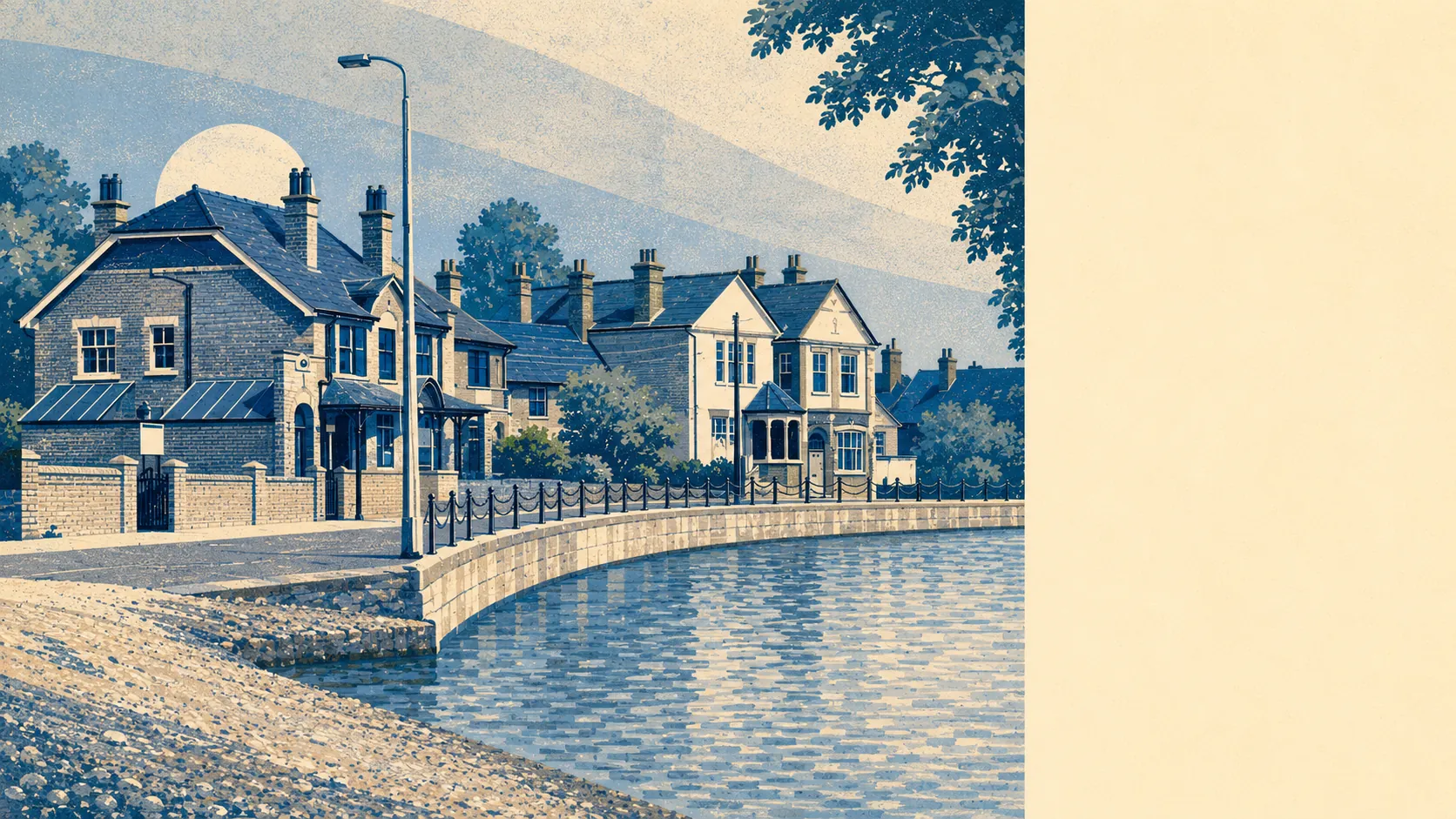
For most houses in Bishopstoke, yes, with the usual permissions rather than a heritage battle. The village carries eleven listed buildings, all of them at the gentlest grade of protection. There is a single conservation area, covering the historic core. Hundreds of planning applications pass through the wider area each year, so this is plainly a place where people build. The freedom is real, but it is not unconditional, and which house you own decides how much paperwork stands between you and the extra bedroom.
Take the listed buildings first, because they are the strictest cases and the fewest. All eleven sit at grade two, the tier that covers the majority of protected buildings nationally and applies the lightest touch of the listing regime. There is nothing at the higher grades here, no grade one and none of the middle tier, which means the village has no untouchable showpieces where every alteration becomes a negotiation. If you happen to own one of those eleven, listed building consent applies to changes inside and out, and the sensible order of events is to talk to the council before you talk to a builder. For everyone else, and that is almost every house in Bishopstoke, listing simply does not enter the conversation.
The conservation area is the other constraint worth knowing. There is one, wrapped around the old part of the village, and living inside its boundary can add a layer of consent that an ordinary street does not carry. Conservation status is designed to protect the character of an area rather than to freeze it, so it tends to bite on the visible things, the frontage, the roofline, the trees, more than on a discreet extension out the back. Whether your plot falls inside that boundary is the single fact worth checking before you assume anything, because two houses a street apart can face very different rules.
In practice this splits the village into two experiences. A typical unlisted home outside the conservation area enjoys the standard permitted development freedoms, the modest extensions and loft conversions that do not need a full application, subject to the normal size and position limits that apply everywhere. A listed home or one inside the historic core needs consent for work that a house on a newer street would not, and the smart move there is to design with the constraints rather than against them. The busy flow of applications through the area shows that plenty of owners get schemes approved, so a constraint is not a closed door. It is a form to fill in and a design to justify.
None of this replaces checking your own address. Listing, conservation boundaries and the finer points of local planning policy are decided plot by plot, and the only reliable answer for a specific house is the council's own record for that house. What the village-wide picture tells you is the odds, and here the odds are decent. Light heritage load, one small protected core, and a planning system that is clearly processing work rather than refusing it.
So the verdict is middling in the best sense. Bishopstoke gives you more freedom to alter a home than a heritage-heavy town would and less than a blank-slate new estate, which for most buyers is the comfortable middle. Check whether your house is one of the eleven or sits inside the old core, and if it is neither, extend away with the usual permissions and get on with it.