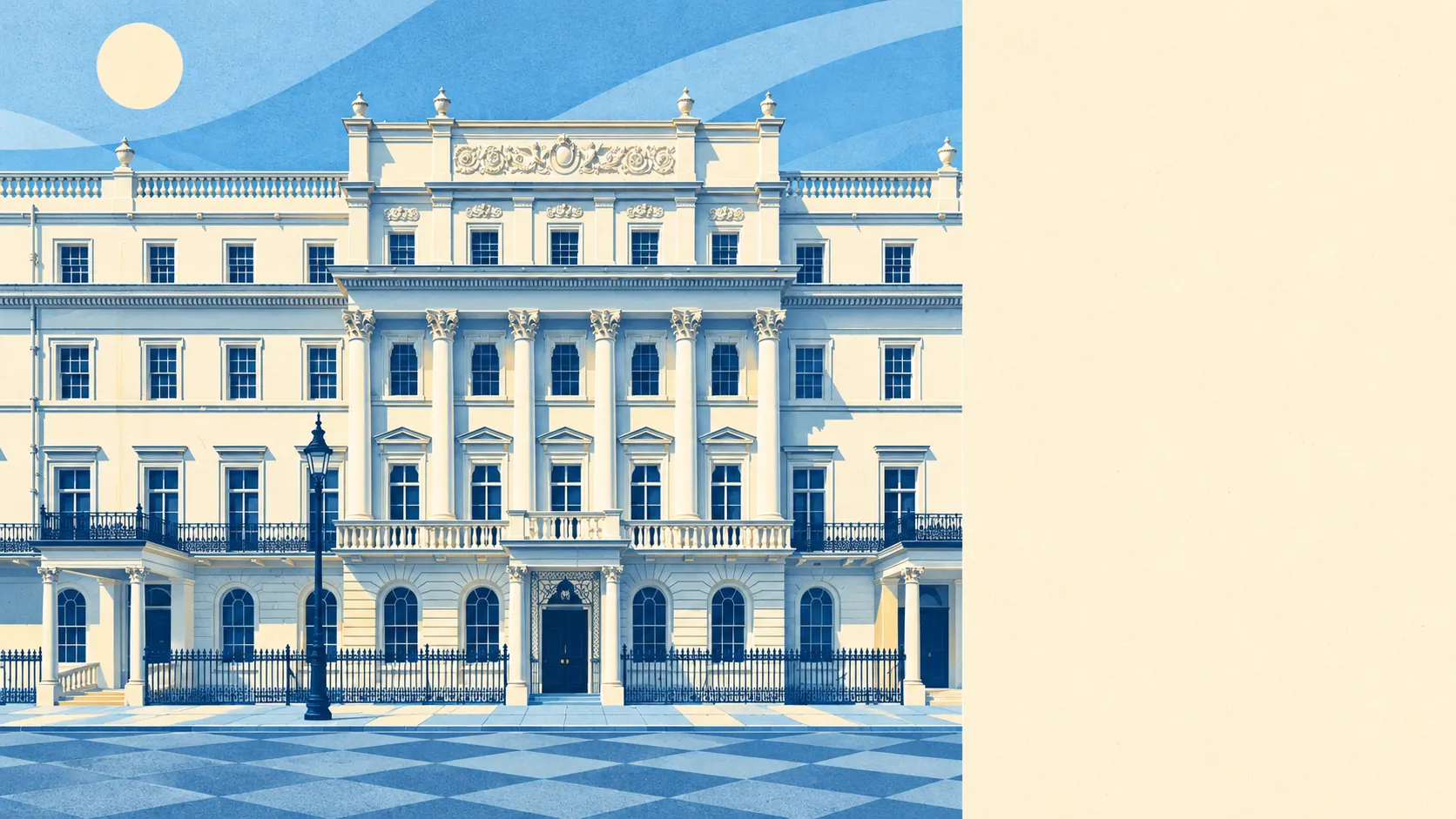
Yes, but only with a lot of permission, and often not at all. Hundreds of buildings are listed. Conservation areas cover the streets around them. Most homes are flats, which come with fewer automatic rights to begin with. In Belgravia an extension is a negotiation, and you will rarely be the one setting its terms.
Historic England lists 794 buildings in Belgravia. Of those, 51 are Grade I, 84 are Grade II* and 659 are Grade II. Listing protects the whole building, including the interior, the staircase and the plasterwork, so changes that would be routine elsewhere, such as moving a wall, replacing windows or lowering a floor, can need listed building consent on top of planning permission. Doing such work without consent is a criminal offence, so this is more than a matter of paperwork. Grade I and Grade II* buildings get the closest attention. Grade II is the most common grade, and even Grade II is a legal designation with real force.
Twenty-two conservation areas fall within the box drawn around the area, Belgravia's own among them. Inside a conservation area, the council controls demolition, and changes to the street front of an ordinary unlisted house are also restricted. Many of the small works that would go ahead without asking in a suburb need an application here. The terraces were designed to be seen as a continuous whole, and the planning system is there to keep them that way.
Wanting changes is clearly not the issue. Westminster's planning register shows 2,402 applications in the area between April 2024 and June 2026, and 1,013 of them were made in the last twelve months. That is a lot of paperwork for a place where very little visibly changes. The obvious explanation is that most of the work happens indoors, in basements and out of sight, and each piece of it still needs a form.
The ground needs as much thought as the planners. The British Geological Survey puts all of Belgravia in shrink-swell class 3, which means clay that expands when wet and contracts as it dries. In practice, any new foundation, basement or rear extension needs a structural engineer's design and foundations deep enough to cope with movement. This is ordinary engineering for London, and it should not alarm anyone, but it does belong in the budget from the start.
Three listed buildings in the area are on Historic England's Heritage at Risk register. That means they are in poor condition, and repairing them may attract grant support and will certainly attract close scrutiny. They are not a risk to anyone buying the house next door, but they show how much attention old buildings receive here.
In practical terms, permitted development rights, the national allowance for small extensions without a full application, apply to houses but not to flats. About 81% of homes on Westminster's valuation list for the area are flats. Conservation-area status trims those rights further, and listing switches them off for the works it covers. The realistic starting assumption is that anything visible needs consent, and that much of what is invisible does too. Check the Historic England register and the council's planning history for the exact building while your offer is still being drafted. Those records tell you whether you are buying a project or a building to look after.
Belgravia offers very little freedom to extend or alter a home. You can enjoy owning one of its buildings, but it was finished long ago and the planning system expects it to stay that way.