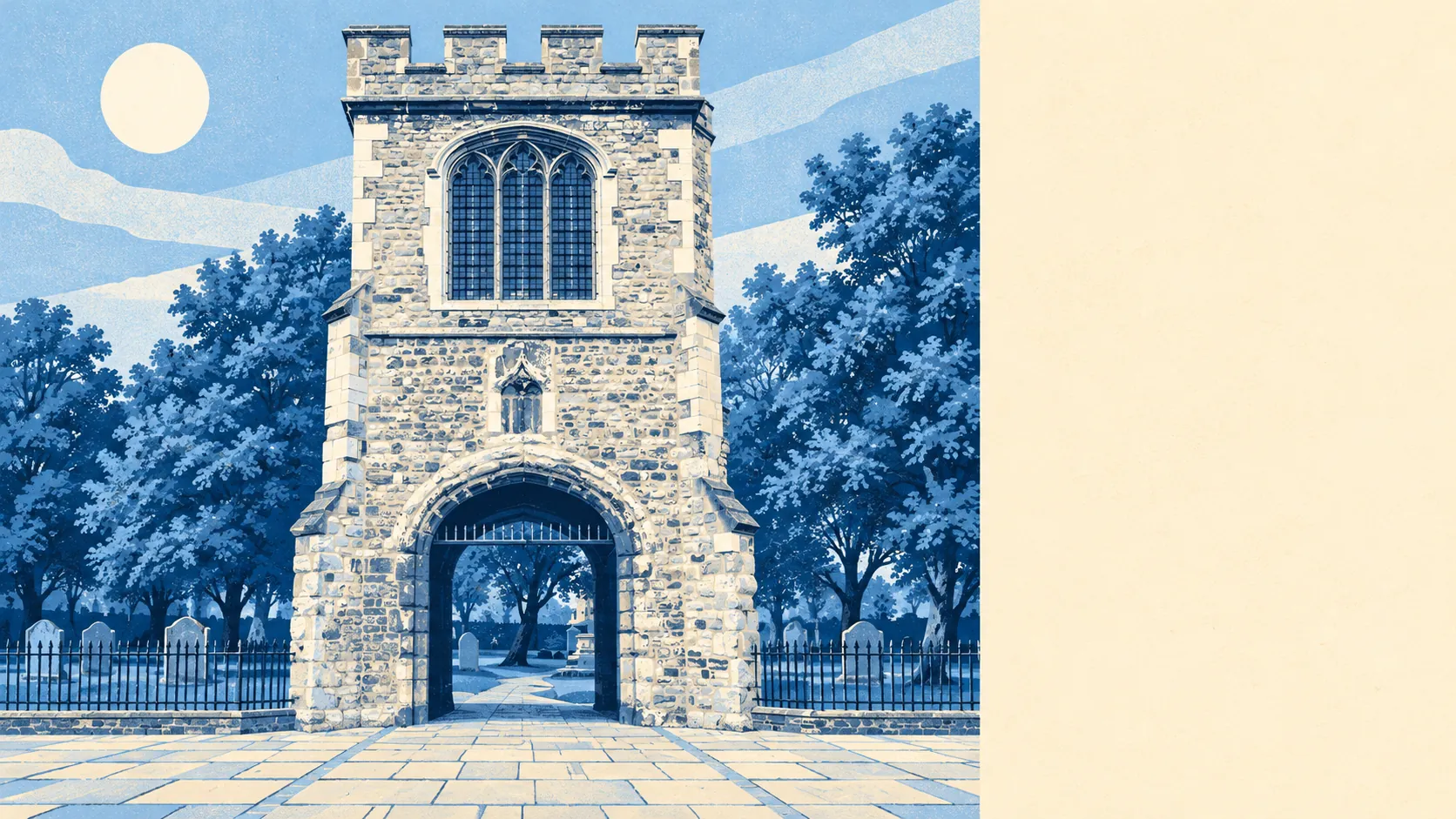
Usually yes, if you own a house and it sits outside the old town centre. The heritage protection is small and bunched together. Hundreds of neighbours apply for planning permission every year. The bigger limits are the clay underneath and the fact that most homes here are flats. Your planning officer will care far less about your extension than your structural engineer will.
There are 18 listed buildings in the Barking area. Three are Grade I, one is Grade II* and the other 14 are Grade II. Listing covers the whole building, inside and out, so even small changes, a new window or a removed wall, need listed building consent on top of any planning permission, and the council will judge the work against the building's history before your plans. Eighteen buildings in a town this size is a short list, and the odds are very good that your house is not on it.
Three conservation areas cover parts of the town: Abbey and Barking Town Centre, Abbey Road Riverside and Mayfield. Inside them the council looks harder at anything visible from the street, including front extensions, roof changes, replacement windows and demolition, and some work that would be allowed without an application elsewhere may need one here. Check the council's conservation area maps for the exact property, because a boundary can run between neighbouring streets and catch one side of a road and not the other.
There is one scheduled monument in the area, the strictest tier of protection in England. It matters mainly to anyone digging or building on land right next to it.
What the neighbours are doing is the best guide to what is possible. Barking and its surrounding postcodes saw 1,216 planning applications between March 2024 and June 2026, 518 of them in the last twelve months. That doesn't tell you how many were approved. It does show that a lot of people here are trying, and the council deals with ordinary household extensions all the time.
The ground deserves more attention than the heritage. The British Geological Survey's shrink-swell hazard map puts the whole of Barking at class 3 or above, its highest class here, meaning the clay swells when wet and shrinks when dry. That matters for any extension, because new foundations may need to go deeper than standard, especially near trees, and a structural engineer should see the plans before the builder quotes. About 3% of the area also reaches class 3 for compressible ground, the soft riverside deposits that settle under load. On ground like this, the trench is where the budget goes.
One listed building in the area is on Historic England's Heritage at Risk register. That means the building is in poor condition and its repair may attract grant funding and close attention from the council. It has no effect on an ordinary house nearby, unless you happen to own the building in question, in which case you already know.
In practice, most houses outside the conservation areas can have modest rear extensions, loft conversions and outbuildings under permitted development, the national rights that let householders build within set limits without a full application. Flats don't get those rights, and about 56% of Barking's homes are flats, so for most residents the realistic extension is moving to a house. For anything near the limits, the council's lawful development certificate is the written confirmation that a project needs no permission.
Extending in Barking is middling: the heritage rules leave most houses alone, but heavy clay and a town made mostly of flats limit what most owners can build.