Banwell is where people move to be near Weston-super-Mare without having to admit they live in Weston-super-Mare. The median resident is 51. Four in five own their home. Half the households run two cars or more. That is not a beach town. It is a quiet, older, car-dependent village on the western edge of the Mendip Hills, and it likes things that way.
The housing stock backs this up. Close to seven in ten homes are houses, and more than a fifth are bungalows, which tells you most of what you need to know about who has been buying here. Flats barely register at one home in fifteen. Most of the building happened after the war, though there is a properly old core, with roughly one home in seven predating 1930. On energy, six in ten homes reach band C or better, respectable for a village of this age, but one in seven still sits at band E or worse, and those are the stone-and-solid-wall properties that cost a fortune to heat and can never quite be fixed.
Prices sit where you would expect for that kind of stock. A typical Banwell sale over the past year landed at £320,000. Detached houses pull the top of the market, at around £378,000 across roughly thirty sales, while semis sit near £304,000 and the handful of flats change hands under £190,000. Council tax mostly falls in band C, with more than a quarter of homes in the two cheapest bands, so this is not a place pretending to be grander than it is.
Renting is the minority sport here, and the local yardstick is the wider area rather than the village itself. Typical private rent across the North Somerset area runs about £1,200 a month. In a place where four in five own outright or on a mortgage, a rental coming up is the kind of thing the neighbours notice.
Banwell is safe in the way villages usually are. The published crime rate is roughly 72 incidents per thousand people a year, which sits about nineteen percent below the North Somerset average. Nothing here is going to trouble a house insurer.
Getting anywhere is the catch. Over half the working residents drive to work and a third now work from home, which is just as well, because barely one in a hundred commutes by train and there is no station in Banwell. The nearest are at Worle, Weston Milton, Weston-super-Mare and Yatton. Broadband is the pleasant surprise: gigabit reaches about three-quarters of the village and superfast almost every home. The real daily grind is the traffic, because the A371 and A368 funnel commuter cars straight through the narrow streets, and Banwell has wanted a bypass since roughly the invention of the motor car.
The surroundings are the best thing about the place. Green space sits under four hundred metres from the average front door, with the Mendip Hills Area of Outstanding Natural Beauty clipping the edge of the village and Banwell Caves protected as a Site of Special Scientific Interest. The catch is water. About one in seven addresses falls inside the highest flood zone, a legacy of sitting on the edge of the Somerset Levels, where the drainage ditches do the work the sea would otherwise do for them.
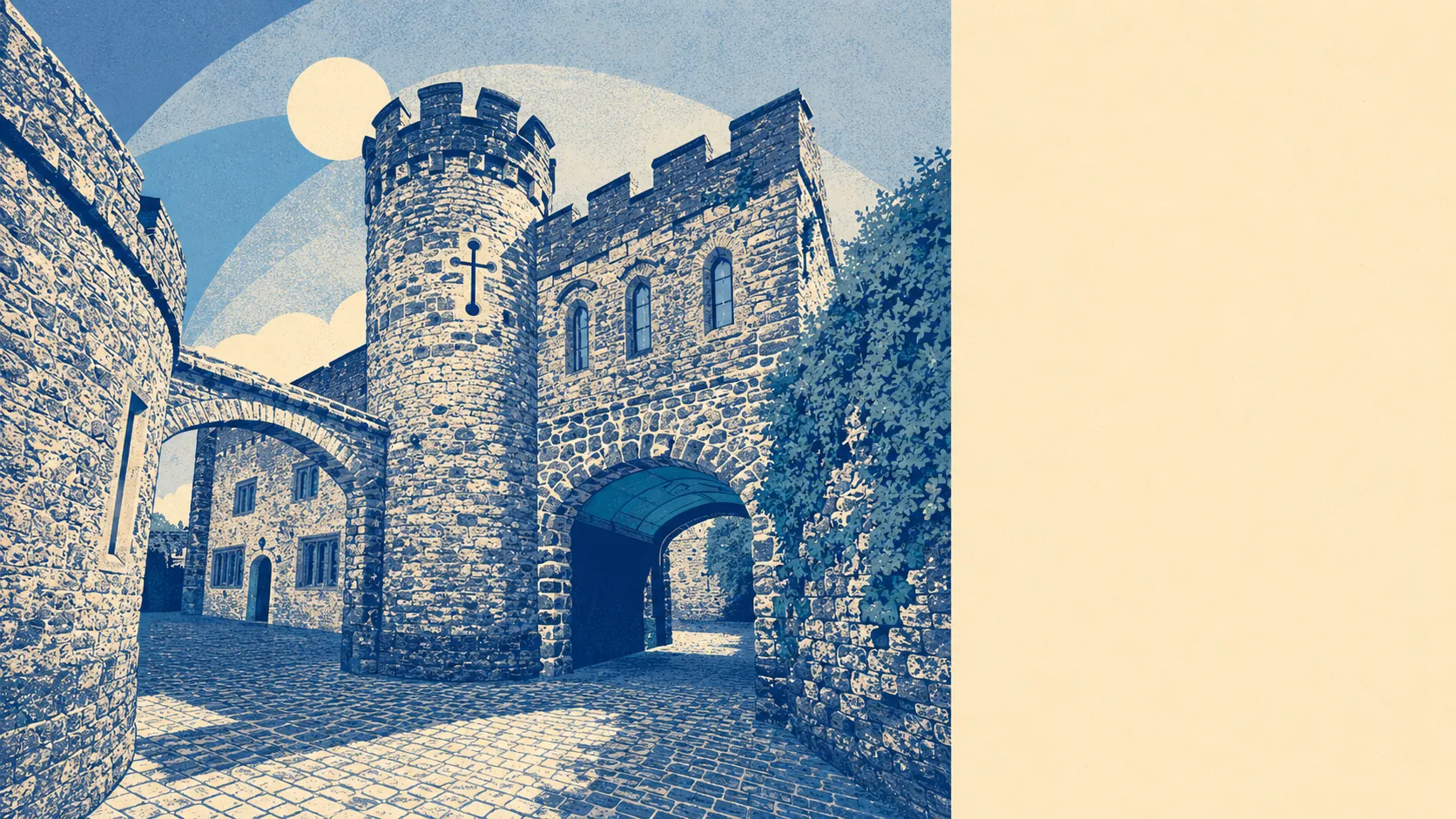
For a village its size, Banwell carries a lot of heritage weight. Forty-four listed buildings, six scheduled monuments and a conservation area covering the old core mean that altering a period home here is a negotiation, not a decision. Banwell Abbey, a bishop's residence reworked by Hans Price in 1870, and Banwell Castle, built in 1847 by a London solicitor and now a hotel, are both Grade II star listed. If you buy one of the older houses, expect the conservation officer to have opinions about your windows.
The character follows from the numbers. Four in five households own their home, the typical household income is about £54,000, and with a median age past fifty this is a settled, middle-of-the-road village rather than a young one. People come here and stay, which is why so little of it ever comes up for sale.
It suits a particular buyer. If you want a house with a driveway, countryside on the doorstep, a fast internet connection and no intention of relying on a train, Banwell delivers all four, and the older, quieter rhythm of the place will read as a feature rather than a fault.
It works less well if you are young, carless and after a night out, or if you need to be at a desk in Bristol by nine every morning. The through-traffic will test your patience, and the village goes quiet early. Buy here for the life you have at the weekend, not the one you have on a Tuesday commute.
The village has produced its share of characters. William Beard, a nineteenth-century bone collector, dug so many ancient remains out of the local caves that one reburied skeleton still has its own marked stone in Cave's Wood. William Job Maillard, born here in 1863, won the Victoria Cross as a naval surgeon. There is also an Assyriologist, a shark-angling brigadier, and a footballer who turned out more than a hundred times for Bath City, which is a broad spread of talent for a place this small.
Banwell rates above average overall, and it earns that grade from the ground it sits on rather than anything it has built. The surrounding countryside and green space are as good as it gets, the strongest thing the village has going for it. The schools are the part that drags, sitting stubbornly average, so this is a place you buy for the walk out of the back gate, not the walk to the school gate. Get that trade the right way round and Banwell is a quietly good bet.