The area around Balham is green on every side and busy in the middle. Four commons surround it. Most front doors are a few minutes from grass. The high road is mostly shops, with more restaurants than pubs. No protected landscape anywhere near, and nobody misses one.
Green space is the area's great luxury. The average home in Balham is about 220 metres from public green space, with around 21 green spaces within a kilometre. The big ones are the four commons that box the district in, one to the north, one to the west, and Tooting Bec and Tooting Graveney Commons to the south and east. A neighbourhood this dense has no business being this close to this much grass, and the Victorians who laid it out deserve some credit for leaving the commons alone.
Water is a little further. The nearest blue space is about 640 metres from the average home, with around 6 bodies of water within a kilometre, mostly the ponds and lakes on those same commons.
The National Cycle Network is about 2.7 kilometres from the average home, and no postcodes count as close to it. There is no ancient woodland in the area. Cyclists here build their routes out of the commons and the back streets, which in practice works well enough that few notice the network's absence.
The high road and its side streets hold 252 shops, 28 restaurants and 10 pubs. Balham, on that count, would sooner book a table than stand at a bar.
Wandsworth averaged about 8.9 micrograms of fine particles per cubic metre of air in 2024, a figure for the whole borough.
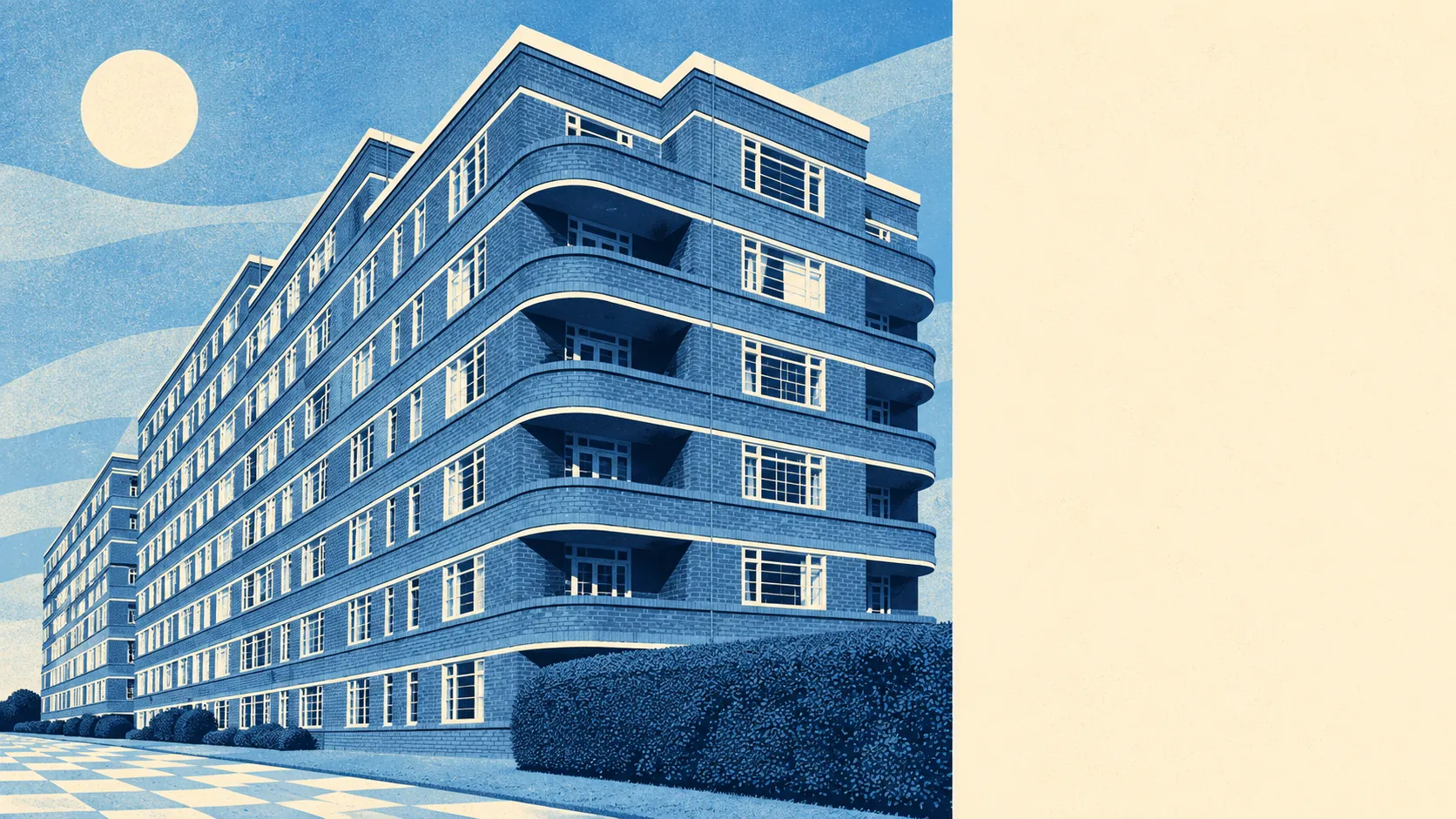
The character comes from the layers. Balham High Road and Balham Hill follow the line of Stane Street, the Roman road to Chichester, and most of the houses on either side went up after the railway arrived in 1856. At the southern end, toward Tooting Bec, Du Cane Court is a 1930s block of Art Deco flats, and the Heaver Estate holds the substantial Victorian houses Alfred Heaver built. The town centre has a Sainsbury's and a Waitrose, each with a car park, and independent cafes and shops in between. It is a Roman road that became a high street and never stopped carrying traffic.
Private gardens are scarcer than the commons suggest. Across Balham there are about 26,900 square metres of private garden for every 1,000 residents, and with most homes being flats, plenty of people have none at all. Ask whether a flat comes with its own outside space or shared access to the garden, because "garden flat" can mean either, and the difference shows up every summer.
The valuation list records 627 rateable premises in the area, of which 250 are shops and 93 are offices, with smaller numbers of restaurants, cafes and other uses behind them. These are premises on the list, some of them empty at any given time, and the count describes the bones of the high street more than what is open today.
The Food Standards Agency has rated 215 food premises in the area, and about 78% hold the top score of five, with about 3% at the low end. Balham eats out a lot and, for the most part, safely.
No area of outstanding natural beauty, site of special scientific interest or ancient woodland overlaps Balham. Its open spaces are London commons, protected by history and use. They do the job of countryside without the official title.
For green space within a short walk, Balham is one of the best-placed neighbourhoods in south London, and the commons more than make up for the small gardens.