Balham is where London's graduates come to settle down, and settling down here costs about £720,000. Seven in ten adults hold a degree. Nine in ten describe their health as good. Sale prices have slipped over the past year without ever getting anywhere near cheap.
The people are the strongest argument for the place. Just under half of households own their home (48%), the typical resident is 32, and the Office for National Statistics models average gross household income across the area at about £90,600 for the financial year to March 2023. Unemployment on census day in 2021 was 3%. The government's deprivation index placed Balham further from the deprived end in 2025 than in 2019, so the neighbourhood has been improving on the official measure while everyone in it was busy at work. The result is a street of young, highly educated, well-paid people, about half of whom are renting from somebody older.
The money is where it hurts. The Land Registry recorded 368 sales in the year to May 2026, at a median of about £723,000. A flat went for around £580,000 across 239 sales, a terraced house for £1,251,249 across 102, and a semi for £1,589,500 across 23. Only four detached houses sold all year, at a median of £2,097,500. In Balham a detached house is a waiting list with a garden. The official house price index has average prices down about 6% in the year to May 2026 and roughly flat over five years, which is a gentle fall from a very high shelf. Band D is the most common council tax band, and 15% of homes sit in bands A or B.
Renting is no escape hatch. A typical private rent across Wandsworth is about £2,600 a month as of April 2026, a borough-wide average from the official price index, and it rose about 4% over the year. Landlords and sellers spent that year moving in opposite directions, and tenants paid for both.
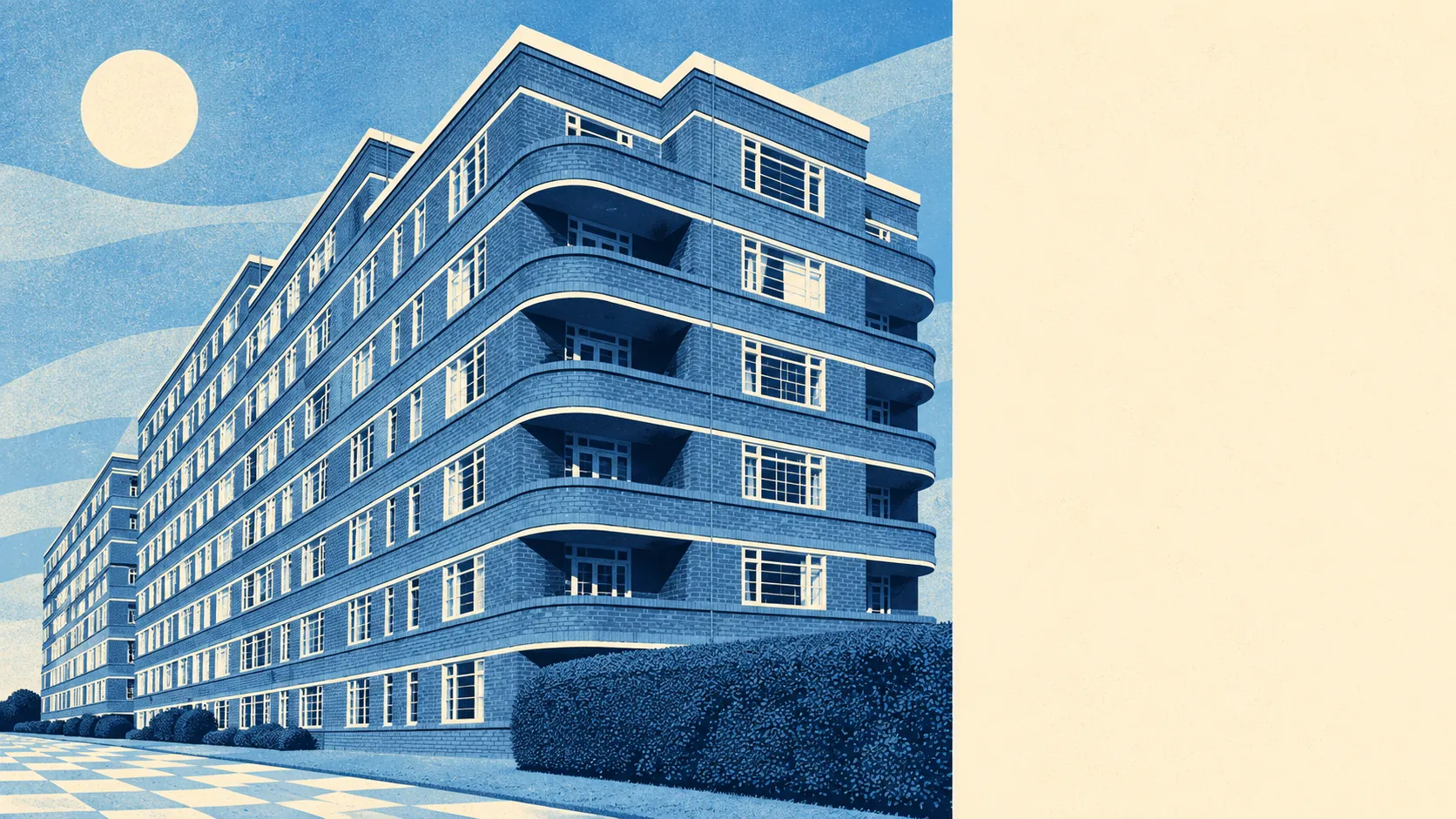
The housing is old and mostly divided. Of every home on the council tax list, 69% are flats, 23% terraced houses, 6% semis and barely 1% detached, and 64% were built before 1930. Most of it arrived after the railway reached Balham in 1856, when the country retreats of the 18th century gave way to streets. About 78% of homes heat with mains gas and 8% rely on electric heating alone. Energy certificates put half the certificated stock in bands A to C, with the rest mostly at D, which is about what a century-old terrace manages once someone has fitted double glazing and stopped there.
Altering any of it takes patience. There are 52 listed buildings, one at grade II* and 51 at grade II, and 14 conservation areas in and around the district, including Abbeville Road, Hyde Farm, Culverden Road and the Heaver Estate, the substantial houses Alfred Heaver built on the grounds of the old Bedford Hill House. In those streets, windows, doors and roof changes need permission first, and the conservation officer has seen every dormer you are about to propose.
Flooding here comes from the sky. None of Balham's postcodes fall in the Environment Agency's river-and-sea flood zones, and there is no recorded historic flooding. Counting every flood indicator including surface water, though, about 21% of postcodes carry a high-risk flag and 24% a medium one. That is a heavy downpour finding the low point of a street, and the low point is usually somebody's basement flat.
The green space is extraordinary. Balham is ringed by four commons, Clapham to the north, Wandsworth to the west, and Tooting Bec and Tooting Graveney to the south and east, and the average home is about 220 metres from green space, with around 21 green spaces within a kilometre. Water is about 640 metres away on average. Most residents can reach grass in the time it takes the kettle to boil, and the dog has an opinion about which common.
Safety is better than the borough's. The police recorded about 96 crimes per 1,000 residents in the year to May 2026, roughly 8% below the Wandsworth average of 104. The mix leans to the petty: anti-social behaviour makes up 22% of recorded crime against 16% nationally, and vehicle crime 12% against 5%, while violence and sexual offences are 19% against 35% across England and Wales. The thing most likely to be targeted is the car parked outside, and 46% of households have the last laugh by not owning one. The Metropolitan Police charged someone in about 10% of cases over the same year, a force-wide figure for all of London.
Getting about is easy. Balham station handles both National Rail and the Northern line, with Clapham South and Wandsworth Common close by, and there are 77 bus stops in the area, averaging 275 weekday departures each and running at weekends everywhere. The 2021 census caught two in three workers at home, in a year when much of the country was doing the same, so that figure is a snapshot of an odd moment. Gigabit broadband reaches about 93% of premises and every postcode has at least superfast. Nobody here can blame the router for anything.
Balham is right for the professional who wants a commute, a common and a crowd like them, and can carry a £580,000 flat or a £2,600 rent without flinching. Families after space, and anyone who wants their money to buy square metres instead of company, should look further out along the line.
Balham is a very good place to live among the right people, and a hard place to afford living among them. Buy it for the neighbours, and expect to pay for every one of them.