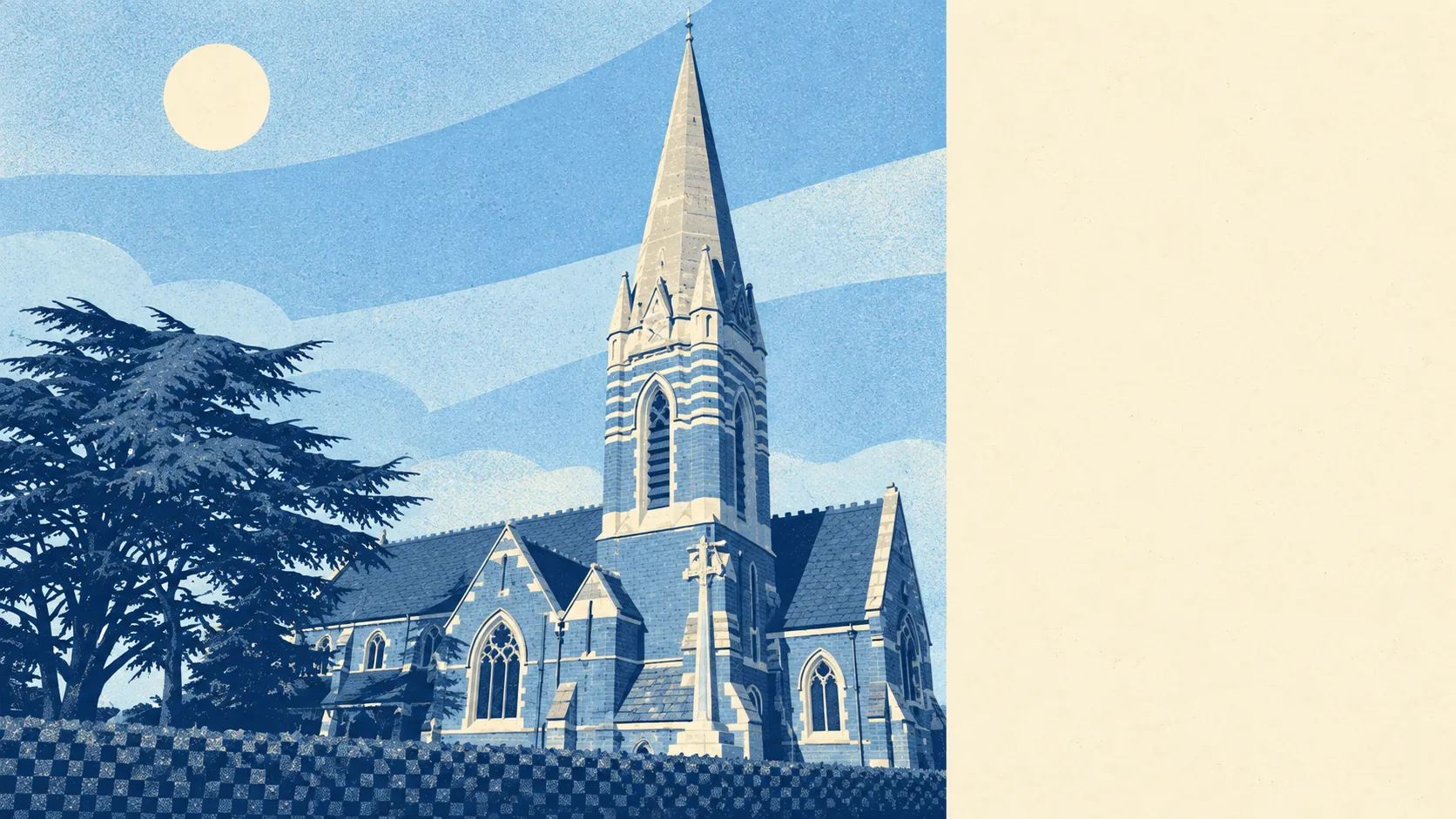
Yes, but read the flood map first. About seven in ten households own their home. There's a park within a short walk of almost every door. Roughly a third of postcodes carry a high flood flag on at least one measure. A comfortable village with damp feet.
The housing is mostly semis and detached houses, and not much of it is old. Of the 2,910 homes on the council-tax list, 29% are semi-detached, 26% detached, 16% terraced, 24% flats and 4% bungalows. Only 14% were built before 1930, so anyone after a village of crooked beams will need to look hard, and mostly in the conservation areas. Energy ratings are respectable. Of the 1,759 homes with a certificate, 57% sit in bands A to C, 37% in band D and 7% in band E or worse. About 81% of homes are on mains gas and 7% rely on electric-only heating. That 7% is the group to ask about at a viewing, because the heating bill turns up whether the estate agent mentions it or not.
On the Land Registry's last twelve months to May 2026, the typical sale price was about £419,000, across 72 sales. That average blends very different buyers. The 13 flats went for a median of £230,000, the 18 terraced houses about £358,000, the 25 semis about £435,000 and the 16 detached houses about £702,000. So the same village contains the first-time buyer's starter flat and the family with a double garage, and they pay the same council. The most common council-tax band is D, and only 12% of homes fall in bands A or B, so there aren't many cheap bills to go round. Surrey Heath charges about £2,585 a year for Band D.
Renting costs about £1,500 a month. That's the typical private rent across the whole Surrey Heath area as of April 2026, not a Bagshot-only figure, and it is up 2% on a year earlier. By size, a one-bed averages about £1,030 a month and a three-bed about £1,610. Landlords advertising Bagshot as a snip compared with the rest of the borough are working from a different set of numbers.
The published crime rate is a sore point. Over the twelve months from June 2025 to May 2026, police.uk records put Bagshot at about 90 crimes per 1,000 residents, around 44% above the Surrey Heath average of about 63. The mix leans towards the nuisance end rather than the frightening end. Antisocial behaviour makes up 21% of recorded crime here against 16% nationally, other theft 11% against 7%, and public order offences 10% against 7%. Violence and sexual offences, the broad category that tops the list almost everywhere, is lower here than nationally, at 32% against 35%. Surrey Police charges about 11% of the crimes it records, a shade under the national 12%. None of that makes Bagshot dangerous. It does make it a village that sees more hassle than its postcode suggests, and a village rarely puts that in its welcome sign.
Bagshot Rail Station is in the village, and in the 2021 Census only 2% of workers commuted by train. Driving accounted for 47% and working from home for 40%, which says most of the commuting happens in a car or a spare bedroom. The 11 bus stops in the area average about 50 weekday departures, with roughly three to four buses an hour at peak times. The Department for Transport's 2019 modelling puts the nearest town centre about 15 minutes away by car and 26 by public transport, and the nearest hospital about 15 minutes by car against 39 by bus and train. Broadband is the easy win: gigabit-capable connections reach about 95% of premises, and every postcode gets 4G or 5G from at least one operator. The downside of the old coaching route is that it's still a road. Every postcode sits near road noise of 65 decibels or more.
Flood risk is where Bagshot needs careful reading, and the two ways of measuring it tell different stories. Counting postcodes flagged on at least one flood indicator, surface water included, 32% carry a high risk, 26% medium and 45% low. The Environment Agency's river-and-sea flood zones are narrower: 8% of postcodes fall in Zone 3 and 5% in Zone 2, with about 17% inside the zone modelled for future climate change. There are no historic flood records for the area. The ground itself behaves. The geology hazards, from shrinking clay to landslides, all sit in the lowest classes, and radon is in the lowest band. The green space is the reason people stay. The nearest park or green space averages about 130 metres from the door, there are about 21 within a kilometre, and water is roughly 235 metres away. Bagshot Park and South Hill Park are right there, and for once the brochure isn't exaggerating.
Heritage rules exist but they're light. Bagshot has 11 listed buildings, one of them Grade II* and ten Grade II, including 44 High Street and Benjamin's Mount. Three conservation areas cover Bagshot Park, Bagshot Village and Church Road. If your house is inside one, windows, extensions and the colour of the front door become the council's business. Outside them, most of the post-war housing can be extended without anyone checking the joinery.
The people are settled and comfortable. About 72% of households own their home and the median age is 43. Modelled gross household income averaged about £70,000 in the financial year to March 2023. That's a village of people who have made a decision and are sticking with it. Only 2% of households are overcrowded, and the neighbourhood sits in the less-deprived half of the country by a comfortable margin.
Bagshot suits a family who wants a semi with a garden, a primary school close by, and heathland on the doorstep, and who works from home or drives. Bagshot Infant School and Connaught Junior School are local, and the typical walk to the nearest primary is about eight minutes. Ofsted rates 147 of the 159 graded settings across Surrey as good or outstanding, which is the county's figure rather than the village's, but it's reassuring. People who work from home get the fast broadband and the parks without having to sit on the A30.
It suits people less well if they want a train-based life, somewhere quiet at night, or an old house with character and nobody watching. Anyone buying a flat near the high street should expect the antisocial behaviour figures to be closer to home than the average suggests. Anyone buying at the lower end of the valley should get a flood search done before paying a solicitor, not after.
The place has always had better neighbours than it lets on. Brian May, Queen's lead guitarist, is linked to a well-known guitar shop in Bagshot. Steve Backshall, the naturalist and television presenter, and the actress Moiya Kelly also appear on the village's list of notable people. The name itself goes back to 1165, when Bagsheta was a wood, and the royal hunting lodge that became Bagshot Park still sits behind the trees. Bagshot started as a wood and has held on to most of it.
Bagshot is an average-to-decent place to live, and people who choose it carefully do well. Its real strength is the surrounding area and green space: parks a couple of minutes away, heathland beyond them, and ground that doesn't move. Its weak spot is flood risk, with the crime rate a close second. Buy on the high ground, well back from the traffic, and the village gives you most of what the green belt promises. Buy without checking and you'll learn about the drains the hard way.