Yes, if you can live with a town that peaked in the Tudor period and never saw a reason to try again. Fewer than four in ten homes reach the better energy bands. Around eight in ten households own outright or on a mortgage. The typical resident is in their early fifties. This is not a place that is going anywhere, and that is the entire pitch.
The housing is houses. The council-tax valuation list, which covers every dwelling rather than only the ones with a recent energy certificate, puts detached homes at around 38% of the stock and bungalows at about 22%, with semi-detached at roughly 19% and terraces at around 10%. Flats account for about 6%, which in practical terms means there is almost nothing here for someone who wants a small first purchase with no roof of their own to maintain. Around 26% of the stock predates 1930. On energy certificates the pattern is what old stone and old brick produce: about 33% sit in band D and roughly 30% sit in band E or worse, against around 37% reaching band C or better. Only about 43% of homes run on mains gas, and close to 9% are heated by electricity alone. An electrically heated period house in the Somerset Levels is a running-cost decision, and it is one worth making before the second viewing rather than after the first winter.
On price, the Land Registry's last twelve months put the typical sale at around £345,000 across 52 transactions. The spread by type is wide and predictable: detached homes at a median of about £500,000, semi-detached around £330,000, terraces around £315,000, and the handful of flats that changed hands at roughly £203,000. Council tax sits mostly in band D, which is the modal band here, and only about 22% of dwellings fall in bands A or B combined. There is no cheap end of this market so much as a slightly less expensive one.
Renting is a thin option. Across the Somerset area, typical private rent runs at about £990 a month as of April 2026, which is the local-authority figure rather than anything specific to these streets. With owner-occupation as high as it is locally, the rental stock in the villages themselves is small, and the figure is best read as a regional guide rather than a promise of what will be available.
Safety is where Axbridge and its surrounding villages are genuinely, boringly excellent. The published crime rate over the twelve months to May 2026 is about 53 per 1,000 residents, which sits roughly 43% below the Avon and Somerset average. That is not a rounding artefact or a quiet quarter. It is the settled position, and it is the single strongest thing this area has going for it.
Connectivity is the trade. About 53% of working residents drive to work and roughly 37% work from home, while train and bus commuting together account for well under 1%. That is not a failure of ambition, it is the timetable. The nearest stations are Weston-super-Mare, Worle, Weston Milton and Highbridge and Burnham-on-Sea, all of which require the car first. Department for Transport modelling from 2019 puts the nearest town centre at around 21 minutes by car and closer to 50 by public transport. Broadband, at least, does not punish you for the postcode: gigabit-capable service reaches around 84% of premises and superfast around 94%, with only a fraction of a percent below the universal service obligation. Mobile coverage from at least one operator reaches essentially every premise.
The water is the thing to understand properly here. On the postcode indicators, which take in surface water as well as rivers, about 8% of postcodes carry a high rating on at least one measure and about 30% carry a low one. Under the Environment Agency's river-and-sea flood zones, roughly 6% of the area falls in zone 3 and about 3% in zone 2, though the climate-adjusted extent rises to around 35%. Around 36% of postcodes sit within the Axe Brue Internal Drainage Board area, which is what living on drained moorland means in administrative terms. Set against that, green space is close and generous: open space averages around 600 metres away, water around 184 metres, and roughly 17% of the area falls inside the Mendip Hills National Landscape.
Heritage is the constraint that will surprise people. There are 191 listed buildings in the area, five of them Grade I and 13 Grade II star, and five conservation areas covering Axbridge itself, Weare, Stone Allerton, Christon and Loxton. Nine scheduled monuments sit within the same bounds. What that means in practice is that a great many homes here cannot be altered on the owner's timetable or to the owner's taste. Windows, doors, roof coverings and anything visible from the street become a conversation with the planning department rather than a decision. Buyers who want to extend, reglaze and reconfigure should check the designation before they check the survey.
The character follows from all of that. Around 79% of households own their homes, the median age is 51, and median gross household income runs at about £56,700 for the financial year to March 2023. This page covers the surrounding neighbourhoods too, including Compton Bishop and Loxton, which share the same pattern of old stone, tight lanes and a car on the drive.
Who it suits: people who have finished moving. Buyers who want a house with land around it, who work from home or accept the drive, and who are untroubled by the nearest railway platform being someone else's town. Families do reasonably here, with Axbridge Church of England First School Academy and Weare Academy First School in the area, and Ofsted has graded 101 of 140 inspected settings across Somerset as good or better.
Who it does not suit: anyone who needs a train, anyone buying a first flat, and anyone whose plan involves knocking through the back of a period cottage and putting in bifold doors. The last group in particular tends to discover the conservation area boundary at the worst possible moment.
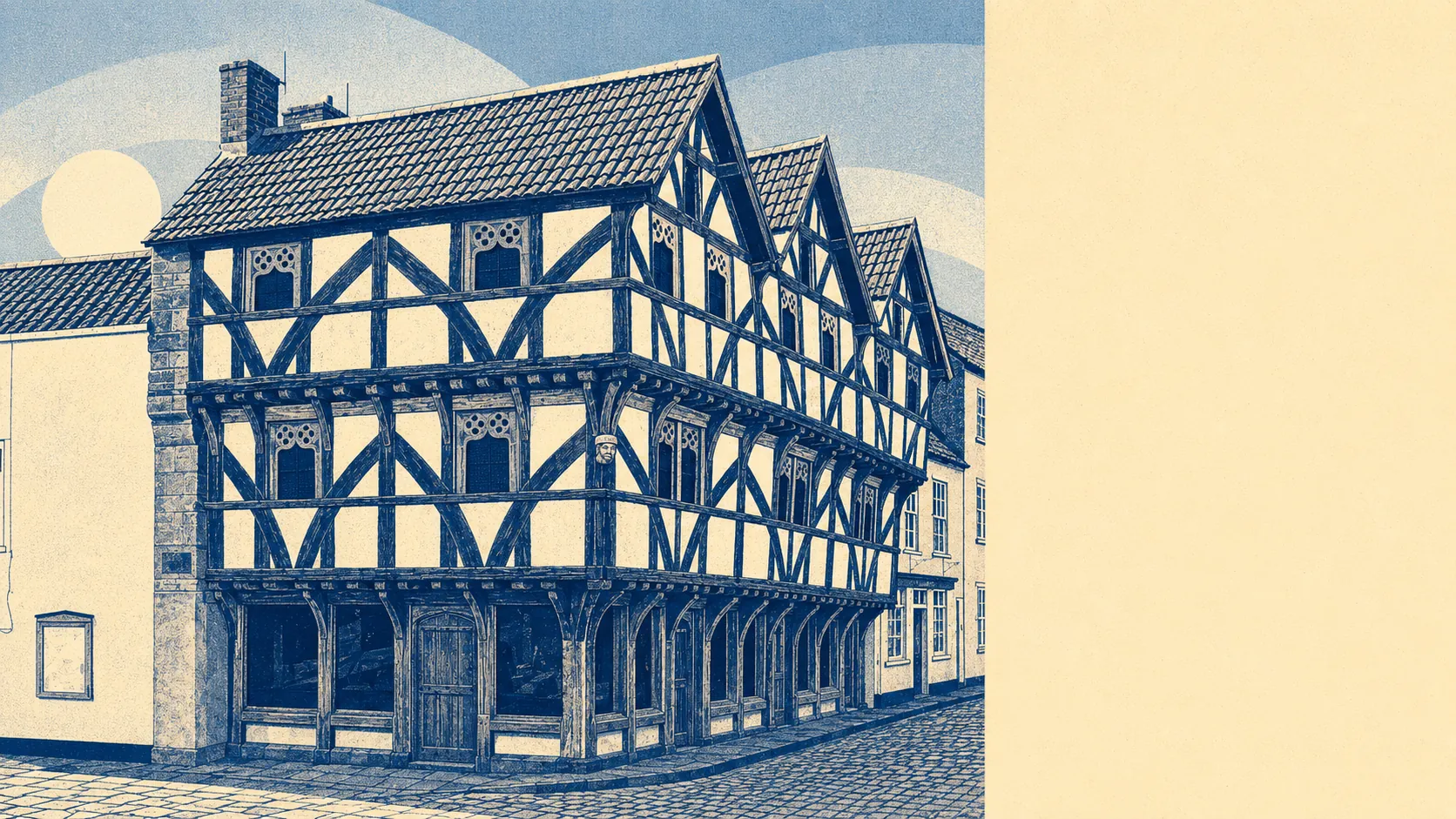
The town's roll of former residents runs to the miniature painter William Naish, the naval officer Maurice Vidal Portman, Admiral Sir Mark Pizey, who ended up running the Indian Navy, and the conductor Timothy Reynish. King John's Hunting Lodge, the Tudor building that is neither a lodge nor connected to King John in any useful way, is the museum. Axbridge grew rich on cloth, sent members to Parliament under Edward the First, then declined so completely that nobody could afford to demolish anything. That accident of poverty is why the square looks the way it does.
Axbridge is a good place to live, and better than most of its neighbours at the thing that matters most day to day. Its real strength is safety, which is not close. The weak spot is the freedom to alter your own home, where the listings and the conservation boundaries mean the house you buy is broadly the house you keep. Buy it for what it already is, or buy somewhere with fewer opinions about your windows.