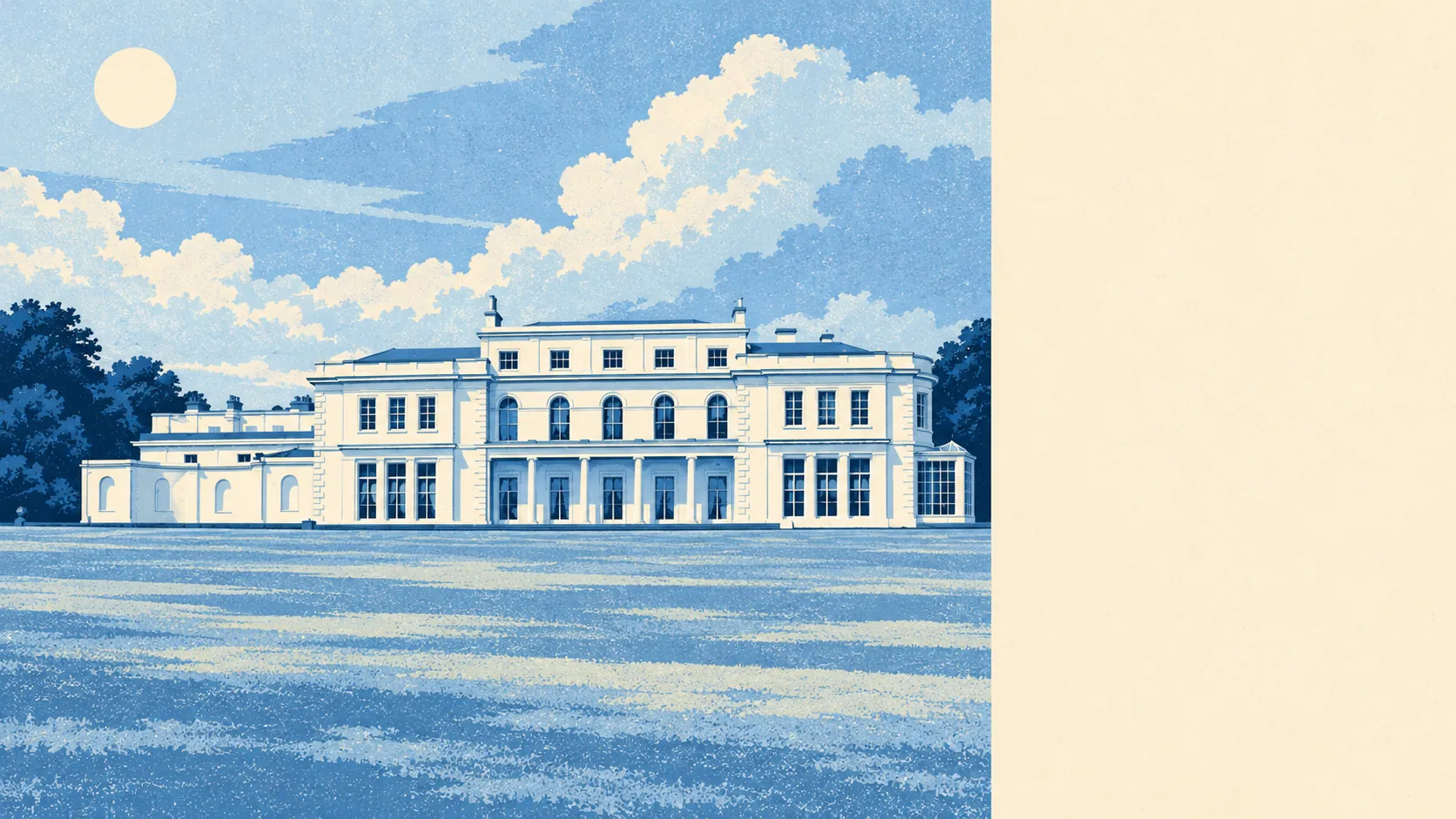
Acton is easy to get out of every morning and hard to change once you own a piece of it. Buses arrive at most stops about twenty times in the peak hour. Most homes can get gigabit broadband. Then the conservation areas start, seventeen of them, and the extension you planned has to get past them first.
Getting about is where Acton earns its keep. Acton Main Line is on the Elizabeth line, and Acton Central and South Acton add more rail on top of that, with East Acton, North Acton and West Acton each carrying the name too. The buses do most of the work. There are 234 stops in and around the area, averaging about 390 scheduled departures each weekday and roughly 21 in the busiest hour, and every one of them has a weekend service. The Department for Transport's modelled times from 2019 put the nearest town centre about 13 minutes away by public transport, though bus timetables age faster than walking distances do. At the 2021 census about 42% of working residents worked from home, and only about 3% took the train to work. Gigabit broadband reaches about 82% of premises and superfast about 98%, and every postcode gets 4G or 5G from all the operators. About half the households here have no car, and with buses that frequent, few of them seem to miss one.
The cost of all that convenience shows up when you try to alter a home. Historic England lists 293 buildings in and around Acton, nine of them at Grade II* and the rest at Grade II. Seventeen conservation areas overlap the area, including Bedford Park, Acton Green, Acton Park, Creffield, the Glebe Estate and Acton Town Centre itself, and ten local entries are on Historic England's Heritage at Risk register. Inside those boundaries, windows, roofs, front walls and rear extensions all become things the council has a view on. Ealing still logged 2,037 planning applications here between April 2024 and July 2026, so people keep trying. The paperwork is the price of living on a street somebody thought worth protecting.
The people are young, mostly renting and well paid. About 36% of households own their home, and around six in ten rent, privately or from a social landlord. The median resident is 34. The Office for National Statistics models gross household income at about £74,700 a year for the financial year to March 2023, averaged across the area, and about half of adults hold a degree. That is a lot of earning power living in flats that belong to somebody else, and it is the landlords, not the tenants, who get to decide when the kitchen gets done.
On safety, the Metropolitan Police's published figures put Acton's rate at about 129 recorded crimes per 1,000 residents in the year from June 2025 to May 2026, roughly 8% above the Ealing average of about 120. Anti-social behaviour makes up about 25% of recorded crime, against about 16% across England and Wales, and vehicle crime about 9%, against 5%. Violence and sexual offences, the largest category almost everywhere, make up a smaller share here than nationally. Ealing's average already includes Acton, so the gap is partly Acton being measured against itself.
Flood risk here is about rain more than rivers. About 18% of postcodes carry at least one high-risk flood indicator once surface water is counted, and about 16% a medium one. In the Environment Agency's river-and-sea flood zones the figure is under 1% of postcodes in each zone. In Acton the water that worries a surveyor arrives from the sky and runs down the road.
The Land Registry recorded 343 sales in the twelve months to mid-May 2026, at a median of about £494,000. That middle figure hides two markets. Across 241 flat sales the median was £400,000, while 56 terraced houses went for a median of about £903,000, 41 semis for about £1,000,000 and the five detached houses that changed hands for about £1,065,000. Moving from a flat to a house in Acton is where most savings plans run out. Band D is the most common council-tax band, and about 17% of homes are in Bands A or B.
Renting costs about £2,060 a month, which is the typical private rent across the whole Ealing area in April 2026, so it covers far more than these streets.
The housing is mostly flats in older buildings. On the council-tax valuation list, which covers every home, about 70% are flats, 16% terraced, 11% semi-detached and 2% detached, and about 45% were built before 1930. Of the homes with an energy certificate, about 66% are rated A to C and about 7% E or worse. About 62% heat with mains gas and about 20% with electricity alone. A pre-war conversion on electric heaters is the flat that looks cheapest when you view it and stops looking cheap when the first bill lands.
Green space is close to almost every front door. The average home is about 110 metres from the nearest green space, with around 42 of them within a kilometre, and the nearest water is about 700 metres away. Acton Park gives its name to one of the conservation areas, so even the greenery comes with protection.
Acton has a habit of producing people who went on to be talked about. Jamal Edwards, who founded a music media platform that launched a generation of British artists, grew up on the Friary Park estate in North Acton. The writer Peter Ackroyd grew up in East Acton. The rapper Mathangi Arulpragasam took her stage name from "Missing in Acton" and keeps putting the place in her lyrics. Not many places get famous for someone being absent from them.
Acton works for renters and first-time flat buyers who commute, or don't, and want the whole of west London a bus ride away without paying for a car. People who want to buy a period house and reshape it should expect a long correspondence with the council, and anyone who needs a detached house with a drive will find five sales a year and a lot of competition.
Acton is an ordinary place to live with an exceptional way out of it. Take it for the trains, the buses and the broadband, and accept that the house will mostly stay the shape it was when you bought it.