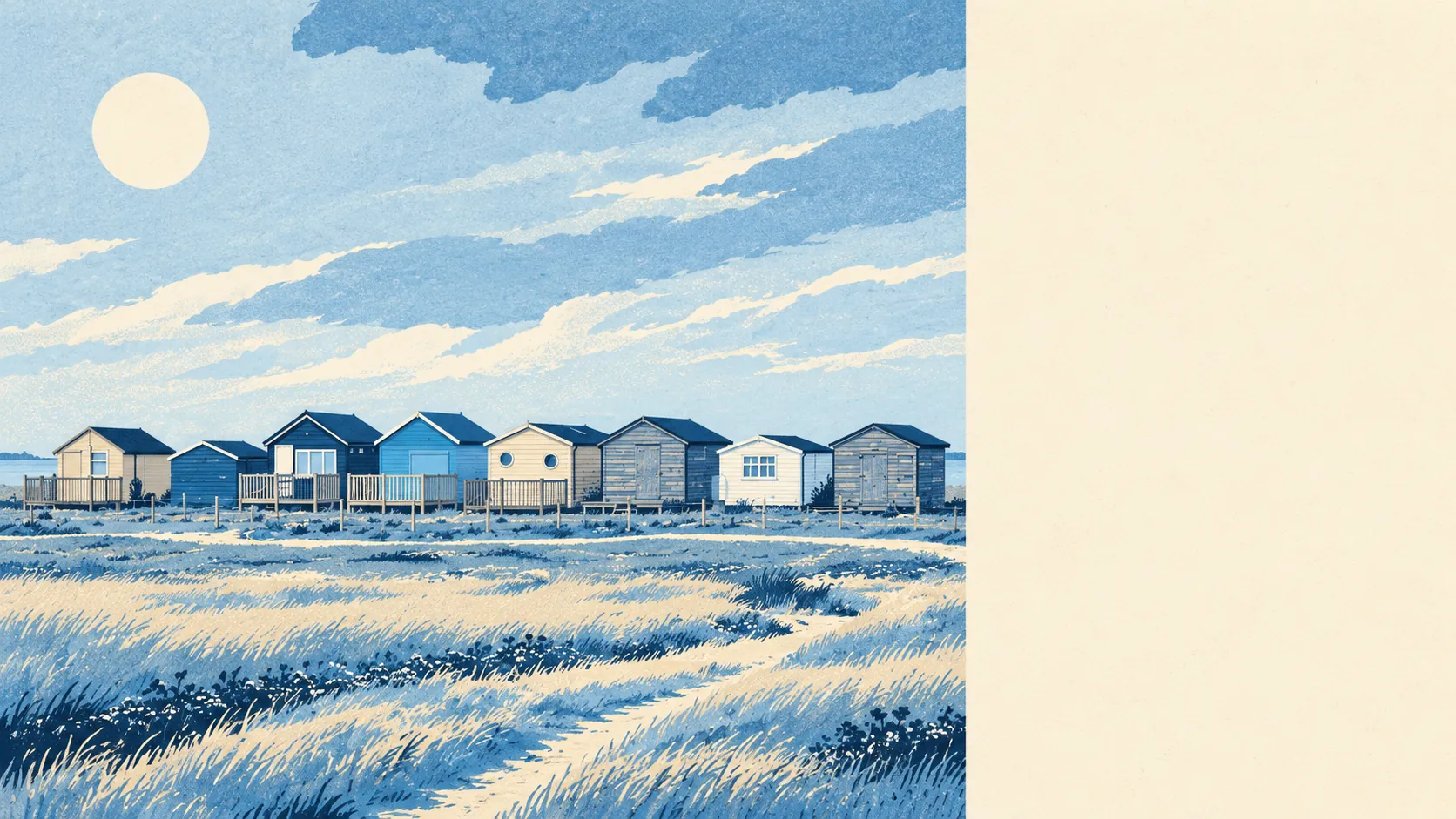
Yes, if you like Whitstable at arm's length. Nearly everyone owns their home. Almost three in ten houses are bungalows. Hardly anyone takes the train to work. Yorkletts chose comfort over footfall a long time ago and hasn't regretted it once.
The housing is detached or bungalow, with very little in between. On the council-tax valuation list, about 31% of homes are detached and 29% are bungalows. Semis make up 20%, terraces 6%, and flats barely exist at 1%, so a neighbour upstairs is closer to folklore than a real risk. Only 19% of homes were built before 1930, which will disappoint anyone after period drama and please anyone who wants a boiler that starts first time. Of the homes with an energy certificate, 52% are in bands A to C, 29% in D and 19% in E or worse. About 65% heat with mains gas. The 6% on electric-only heating are the ones to ask about at the viewing, before the first January bill does the asking for you.
The Land Registry recorded nine sales in the year to October 2025, at a median of about £547,500. Nine sales make a thin market, and one big house can drag the figure whichever way it likes. The eight detached sales had a median of about £524,000. Houses here change hands at roughly the speed of an estate agent's diary with nothing in it. For council tax, band C is the most common, and 19% of homes sit in bands A or B, so most people here pay the middle rate and like it that way.
Renters are a small minority, and the rent figures come from the wider area rather than from Yorkletts itself. Typical private rent across the Canterbury area was about £1,270 a month as of April 2026. Across that area, a flat went for about £1,015 and a detached house for about £1,650. Yorkletts has almost no flats, so the cheap end of the Canterbury market mostly isn't on offer here.
Crime is low. Police figures put Yorkletts at about 46 recorded crimes per 1,000 residents in the year from June 2025 to May 2026. The Canterbury area as a whole sits at about 113, which puts Yorkletts roughly 60% below its own council's average. The totals are small enough that a few incidents shift the mix by several points, so don't read too much into which categories top the list. For most of the year, the main local threat is a hedge that's overdue a trim.
This is car country. About 55% of working residents drive to work, 32% worked from home at the last census, and about 3% took the train. Whitstable and Chestfield & Swalecliffe are the nearest stations. The four bus stops get about five weekday departures each, and all of them have a weekend service. Five buses a day is a timetable you can learn by heart and still miss. The Department for Transport's 2019 modelling puts the town centre about 15 minutes away by car and 25 by public transport, and that bus figure is the one more likely to have got worse since. Broadband is better than the buses: gigabit-capable connections reach about 79% of premises and superfast about 92%. All the major mobile operators have 4G or 5G coverage across about 99% of the area.
Flooding needs careful reading. None of Yorkletts falls in the Environment Agency's river-and-sea flood zones 2 or 3. However, about 15% of postcodes are flagged as high risk on at least one flood indicator, including surface water, and 46% as low risk. That means the concern is water running off the land rather than the sea coming in. The coast is about 2.2 kilometres away at the median, and the shoreline management plan's policy there is to hold the line over 20, 50 and 100 years. Every postcode sits in class 3 for shrink-swell clay and for collapsible ground on the British Geological Survey's hazard scale, so a survey that looks properly at foundations is worth paying for. Water is close, at about 455 metres on average. Public green space is less close, at about 1.3 kilometres, and the gardens make up the difference.
Heritage rules barely touch the place. There is one listed building, at Grade II. There are no conservation areas and no scheduled monuments within the village itself. The nearest serious history is a group of medieval salterns out on Seasalter Level, and they have no view on your loft conversion. If you want to extend, replace windows or change a roofline, the planning route is about as unobstructed as it gets in this part of Kent.
The people match the housing. About 85% of households own their home, the median age is 49, and Office for National Statistics modelling puts gross household income at about £57,700 in the financial year to March 2023. That's a settled, mortgage-nearly-paid crowd, the kind who notice a new car on the lane within a day and have views on it within two.
It suits people who want space, a driveway and a garden, and who treat Whitstable's harbour as a place to visit rather than live on top of. Buyers who want a detached house or bungalow with room to extend, and who drive or work from home, will find the numbers on their side.
It won't suit anyone who needs a train, a bus they can rely on, or a pub at the end of the road. First-time buyers hunting for a flat will find there's almost nothing here to buy.
Yorkletts is a good place to live for people who've made peace with the car. Its real strength is the freedom to change your home, because almost no heritage rules stand in the way. The weak spot is flood risk, and that comes from surface water rather than the sea, so check the exact address before you fall for the garden. Whitstable is close enough to enjoy and far enough away that you never have to be part of it.