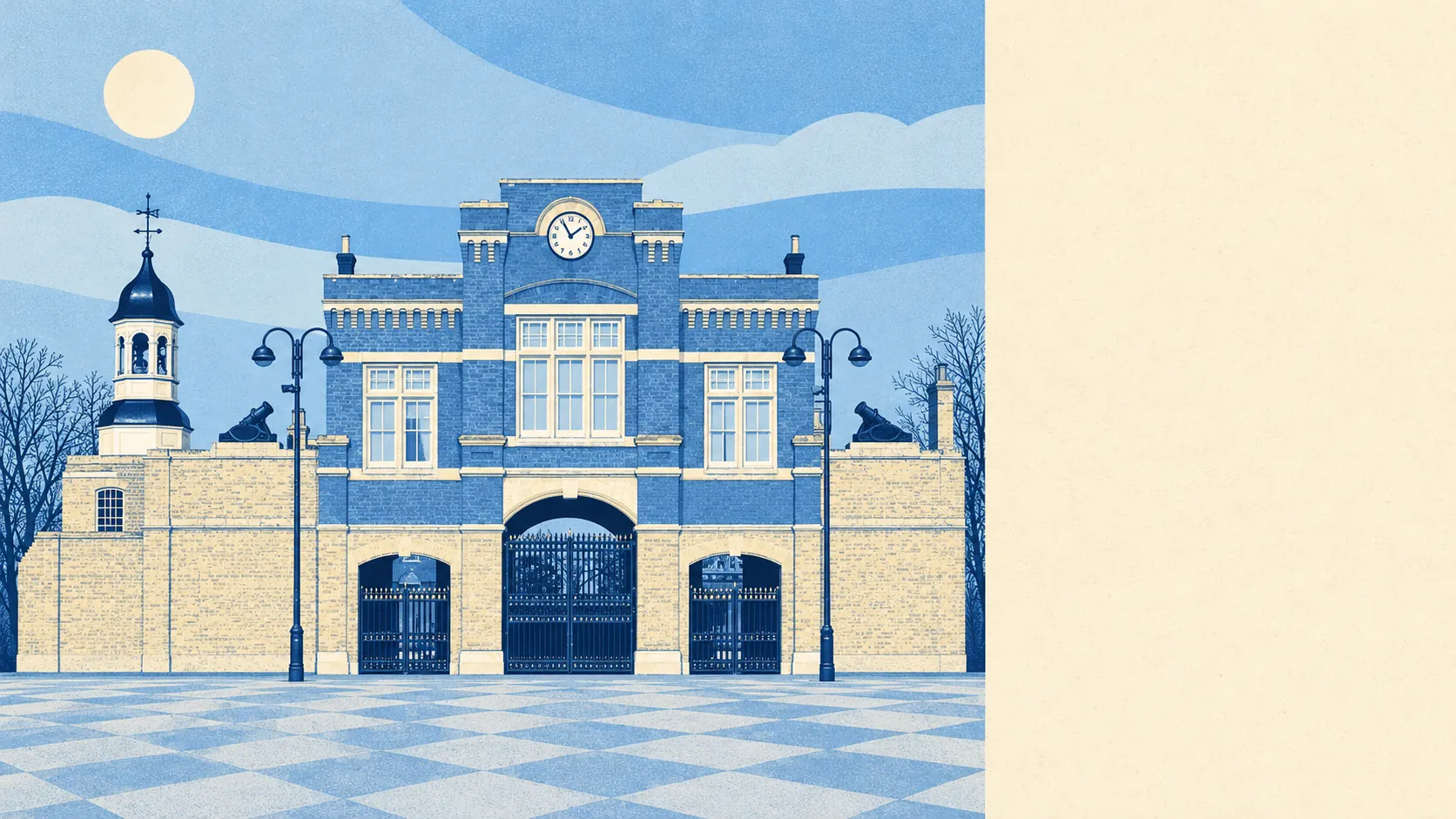
Yes, in most of Woolwich, though the obstacles are not the ones buyers expect. The heritage weighs heavily on a few streets and hardly at all on the rest. There is one conservation area. The clay underneath affects every extension. Most homes here are flats, and flats can do far less without permission than houses can.
There are 131 listed buildings in and around Woolwich: 5 Grade I, 13 Grade II* and 113 Grade II. Listing covers the whole building, inside and out, so almost any change that affects its character needs listed building consent on top of planning permission, and that includes windows, doors, walls and interiors. Much of the listed stock was built for the army and the arsenal, so the owners of listed homes here are dealing with what the military left behind. Most ordinary terraces and post-war flats are nowhere near it.
Historic England records one conservation area within Woolwich's bounds. Inside a conservation area the council can control changes that would otherwise be allowed, such as demolition, some alterations to frontages and work to trees, and a special direction can remove more of the usual freedoms. The council's conservation-area map is the quickest way to find out which side of the line a house is on, so check it for any address you are considering.
Three scheduled monuments are within the area's bounds. Scheduling is the strictest protection there is, and it matters mainly to anyone digging near one.
People here change their homes all the time. The Royal Borough of Greenwich logged 1,851 planning applications for the area between April 2024 and June 2026, and 886 in the most recent twelve months. Those are applications only, a record of people asking, and the count says nothing about how many were approved.
The ground is the constraint that applies everywhere. The British Geological Survey classes shrink-swell risk here at class 3, and the whole of Woolwich reaches that level. Clay at that class swells when wet and shrinks when dry, so an extension usually needs deeper foundations than it would on firmer ground, especially near trees. Ask a structural engineer early, and expect the foundations to cost more than the builder's first quote. The heritage rules affect a few streets, but the clay is under every one of them.
Seven listed buildings in the area are on Historic England's Heritage at Risk register. That means they are in poor condition. Repair work on them may qualify for grant support and will be closely scrutinised. For someone extending an ordinary house a few streets away, they make no difference.
In practice, a house outside the conservation area and not listed can usually use permitted development for a modest rear extension or a loft conversion, and anything larger goes through a normal planning application. A flat is different, because flats do not have the householder permitted development rights a house has, and most changes need the freeholder's consent as well as the council's. On the council-tax list, about 57% of Woolwich's homes are flats, which means the most common obstacle to extending here is that most homes are not houses.
Freedom to extend in Woolwich is middling: easy enough for an ordinary house away from the old military core, harder inside it, and limited everywhere by the clay. If you have a flat, the conversation starts with the freeholder.