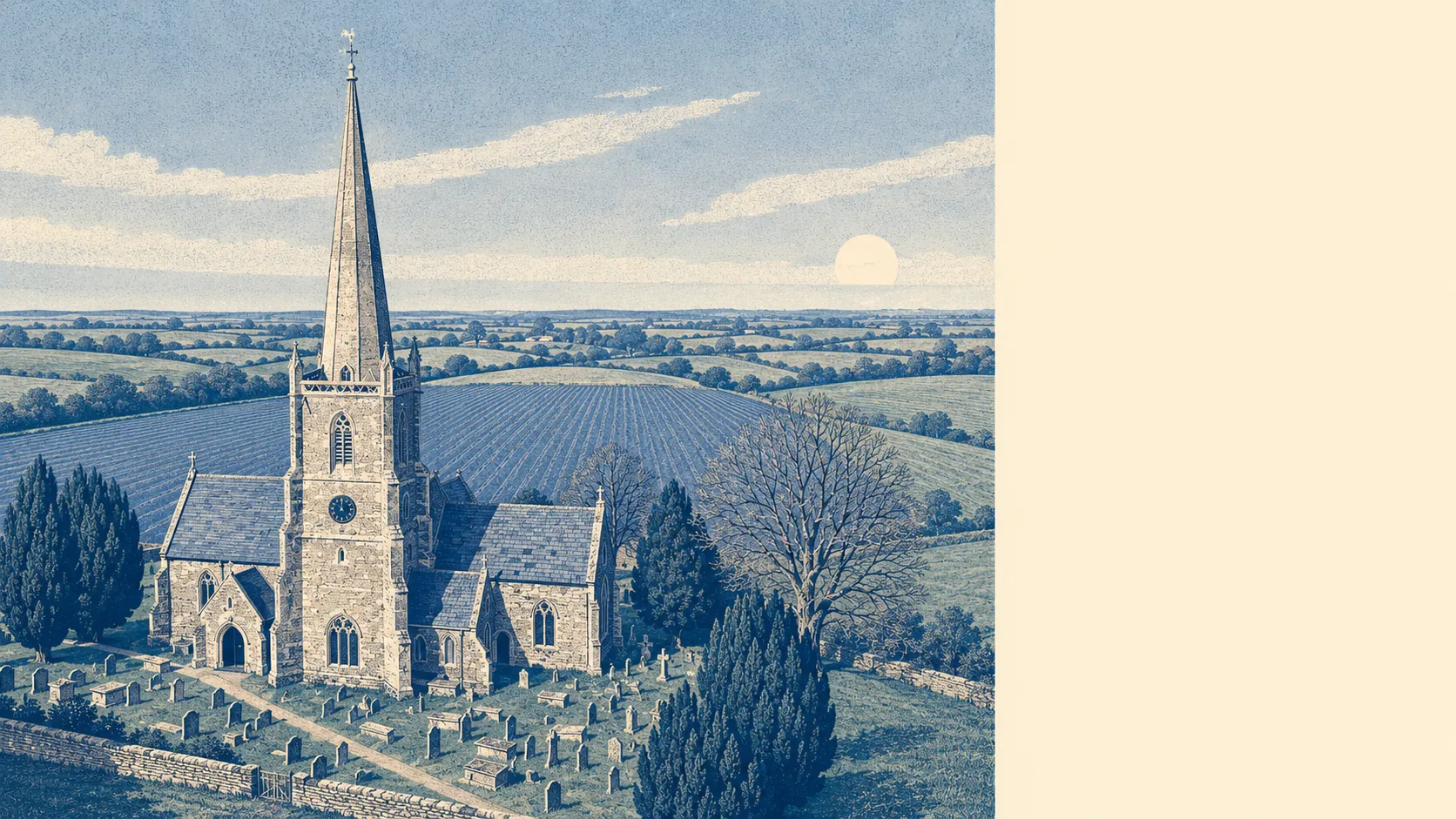
Medieval village, motorway junction, two cars each. There is a duck pond, a 12th-century spire visible for miles, and a 14th-century tithe barn next to the church, and there is also the M4, which does most of the actual commuting on the village's behalf. About four in ten residents work from home. Nearly half drive to work. Almost nobody takes a train. Winterbourne looks like a Domesday village, and it is one, recorded as Wintreborne, the winter stream. It also runs on broadband and petrol, and the sooner you accept that, the more sense the place makes.
The housing is houses. Nearly four in five homes are houses rather than flats, with flats barely one in ten, and the bulk of the stock went up between 1950 and 1982, so the postcard cottages by St Michael's are the minority the estate agents photograph and the semis and detacheds are what you actually buy. On energy, about half the homes rate C or better, roughly a third sit at band D, and about one in five land at E or worse, which is the polite way of saying a good number of them were built before anyone costed a gas bill.
Buying in is a proper family-house price. The typical sale over the past year came in around £430,000 across just over a hundred transactions. Detached houses run to about £525,000, semis to roughly £400,000, terraces to about £378,000, and the handful of flats that changed hands sat near £132,500, which tells you flats here are a rounding error rather than a market. Council tax clusters at band D, and fewer than one in five homes fall in the two cheapest bands, so this is not where you come looking for a bargain rate demand.
Renting is thinner on the ground, and the honest figure is a wider one: typical private rent across the South Gloucestershire area is about £1,450 a month. That is the district number, not Winterbourne's own, and in a village where nearly four in five homes are owner-occupied you should read it as a guide rather than a promise, because most people here bought and stayed.
On safety the published crime rate is about 71 per thousand people, which sits roughly 12 per cent below the South Gloucestershire average. That is the boring, reassuring kind of number, the sort that makes the parish newsletter and nothing else. Whatever anxieties a large village keeps, the crime figures are not carrying them.
Connectivity is the split personality. The broadband is genuinely excellent, gigabit at roughly four in five homes and superfast at nearly every address, so working from home is a solved problem. Getting to Bristol without a car is the unsolved one. The nearest stations, Bristol Parkway, Filton Abbey Wood and Patchway, are all a drive away, public transport to the town centre runs to nearly half an hour against about fifteen minutes in the car, and over half of households keep two cars or more. The wires arrived before the buses did, and it shows.
The setting is the easy win. Green space is close enough to be background rather than an outing, under 200 metres from the average front door with something like fifteen patches within a kilometre, plus the Frome valley and the old Huckford Quarry nature reserve under the viaduct. The catch is water, and it is a real one. About one in five postcodes carry a high flood indicator of some kind, though the strict Environment Agency zone-3 land is only around one per cent. The village sits on a hill for a reason, and the Bradley Brook and the Frome are the reason.
Heritage sits lightly here. There are about seventy listed buildings in the wider area, one of them Grade I and a handful Grade II star including that tithe barn, plus two conservation areas at Church Lane and Hambrook. Most of that is churches, farmhouses and the historic core, so unless you buy into one of those pockets you are not going to need consent for a new window. If you do buy the pretty one by the spire, factor the paperwork in before you fall in love with it.
The neighbourhood profile is settled and comfortable. Nearly four in five own their homes, the median resident is 45, and household income runs to about £70,000. This is a place people move to and then do not move again, the kind of demographic that produces a full village hall diary and a very competitive duck-feeding rota.
If you are a family who wants space, a garden, good broadband and a school run measured in minutes, with two cars on the drive and no intention of apologising for either, Winterbourne fits you almost exactly. It is quiet, green, low on crime, and close enough to Bristol's jobs to be practical.
If you want a high street with actual shops on it, a night out, or a life that does not depend on a car, this is not it. The village has a pond and a spire, not a scene. Chase that here and you will spend your evenings driving, and Filton does the functional-suburb job more honestly while Bradley Stoke does the modern convenience next door without pretending to be anything older than the 1990s.
The village has form for producing people who then went elsewhere. Arthur Austen-Leigh, vicar and cricketer, was rector for fifteen years in the late 1800s and lived here with his children, one of them the writer Lois Austen-Leigh. The cricketer James Bracey came out of here for Gloucestershire and England. The racing driver Joe Fry was born in the village in 1915. Edward Colston, the merchant and slave trader whose statue Bristol argued about at length, is believed to have spent much of his childhood here, which is the kind of local connection a place tends not to put on the welcome sign.
Overall Winterbourne rates above average, around three and a half out of five, and the score is honest about why. The strongest thing about it is the community and comfort, a clear top mark, the settled, safe, well-off village life it does without trying. The weakest is flood risk, and that is the one line you cannot broadband your way out of. Buy the hilltop, check the surface water on the specific street, and you are buying Bradley Stoke's convenience with several hundred more years of history and a duck pond thrown in. Just do not turn up expecting the Chipping Sodbury high street, because that is a different postcode and a different bill.