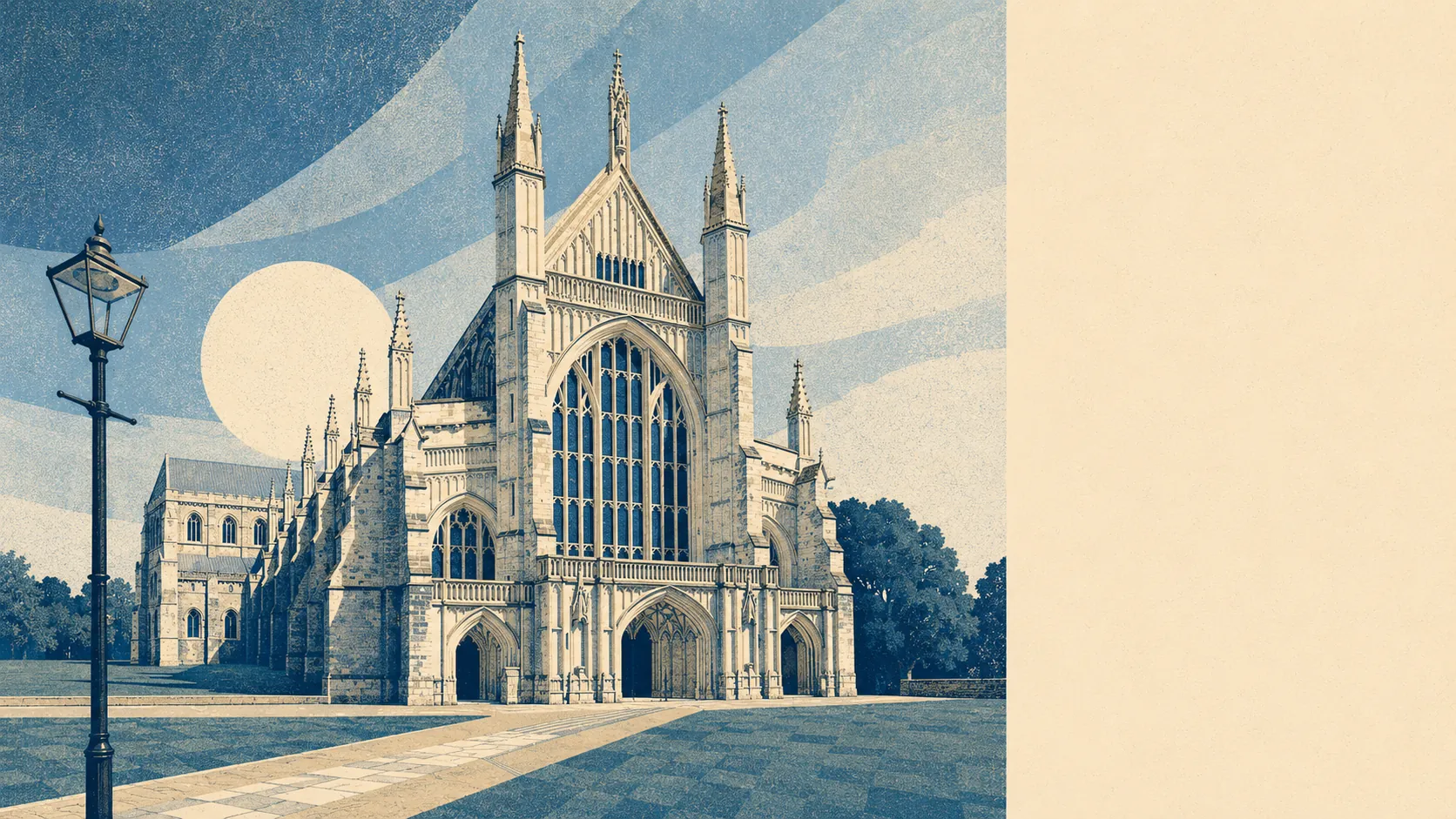
Winchester is a good place to live if you have the money, and a faintly irritating one if you do not. Houses cost a small fortune. Green space begins more or less at the front door. The cathedral has run the town for close to a thousand years and has no intention of handing the job on. Expensive, handsome, and quietly certain of its own worth, Winchester is the sort of place people move to and then defend as though they invented it.
The housing stock is mostly proper houses rather than flats, with something like six in ten homes being houses and about a third being flats. The bulk of it went up in the post-war decades, with a respectable Victorian and Edwardian layer underneath, roughly one in five homes dating from before 1930. On energy, it does better than most old places manage: a little over half the stock sits in the top energy bands A to C, about a third lands in band D, and only around one in ten falls into band E or worse. Translated into daily life, that means most of Winchester is warmer to run than its age would suggest, and the draughty minority tends to be the pretty listed stuff people buy with their eyes rather than their heating bills.
None of this is cheap. A typical sale over the last year came in at about £515,000, which is the kind of figure that makes buyers from almost anywhere else go quiet. The spread is wide and unforgiving. A detached house runs to roughly £860,000, a terrace to about £490,000, and a flat to around £300,000, so the ladder here has some genuinely long rungs. Council tax mostly clusters around band C, though only about a fifth of homes sit in the cheaper A and B bands, which tells you the place skews comfortable rather than modest.
Renting offers no escape hatch. Typical private rent across the Winchester area is about £1,500 a month, a figure that reflects the wider district rather than any single street, and one that quietly filters out anyone hoping the city might come with a bargain attached.
On safety, the published rate is about 84 recorded crimes per thousand people, which sits roughly 29% above the average for the wider Winchester local authority. That sounds worse than the lived experience usually is, because a cathedral city with a busy centre, a nightlife and a station will always log more than the sleepy parishes it gets measured against. The number is real and worth knowing. It is not the same as walking home feeling unsafe.
Getting out is straightforward, which is half of why the prices hold. Winchester Rail Station puts London within reach on the main line, and Shawford Rail Station adds a second option to the south, though only around one and a half in a hundred residents actually commute by train, most having decided the car or the home office wins. Buses are well seeded, with a few hundred stops scattered across the area. Broadband is solid: gigabit-capable connections reach about seven in ten properties and superfast coverage stretches to nearly all of them, so the working-from-home crowd that props up half the town has little to complain about.
The setting is the genuine prize. Flood risk is real but contained, with roughly one in ten postcodes carrying some high surface-water risk and about a fifth touched by lower-level risk, so it pays to check the specific street rather than the postcard. Against that, green space is almost absurdly close, sitting on average about 150 metres from the front door, with dozens of separate green spaces within a kilometre of a typical home. This is a city where the countryside does not so much surround you as lean in through the window.
Heritage is where the romance starts charging rent. There are 528 listed buildings across the area, three conservation areas covering Winchester itself along with Kings Worthy and Abbots Worthy, and around 20 scheduled monuments for good measure. Live inside that and altering your home becomes a negotiation rather than a decision. Windows, extensions, even the wrong paint can turn into a form-filling saga, and the older and prettier your house, the more the town council gets a say in what you do to it.
The character underneath the stone is comfortable and settled. Around half of homes are owned outright or on a mortgage, the typical resident is in their late thirties, and household income runs to roughly £70,000, all of which points to a place that has arrived rather than one still climbing. This page also covers the surrounding pieces that make up greater Winchester, from Stanmore, Badger Farm, Abbotts Barton, Bar End and Winnall closer in, out through Oliver's Battery, Littleton and Harestock, Compton and Shawford, Twyford, Easton, Itchen Abbas and Martyr Worthy, and further still to Hursley, Sparsholt, Owslebury, Micheldever and Sutton Scotney. Some are proper suburbs, some are villages that happen to share the postcode and the price tag.
Winchester suits people who want an old, good-looking, well-connected place and can pay the premium without flinching. Families chasing space and green, remote workers who need the fast train more as insurance than habit, and downsizers trading a big garden for a short walk to everything all tend to land well here.
It suits you less if your budget is tight, if you want a blank-canvas house you can gut and extend on a whim, or if the idea of a city that takes its own history extremely seriously makes you want to lie down. The friction here is cost and constraint, not danger or dullness.
On balance Winchester rates as average overall, a three out of five, which sounds harsh for somewhere this pleasant until you see how the scores are made. The surrounding area and its green space are the standout, a clean five out of five, and genuinely hard to beat. The weak spot is the freedom to extend or alter a home, which scrapes a one out of five, because a town this listed and this protected gives with one hand and files a planning objection with the other. Buy here for what already exists, not for what you plan to change.