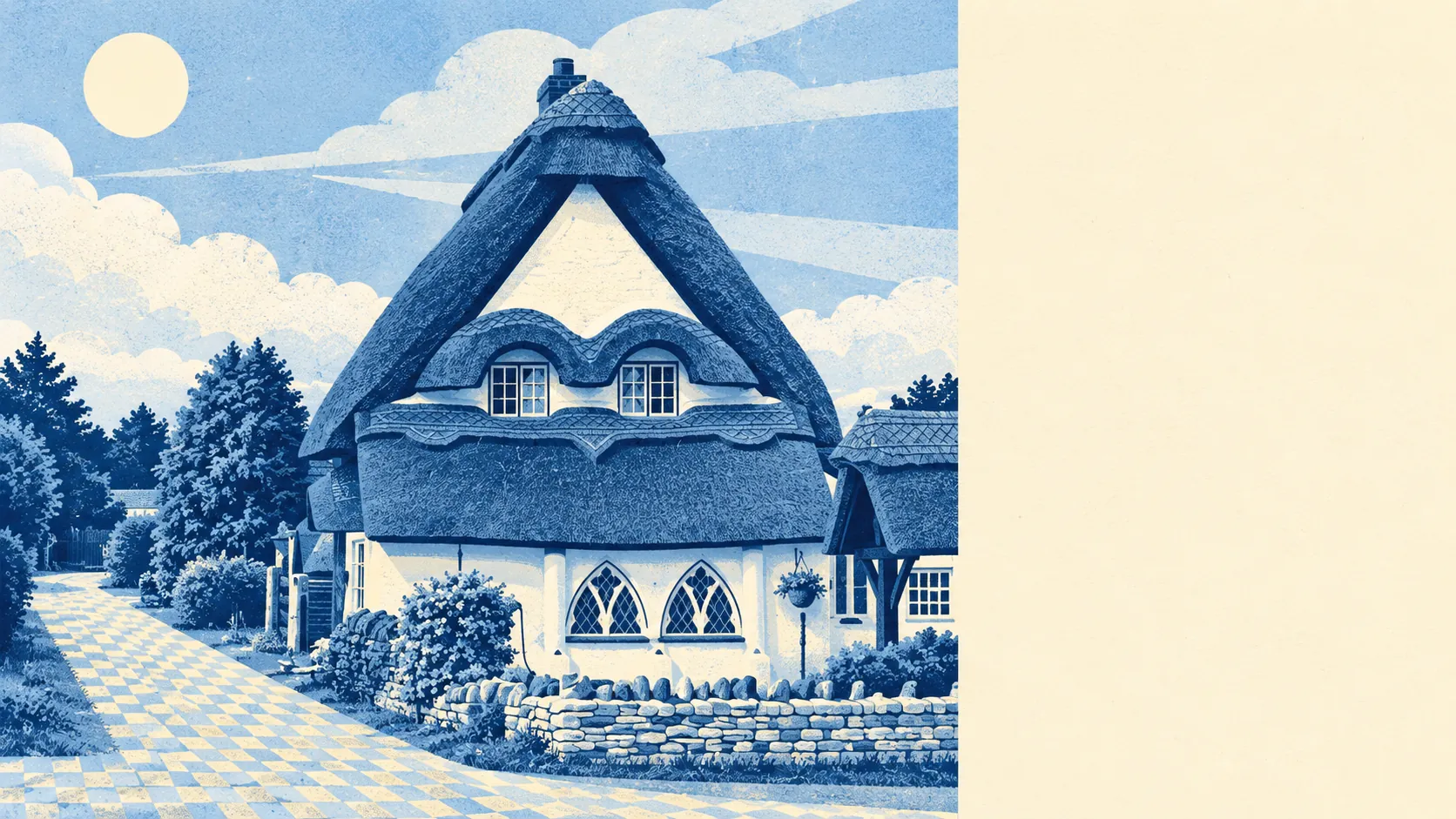
The area around Wilstead is open, low-key farmland, the walks are better than the shopping, and nobody has designated any of it as special. Green space starts a few minutes from most front doors. There are about a dozen patches of water within a kilometre. Gardens are big. The best-known buildings nearby include two sheds.
The average home in the area is roughly 290 metres from the nearest public green space, with five or six within a kilometre. That is close enough that most people don't need to drive to a walk, which in a place where they drive almost everywhere else is a real advantage.
Water is close too. The nearest patch of it averages about 370 metres from home, with 12 or 13 within a kilometre. In clay country drained by an internal drainage board, plenty of that is likely to be ditch and pond, but it still counts on a walk.
Cyclists have further to go. The National Cycle Network is on average about 3.9 kilometres away, and none of the area's postcodes are close to it. The countryside is easy to walk into and harder to ride through.
Across the wider area the business ownership records cover, there are 480 shops, 91 pubs and 49 restaurants, a footprint that reaches well past the village into the surrounding towns. Closer to home the offer is smaller. Haynes, which this page also covers, has The Greyhound, a shop, a post office and a village hall, and that counts as a full set around here.
Fine particles in the air across Central Bedfordshire averaged about 7 micrograms per cubic metre in 2024, the council's figure for the whole district.
Most of the area's character is in its big estates and ruins. Haynes Park, Warden Abbey, Chicksands Priory and the ruins of Houghton House, a 17th-century mansion that is now a scheduled monument, are all within reach, along with the parkland at Ampthill Park and Southill Park. The two listed sheds at the former Royal Air Force station at Cardington are among the best-known buildings for miles. In Bedfordshire, sheds get listed.
Private outdoor space is generous. The area has about 216,000 square metres of private garden for every 1,000 residents, the measure that shows how much garden people actually have, as opposed to a share of land that farmland would swamp. For the many households here in detached houses and bungalows, that means a lawn worth mowing and a shed of their own, listed or not.
The business rating list records 76 rateable premises in the area, and the largest single category accounts for just 16 of them. These are premises on the valuation list, and some may not be trading. Either way, nobody here commutes to the village to work.
Of the 13 food outlets the food hygiene scheme has rated in the area, about 77% hold the top score and none sits at the bottom. That's a small sample with a clean record.
No area of outstanding natural beauty, site of special scientific interest or ancient woodland overlaps the area. It is ordinary working countryside with no official label, which means fewer rules on what landowners do with it and fewer coachloads at weekends.
The surroundings are one of Wilstead's real strengths. Green space and water are a short walk away, the gardens are large, and the historic estates nearby are far more interesting than the high street.