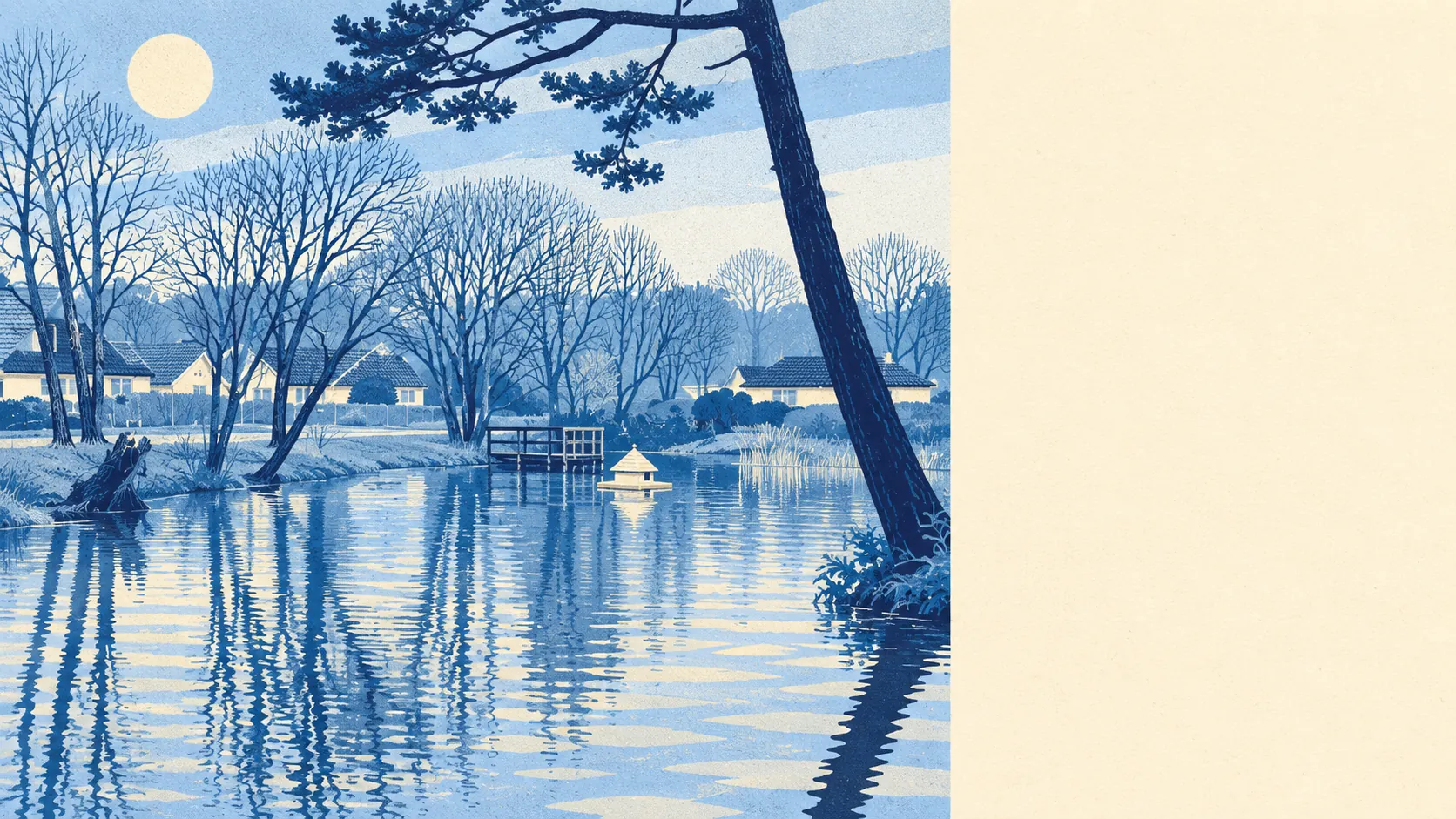
Green, close and refreshingly unprotected. Parks and commons sit a couple of minutes from most front doors. Water is a short walk away. Gardens are big. The countryside around Whitehill is the everyday kind, used for dog walks rather than postcards, and it is better for it.
Green space is the thing Whitehill does best. The nearest green space sits about 130 metres from the average home, and there are around 10 separate green spaces within a kilometre. That is close enough that the dog decides the route, not the owner. Nobody here drives to a park.
Water is within reach too. The nearest blue space, meaning ponds, lakes, streams and similar open water, sits about 670 metres from the average home, with around 14 bodies of water within a kilometre. It is not a riverside village, but it is a place where a walk usually passes something wet.
The National Cycle Network runs about 540 metres from the average home, and about 52% of homes sit close to it. There is no ancient woodland within the area itself, at 0%, so the woods people walk in are younger and more ordinary than the historic kind, which also means fewer rules about where the path can go.
The high street is modest. The wider ownership records count 136 shop premises, 8 pubs and 3 restaurants, which tells you the evening options lean towards a pint rather than a tasting menu. The valuation list for Whitehill's own boundary holds 28 rateable business premises, with shops the biggest single group at 9. These are premises on a list, not a guarantee of what is open and trading on any given Tuesday.
Eating out is small in scale and clean in record. Of the 15 food premises with a hygiene rating, about 60% hold the top score of five, and 0% sit at the low end. With 15 places, that is a short menu rather than a food scene, but nothing on it is a gamble.
Air quality figures are published for the council area rather than the village. East Hampshire's fine-particle level was about 6 micrograms per cubic metre in 2024.
The character comes from what lies just beyond the houses. The surrounding land is dotted with Bronze Age barrows on Woolmer Down and the surrounding commons, and the Hillfort on King John's Hill, which means the landscape had residents with strong opinions about burial long before it had residents with strong opinions about parking. Small places ring the village, Standford, Hollywater, Shortheath, Deadwater and Weavers Down among them, and a short drive reaches the conservation villages of Headley and Blackmoor for anyone who wants the thatch Whitehill does not supply. The place itself is working suburbia with heathland at the end of the road, and the heath is what people remember.
Private outdoor space is generous. Across the area there is about 186,000 square metres of private garden for every 1,000 residents, which is a lot of lawn to mow and a lot of room for children, sheds and trampolines. Most people here have their own green space before they reach the public kind.
No protected-landscape designation overlaps Whitehill itself. The area has no area of outstanding natural beauty, no site of special scientific interest and no ancient woodland within its boundary. That is not a fault. It means the countryside here is a place to live in rather than a view to preserve, with fewer restrictions and no coachloads.
The surroundings are Whitehill's real strength: green space on every doorstep, water within a short walk and gardens big enough to lose a football in. A buyer who wants the outdoors for daily use rather than special occasions will find very little to complain about.