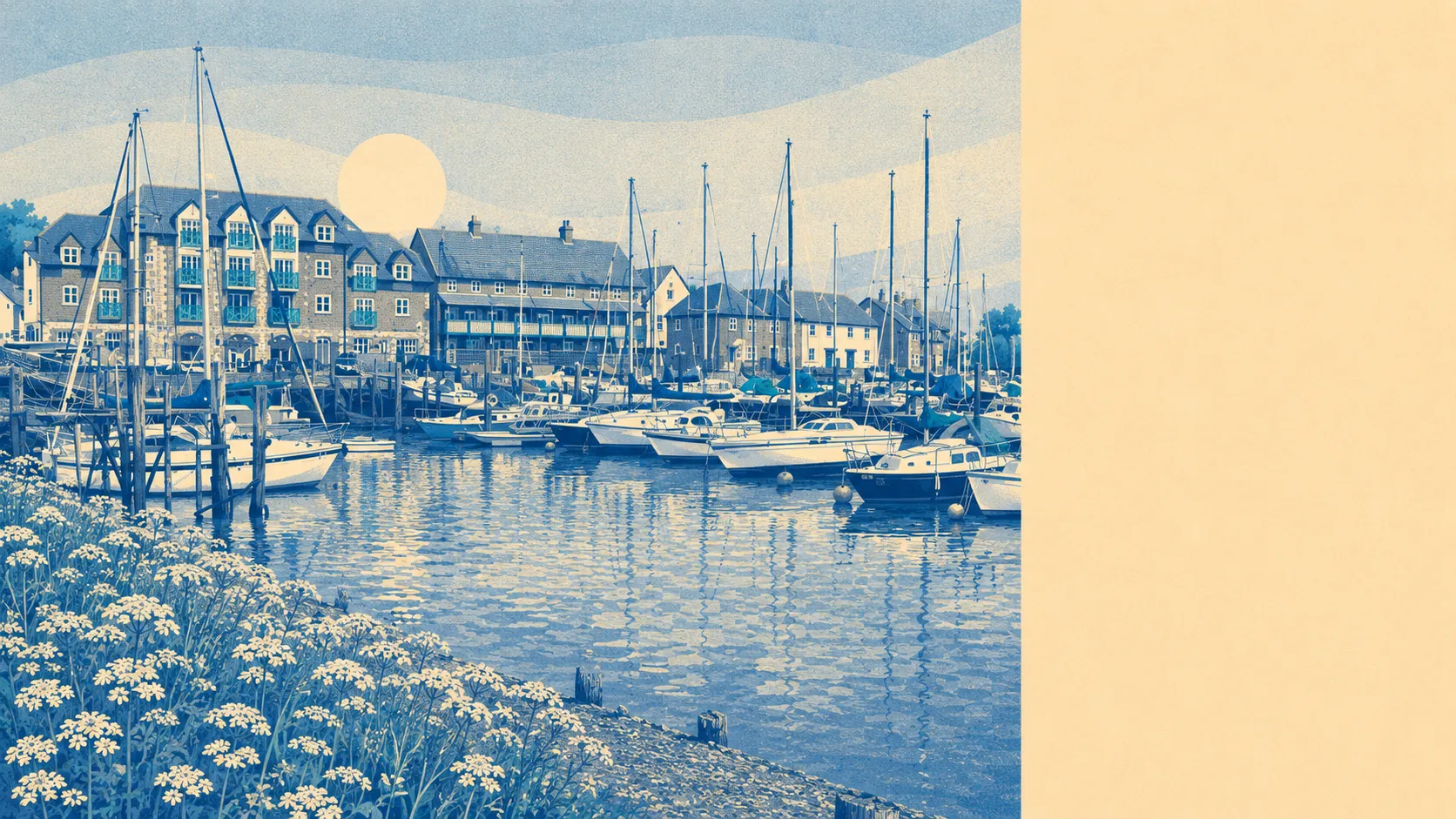
Totton is the New Forest for people who still have to go to work. It sits on the edge of the prettiest national park in the south and charges a fraction of what the postcard villages inside it do. Mostly houses, mostly owned, mostly quiet. The green space is on the doorstep and the crime rate is the one figure that spoils the mood. Not chocolate box, and better for it.
The housing tells you what kind of town this is before anyone opens their mouth. Roughly seven in ten homes are houses rather than flats, with about one in six being flats and a solid slice of bungalows on top. Most of it went up between the 1950s and the early 1980s, which is to say Totton grew when families needed somewhere to grow, not when developers needed somewhere to stack. On the energy ratings the stock is honest and unspectacular: band D is the single most common result, sitting at around four in ten homes, a little under half manage a C or better, and roughly one in nine limps in at E or worse. That is the profile of a place built for living in rather than for a brochure, with the heating bills to match.
On price, Totton does the thing the surrounding forest villages refuse to do, which is stay within reach. The typical sale over the past year landed a little over £310,000, and the spread underneath that number is where the real choice lives. A detached house runs to around £427,500, a semi to about £335,000, a terrace to roughly £275,000, and a flat to about £165,000. So the town hands you a genuine ladder rather than a single rung: you can buy your first flat and your growing family's semi in the same postcode without ever leaving. Council tax mostly sits in band C, and about a third of homes fall into the two cheapest bands, which keeps the monthly maths friendlier than the New Forest name would suggest.
Renting follows the same pattern of being the sensible option in an expensive corner of the country. The typical private rent across the New Forest area is about £1,240 a month, and Totton is the part of that area where the figure actually feels survivable, because you are paying for a market town rather than a thatched fantasy. It is the kind of place people rent while they save for the buying ladder two paragraphs up.
Safety is the sentence Totton would rather you skimmed. The published crime rate is around 77 recorded offences per thousand people, which runs roughly a third above the New Forest average. That sounds alarming until you remember the New Forest average is dragged down by villages where the biggest annual drama is a loose pony, so being above it is less a warning than a reminder that Totton is a working town doing working-town things. It is not a place to lie awake over, but it is the number on this page most likely to make a cautious buyer pause, and pretending otherwise would be an insult.
Getting out of Totton is easy as long as you have accepted that the train is somebody else's idea of commuting. Next to nobody here travels to work by rail, despite the town having its own station and Redbridge and Millbrook sitting close by, with Southampton Central as the proper hub for anything that goes far. The car does the heavy lifting and the buses do the rest, with well over a hundred stops scattered across the town. Broadband, at least, has quietly overtaken the railway: gigabit-capable connections reach around nine in ten homes and superfast is close to universal, so the town moves data far better than it moves people.
The setting is where Totton stops apologising and starts winning. Green space is almost absurdly close, with parkland or open ground typically only around 160 metres from the front door and water not much further, which is the practical payoff of living where a national park runs out of forest and into houses. The catch is flooding, and it is a real one: something like one in seven postcodes carry a high surface-water flood risk, a similar share sit at medium risk, and a third face at least some low-level risk. It is not the whole town by any stretch, but it is enough that the flood map is a document to read before you fall in love with a specific street near the water, especially down toward Eling.
Heritage sits lightly here, which is good news if your plans involve a rear extension rather than a museum. Totton carries around thirty-four listed buildings and three conservation areas at Eling, Hanger Farm and Hazel Farm, plus a single scheduled monument. Outside those pockets, most of the housing stock is ordinary enough that altering your home is a conversation with the planners rather than a negotiation with history. Buy inside a conservation area and the rules tighten around windows, materials and street character; buy on a 1970s estate and nobody much cares what colour you paint the door.
The people fit the property. Around seven in ten households own their home, the typical resident is in their mid-forties, and household income runs to roughly £58,000, which paints a town of settled families and paid-down mortgages rather than transients passing through. It is stable in the way that suburbs are stable, which some readers will find reassuring and others will find quietly terrifying.
Totton suits the family that wants the New Forest as a weekend habit rather than a mortgage burden: buyers who need three bedrooms and a garden, value a school run over a nightlife, and would rather spend the saved money on the house than the postcode. If a car is already part of your life and the forest is the point, this is close to ideal.
It suits less well the buyer chasing a fast train to London, the renter who wants a town that stays up late, or anyone whose heart is set on a specific waterside cottage without first checking which way the flood risk runs. Those people can be happy here, but they will spend the first year adjusting expectations the town was never trying to meet.
The overall verdict lands at above average, and it earns that honestly rather than by rounding up. The surroundings do the heavy lifting, with green-space access about as good as this platform measures, while safety is the drag on the score and the one dimension a careful buyer should weigh hardest. Totton is a good place to live for the people it is actually built for, which is most families and almost none of the people who think they want the forest but really want the gift shop.