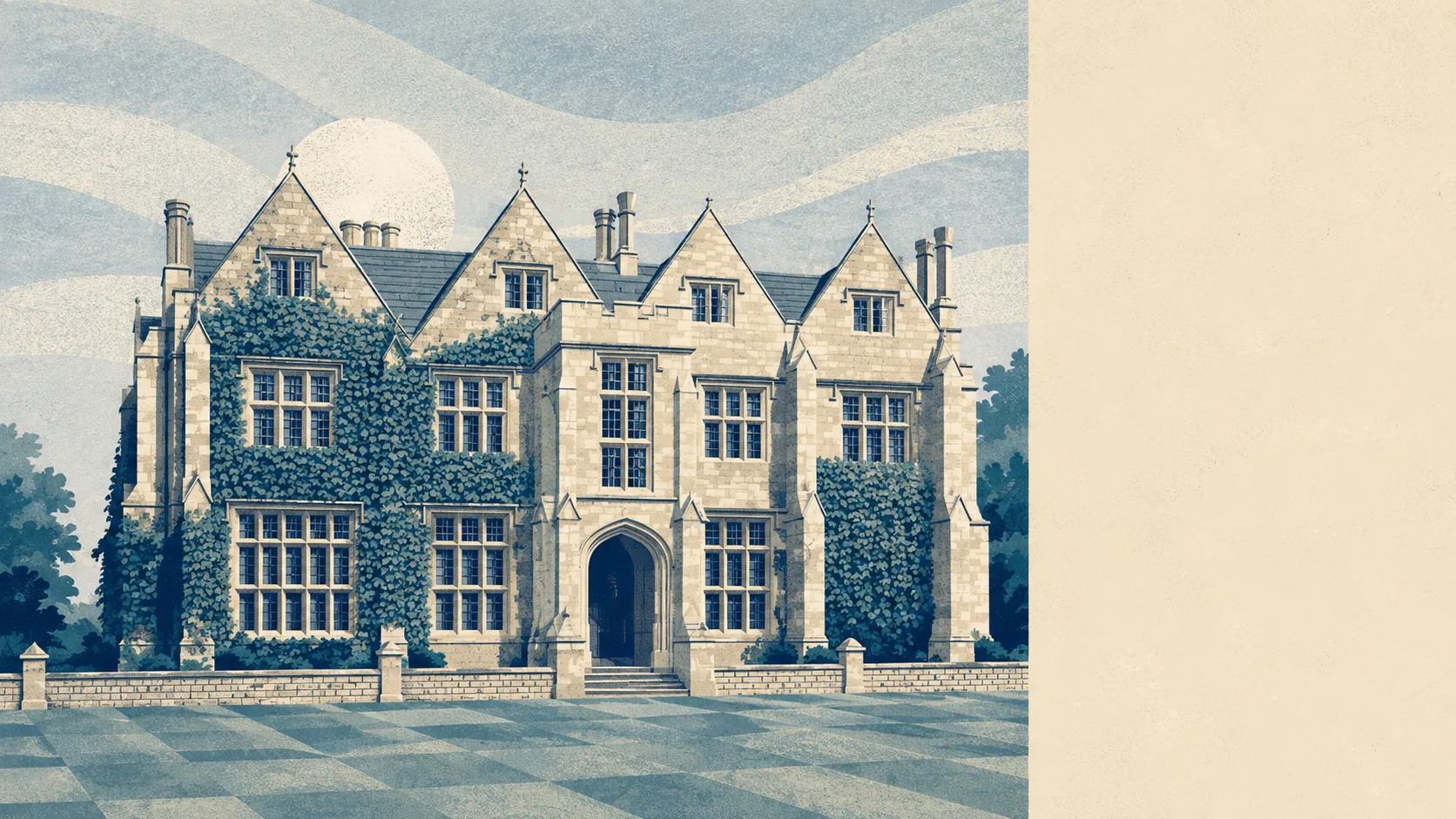
Yes, and the harder question is what sits under the house rather than what you want to put on the back of it. Only a small number of buildings in the village carry a listing. One conservation area covers the historic core. Every postcode in the village sits on the old coalfield. Most extensions here are an ordinary builder-and-council exercise with a mining search stapled to the front of the file.
Heritage constraints are real but contained. There are 21 listed buildings in the area, none of them grade one, two at grade two star and the remaining 19 at grade two. If your house is one of the 21, listed building consent becomes part of ordinary life: it covers internal work as well as external, so replacement windows, a knocked-through wall, or a change of roof covering all become a conversation with the conservation officer rather than a trip to a builder's merchant. Doing that work without consent is a criminal offence rather than a paperwork slip, which is the part people underestimate. If your house is one of the other several hundred, none of this touches you.
There is one conservation area, covering Timsbury itself. Designation does not freeze a place, but it does change the rules at the edges. Demolition of walls and outbuildings, work to trees, and some alterations that would be permitted development elsewhere can need consent inside a conservation area, and councils apply more scrutiny to materials and frontages. Check whether a specific address falls inside the boundary before assuming either way, because conservation area boundaries in villages like this tend to follow the historic core rather than the parish edge, and the line can run down the middle of a street.
People clearly do alter their homes here. The planning register covering this area logged 3,557 applications between April 2024 and June 2026, with 1,556 of those in the most recent twelve months. That is a steady flow of householders extending, converting and reroofing, which is worth more than any policy document as evidence that the council is not treating alteration as a novelty.
The ground is the genuine complication. Every postcode in the village sits within the coalfield consultation area, and 73 of them have a recorded mine working directly underneath. On average there are around six abandoned workings within 500 metres of a given postcode, and the nearest recorded working is effectively at the surface. None of that means a house is unsafe or that anything is going to move. What it means practically is that a coal mining search is not optional here, that a specialist report may be asked for on top of it, and that both your lender and your insurer will want to see the paperwork before they commit. For an extension, the council may want the foundation design to account for what is below. Build that into the timetable and the budget rather than discovering it at the point of exchange.
For most houses in Timsbury, permitted development still does what it does everywhere: a rear extension within the size limits, a loft conversion within the volume limits, and outbuildings within the height and coverage limits, all without a full application. The village's housing is mostly twentieth-century, sitting on plots with room at the side and back, which is the sort of stock permitted development was written for. The exceptions are the listed 21, anything inside the conservation area boundary, and any address where the mining picture pushes the engineering beyond the ordinary. Confirm which of those three, if any, applies to a specific house before drawing plans.
Freedom to alter a home here is middling, and the middle is a comfortable place to be. The heritage load is light enough that most buyers never meet it, and the constraint that actually applies to everyone is a search rather than a refusal.