The area around Sway is green before it is anything else. On average there are about nine green spaces within a kilometre of a Sway home, and the nearest is under 300 metres from the front door. The whole village sits inside a national park, ringed by small hamlets rather than sprawl. Water is close too, roughly 700 metres to the nearest blue space on average. This is countryside that starts at the end of the road, not somewhere you drive to reach.
That green-space figure is the one that defines daily life here. Nine open spaces inside a kilometre, the closest a few minutes on foot, is the kind of access most towns spend planning documents pretending to offer. What makes it land is the contrast underneath it. The built-up part of Sway is reasonably tight, packing in around 1,400 people per square kilometre, yet almost nobody is more than a short walk from something open and green. You get the density that supports a village with shops and a station, and you get the trees anyway. The two usually cancel each other out. Here they do not.
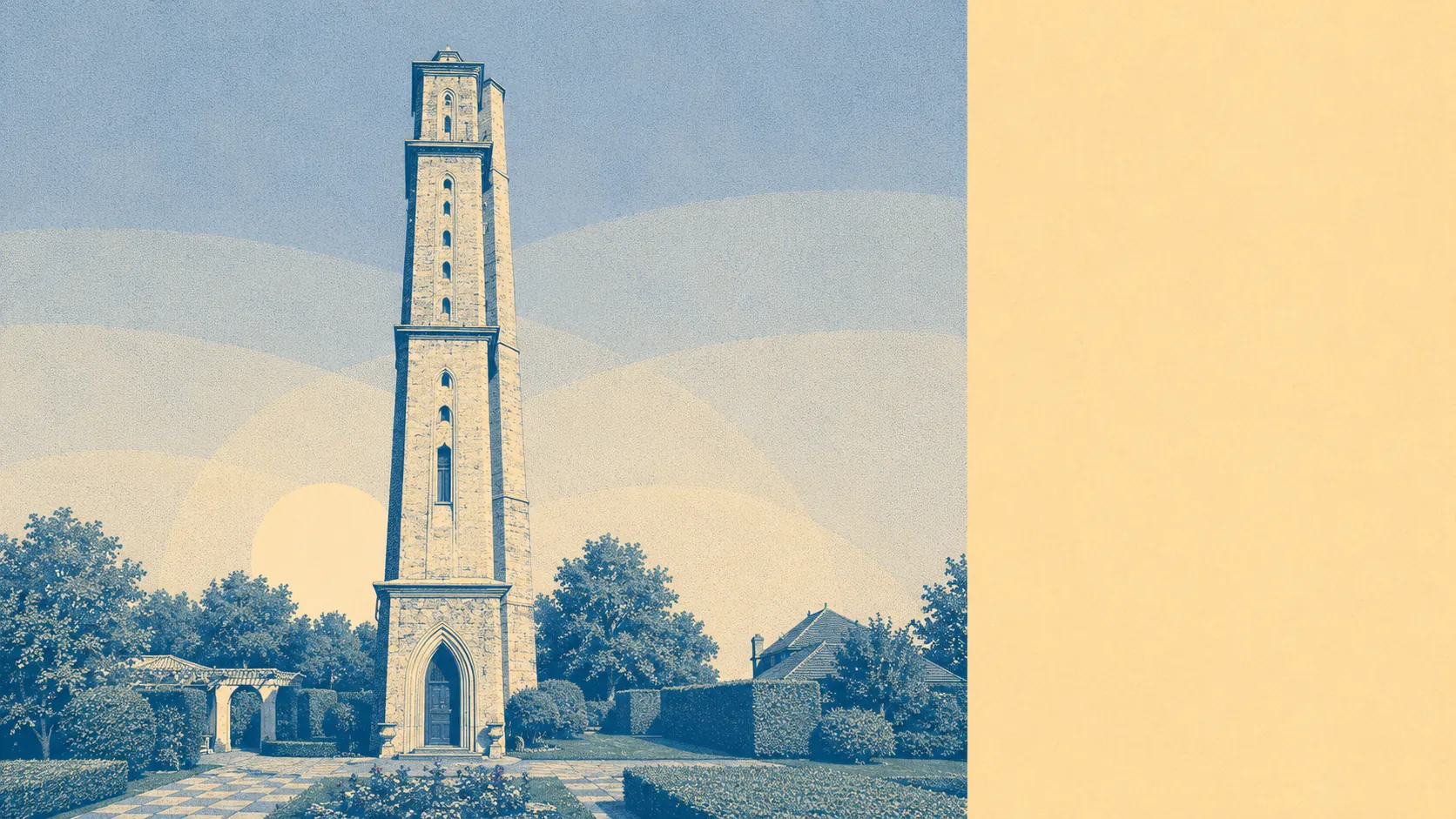
The character is national-park countryside through and through, and it comes with the neighbours to prove it. Around Sway sits a scatter of proper forest hamlets, Setley, Tiptoe, Sandy Down, Mount Pleasant, Durns Town, Battramsley, each small and quiet and tied to the land, with the larger towns of New Milton and Hordle close enough for the bigger shops. The skyline has its own oddity in Peterson's Tower, the concrete folly that breaks the tree line and tells you which village you are looking at from a distance. The Church of Saint Nicholas anchors the older core, and Brockenhurst Park lies within reach for a proper day among the trees. This is old ground: the land carries Bronze Age barrows scattered across the surrounding plains at Setley, Wilverley and Shirley Holms, and the settlement turns up four separate times in the Domesday Book of 1086. People have been living here, in other words, for a very long time, and have resisted the temptation to make it busy for most of it. The plains keep their burial mounds and the village keeps its trees, which is roughly the deal Sway has always run on.
Sway sits in one of the better spots the national park has for open surroundings. Green on every side, water not far off, a ring of small settlements keeping the scale sensible, and a national park doing the job of a green belt without needing to be asked. If the point of moving out here is space and quiet with the trees at the door, the area around Sway delivers exactly that and makes very little fuss about it.