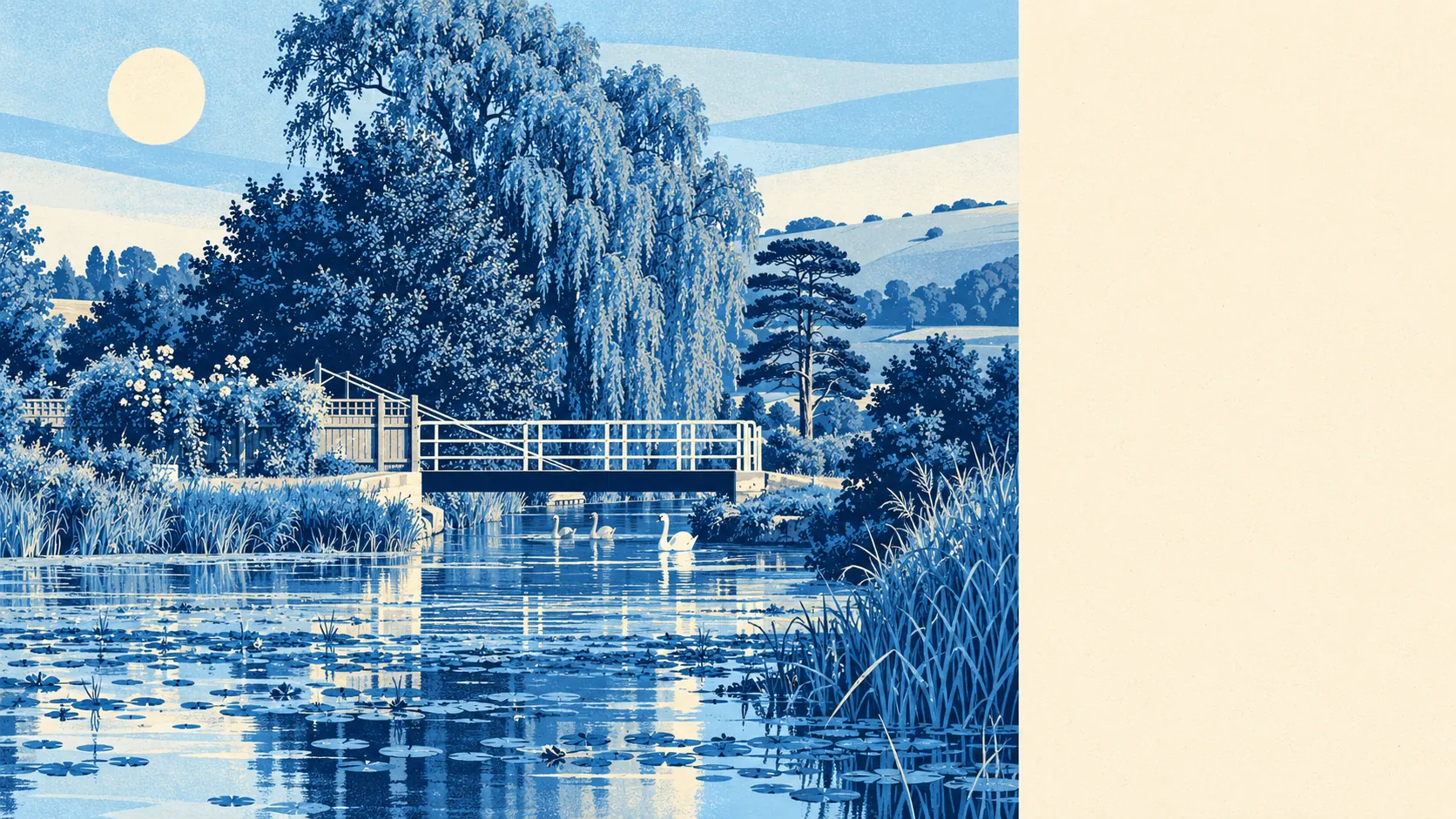
Stonehouse is surrounded by excellent countryside, with the Cotswold edge rising behind it and the canal running along the bottom of the valley. A typical home is a couple of minutes' walk from a park or open space. There is water within easy reach of most streets. The town itself has industrial estates and offices alongside its shops. The countryside starts at the end of the road and the town still earns its living.
On average, a home in Stonehouse is about 165 metres from the nearest park or open space, with 18 within a kilometre. Open grass is part of daily life here, and getting to some takes about as long as finding your keys.
Water is about 330 metres from the average front door, and there are 34 bodies of water within a kilometre, the Stroudwater Canal chief among them. The canal has run through the old manor lands since 1779, and what was built as a working route for the valley's cloth trade is now where people walk the dog.
The National Cycle Network is about 560 metres away on average, and about 53% of postcodes are close to it. There is no ancient woodland inside the area. Up the escarpment it is all hills and hilltop paths, Haresfield Hill among them, for anyone who wants a climb with their walk.
Among the rated premises in the town are 77 shops, eight pubs and four restaurants. Eight pubs against four restaurants is a fair guide to how Stonehouse likes to spend an evening.
The Stroud district recorded fine-particle pollution of about 6 micrograms per cubic metre in 2024.
There is no site of special scientific interest in the area, and none of it is ancient woodland. About 1% of it falls inside the Cotswolds Area of Outstanding Natural Beauty, a sliver at the edge where the town meets the hills. Most of Stonehouse is ordinary, unprotected valley-floor land, and the protected landscape is visible from almost all of it.
There is plenty of old history close by. Woodchester Roman villa, Leonard Stanley Priory, The Toots long barrow and the medieval tithe barn at Frocester are all within the wider area, along with the mill buildings at Stanley Mills and village churches in King's Stanley, Leonard Stanley and Eastington. The Romans chose Woodchester for a villa, and nearly two thousand years later the residents of Stonehouse get the same valley with central heating and a Saturday parkrun-free lie-in.
Gardens are generous. Across its seven neighbourhoods, Stonehouse has about 138,000 square metres of private garden for every 1,000 residents, enough that most homes come with lawn as well as a patio. With the semis and detached houses that make up much of the town, a back garden is standard here.
The valuation list holds 464 business premises in the area. Offices are the largest category at 131, followed by 82 workshops and small industrial units, 67 shops, 50 factories and 37 warehouses. Those are premises on the rating list rather than a count of businesses currently trading, but the order is clear: Stonehouse has more desks and workbenches than shop counters. The industrial parks to the west of town, home to firms including Schlumberger and Delphi Automotive, keep it a working town as well as a commuter one.
Of the 52 food businesses rated for hygiene, about 60% hold the top score of five, and about 4% are rated at the bottom end. Most of the town's kitchens are clean, and the poor ones are few.
The surroundings are the best thing about Stonehouse: park, canal and escarpment within a short walk of most homes, plus a big enough garden to come back to.