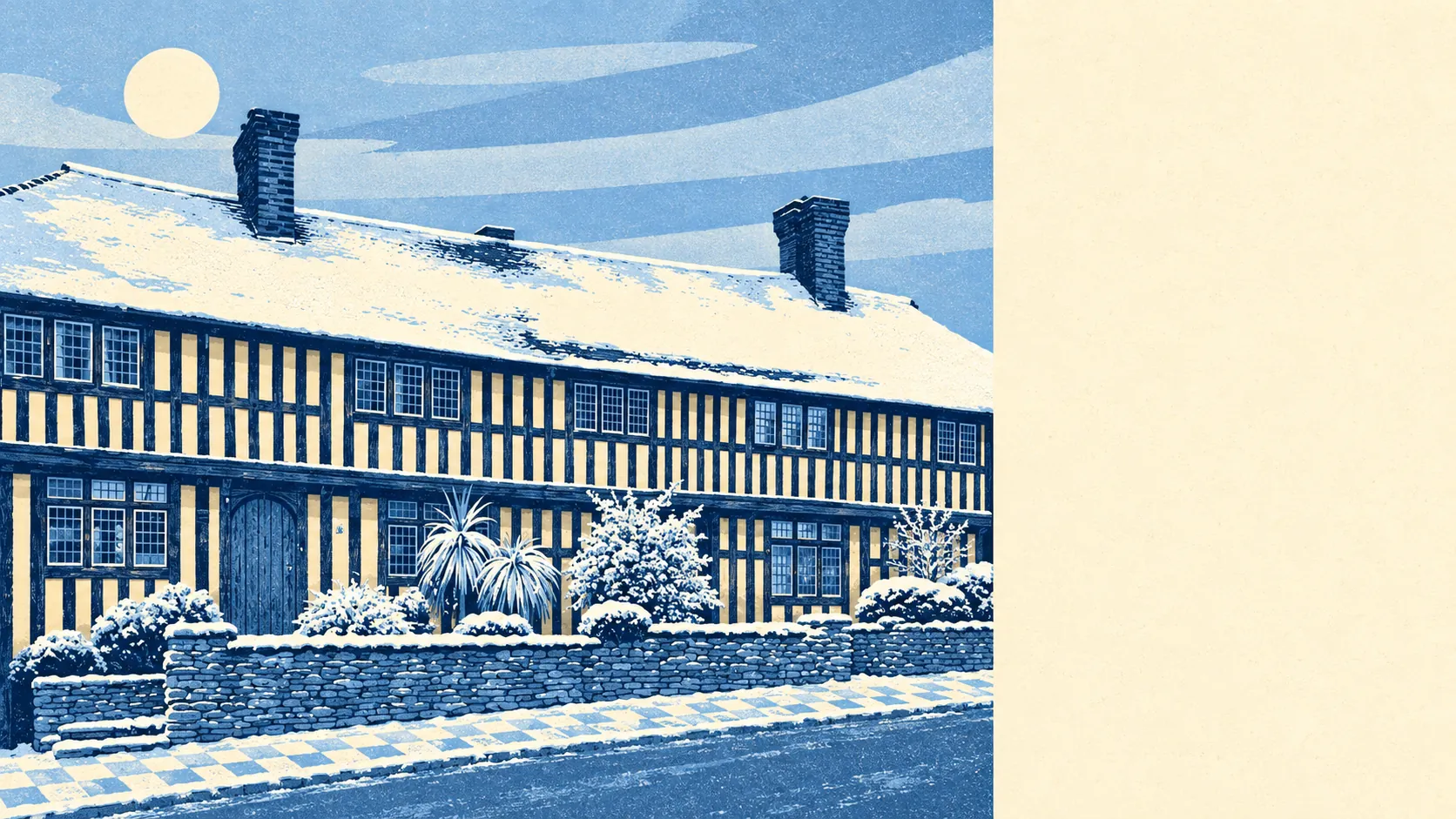
The area around Staplehurst is flat, green, wet in places and easy to walk straight out into. There's green space within a short stroll of most homes. There's water even closer. The gardens are big enough to lose a tennis ball in. People move here for the fields, not the nightlife, and the fields keep their end of the deal.
The average Staplehurst home is about 180 metres from the nearest public green space, and there are about 10 green spaces within a kilometre. That's a normal amount of countryside for a Weald village, and it's the reason dog ownership here looks less like a hobby and more like a condition of residency.
Water is closer still. The average home is about 130 metres from the nearest stream, pond or other water, with around 56 of them within a kilometre. In a village with ditches, streams and drainage channels everywhere, that makes for a pleasant walk, and it's also something to keep in mind when you look at the flood maps.
Organised cycling routes are further away. The nearest National Cycle Network route is about 8.5 kilometres from the average home, and no postcodes sit close to one. Cycling here means country lanes and your own map.
The premises records for the area list 119 shops, 21 pubs and 6 restaurants. That's a village built for picking something up and having a pint, not for a long night out. The historic parade at the south end of the village is where most of that everyday business happens.
Across the Maidstone council area, fine-particle air pollution averaged about 7 micrograms per cubic metre in 2024. That's a council-wide figure, not one measured on any Staplehurst street.
The village began as a string of hamlets and farmsteads that slowly joined up, and it still feels that way. All Saints' Church sits on the hill that gave Staplehurst its name, and the hamlet of Hawkenbury belongs to the same parish. The surrounding map is covered in small green-and-cross names, including Knox Bridge, Sinkhurst Green, Plumtree Green, Cross-at-Hand and Wanshurst Green, with Marden and Frittenden as the larger neighbours. Early nineteenth-century invalids came here for the clean air. Their modern equivalents come for a garden and a quiet road.
Those gardens are the real draw. The four small statistical areas covering the village hold about 214,000 square metres of private garden for every 1,000 residents, which is generous by any standard. The back lawn here isn't a patio with ambitions. It's a proper garden, and it's where most weekends end up.
The council's business rates list holds 151 rateable premises. Warehouse and industrial premises top the list, reflecting the industrial estate near the station, followed by shops and then offices. These are premises on a valuation list, not a count of businesses currently open, but they point to a village that still does some actual work rather than only sleeping between commutes.
Eating out is low-risk. About 83% of the 36 rated food premises hold the top hygiene score, and none sit at the bottom. You'll struggle to find a bad kitchen here.
No protected landscape designation covers the area. There's no area of outstanding natural beauty, no site of special scientific interest and no ancient woodland. That tells you what Staplehurst is: working farmland and ordinary countryside, not a protected landscape. The upside is that you can walk the fields without feeling you ought to buy a guidebook first.
The surroundings are one of Staplehurst's clear strengths, with green space, water and private gardens all in generous supply. It's ordinary countryside, but there's a great deal of it.