Yes, if you have already made peace with the car. Two in three own their homes. The typical resident is in their mid-fifties. Almost nobody leaves the village by train or bus, mostly because almost nobody can. Good village. Narrow terms.
Start with what you would actually be buying. On the council tax valuation list, which covers every dwelling rather than only the ones certificated or sold recently, detached houses and terraces each account for 26% of the stock, semis 22% and bungalows 16%. Flats are 4%, which in practice means there is no flat market here worth the name. Twenty-nine percent of the stock went up before 1930, a good deal of it in the honey-coloured Ham Hill stone that gives the village its face and its owners their repointing bills. Among homes with an energy certificate, 55% sit in bands A to C, 34% in band D and 10% in band E or worse. Three quarters run on mains gas, and 1% have no central heating at all, which is 1% more than most buyers assume is still possible.
The Land Registry recorded 40 sales in the twelve months to late May 2026, at a median of £360,000. That figure hides two different villages. Detached homes came in at a median of £535,000, terraces at £272,500 and semis at £222,500, so the step between a cottage and a house with land is not a step, it is a different conversation with a different mortgage adviser. Council tax lands at the cheap end, with band B the most common and 32% of dwellings in bands A or B. The address costs less to run than it does to acquire.
Renting is a Somerset question rather than a South Petherton one, because the published figure is drawn at local-authority scale. Typical private rent across the Somerset area is about £990 a month, a mean from the Office for National Statistics price index rather than a median of what happens to be advertised in the village this week. Roughly a third of homes here are rented, between private landlords and social housing, so the local market exists. It just does not turn over often enough to have a mood.
The published crime rate is about 70 recorded offences per 1,000 residents in the year to May 2026, roughly 25% below the Somerset average of 93. That is genuinely quiet by the standard of its own county, with the usual village caveat attached: the totals are small enough that a bad fortnight shows up as a trend to anyone determined to read one.
Connectivity is where the village asks for something back. Fifty-nine percent of working residents commute by car and 27% work from home. Train commuting runs under one percent, and the bus does no better, which says less about local taste than about local timetables. Nine of the thirteen stops carry published services, averaging nine departures across a weekday, 89% of them run something at weekends, and nothing on the network resembles a peak-hour frequency. The two nearest railway stations closed in the 1960s and were never replaced. What the village has instead is the A303 along its southern edge, a twice-daily Berrys coach to Hammersmith for anyone who wants London without the steering, sixteen minutes by car to a town centre against about forty-three by public transport on Department for Transport modelling, eight minutes to a food shop and thirteen to a doctor's surgery. Broadband is the consolation and a serious one: gigabit at 98% of premises, superfast at 99%, nothing below the universal service minimum, and 97% of premises covered by every mobile operator for fourth and fifth generation service. You can work from here. You cannot commute from here without a bonnet.
Water is worth checking street by street. Twelve percent of postcodes carry a high rating on at least one flood indicator, surface water included, and 9% a medium one. On the Environment Agency's river-and-sea zones, which measure something narrower, 4% of the area sits in zone 3 and 1% in zone 2. The River Parrett forms the parish's eastern boundary. No recorded historic flood extent covers the place, which is not a guarantee but is better than the alternative. The compensation is the setting: the average postcode sits about 180 metres from open green space with eight within a kilometre, and water about 300 metres away with sixteen within a kilometre. No national landscape or protected wildlife designation crosses the village, so the countryside here is working farmland rather than a curated view with a car park.
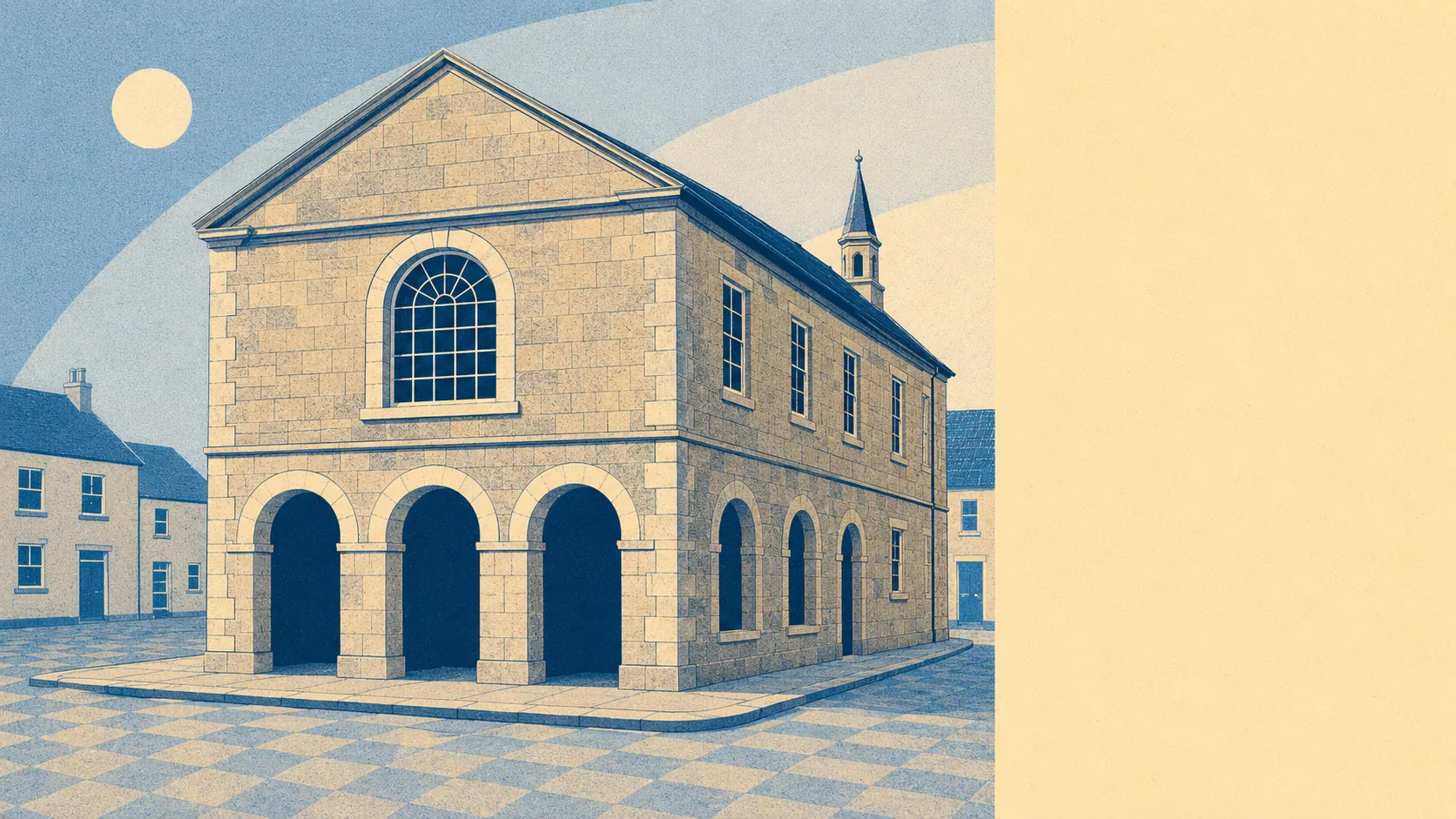
Seventy-one listed buildings sit in and around the village. One is Grade I, Wigborough Manor House, four are Grade II starred, and the remaining 66 are Grade II, among them the fives court wall off Crown Lane and the fourteenth-century manor house on Silver Street known as King Ina's Palace. A single conservation area covers the core. If your plan involves new windows, solar panels or anything visible done to a frontage inside that boundary, consent is not a formality, and the conversation will be about materials for longer than you expect. Buy the honey stone for the honey stone, and accept that the honey stone now has opinions.
Sixty-seven percent own their homes, the median age is 54, and median gross household income before tax was about £54,300 in the financial year to March 2023, modelled by the Office for National Statistics. That combination makes a particular texture: people who have finished moving, in houses they are not planning to sell, on incomes that need the village to do nothing except stay roughly as it is.
The page also covers East Lambrook, Lopen and Over Stratton, all smaller and quieter again. East Lambrook is responsible for the one local thing with a national following, the manor gardens Margery Fish made, which is where the horticultural pilgrims turn off.
It suits a buyer with a car, a job that either travels down a broadband line or stays put, and a tolerance for shops that close when the light goes. Families manage well on foot, with a primary school inside a twelve-minute walk of most of the village. Retirement money stretches further here than it does nearer the coast, and the bungalow stock is unusually deep for a place this size.
It does not suit anyone who needs a station, anyone whose evenings depend on spontaneity after eight, or a household trying to run without a car. Ten percent of homes here have no car, and they are working considerably harder than the rest. If the convenience of somewhere like Martock matters more to you than the stone does, take Martock. That trade is honest in both directions.
For a village of this size the alumni list is unreasonable. John Brunner, who wrote some of the sharpest British science fiction of the twentieth century, came from here, as did the soldier who finished as Lord Harding of Petherton, and John Weston Parsons Peters before him. Two townsmen were prosecuted in the Bloody Assizes after the Monmouth Rebellion, which is the kind of civic record that never makes the parish sign.
South Petherton is a good place to live and unusually honest about its terms. Its real strength is the surroundings, with green space at the end of nearly every street, water minutes away and farmland that is not going anywhere. The weak spot is leaving, because everything past the parish boundary is either a car journey or a negotiation with a timetable written for somebody else. Buy the stone and the quiet, and pay for both in miles.