Yes, if you can live somewhere that has already decided what it is. South Molton is a working market town in the middle of North Devon, closer to sheep than to sea. Crime sits comfortably below the district average. Green space starts at the end of most streets. What it does not have is a station, a buzz, or any interest in acquiring either.
The housing is small-town Devon done straight. Terraces are the biggest single type on the council-tax list at around 27% of dwellings, with detached houses at about 22%, bungalows at roughly 21%, semis at around 15% and flats at about 10%. Around a quarter of everything here was built before 1930, which in practice means solid stone and cob frontages on the older streets and thickening rings of post-war and modern estate building outward from them. Energy performance follows that split: roughly two thirds of certificated homes sit in bands A to C, about 24% in band D, and around 11% at band E or worse, which is the older end of the stock and the part that will cost you in February. About 73% of homes run on mains gas and around 7% are on electric-only heating, and that second figure is the one to check before you fall in love with a cottage. Electric-only heating in a pre-1930 building is a running-cost decision, not a detail.
On price, the Land Registry's last twelve months put the typical sale at about £245,000 across 92 sales, which for a Devon town within reach of Exmoor is not a headline anyone is going to write about. The split by type is wide. Flats came in around £163,000, terraces around £210,000, semis around £248,000 and detached houses around £340,000, so the difference between the bottom and the top of this market is most of a second house. Council tax leans low: band B is the most common band, and around 46% of dwellings sit in bands A or B. That is a genuine monthly saving over most of southern England, and it is the sort of thing buyers notice only after they have moved.
Renting is harder to pin to the town itself. The typical private rent across the North Devon area runs at about £850 a month, which is an area-wide figure rather than a South Molton one, and rural rental markets vary street by street more than that number suggests. Treat it as the shape of the market, not a quote.
Safety is the strongest thing the numbers say about the place. The published crime rate is about 58 recorded crimes per thousand people, which sits roughly 21% below the North Devon average. That is not an argument that nothing happens here. It is an argument that what happens here happens less often than in the district around it, which for a town with a livestock market, a high street and pubs on it is a better result than it sounds.
Connectivity is where the town charges you. There is no railway station, and effectively nobody commutes by train, because there is no train to commute by. Around 54% of working residents drive, roughly 20% work from home, and about 17% walk, which tells you the town is compact and the county is not. There are 30 bus stops in the town, averaging around 12 scheduled weekday departures each and with weekend service at nearly all of them, which is respectable for rural Devon and still not a substitute for a car. The nearest hospital is about 32 minutes by car and over an hour by public transport. Broadband is the surprise: full gigabit is available to around 86% of premises, superfast reaches everything, and no premises sit below the universal service obligation. At least one mobile operator gives four or five G coverage at around 100% of the area. You will get worse internet in parts of London.
Environmentally the picture is mostly good with one qualifier. Green space is barely a consideration because it is everywhere: the average postcode sits about 120 metres from open green space with around 27 separate green spaces inside a kilometre, and water is about 500 metres away on average. There are no Sites of Special Scientific Interest or National Landscape designations overlapping the town. Flooding needs care because two different measures exist and they say different things. On the postcode-level indicators, which include surface water, about 12% of postcodes carry a high rating on at least one indicator and around 10% a medium. In the Environment Agency's river-and-sea flood zones, the exposure is much smaller: about 2% of the area falls in zone two and under 1% in zone three. The River Mole runs through the town, six flood events are on record, and the most recent of those dates to 1968. Radon is the one to raise with a solicitor: the whole area sits in an elevated radon band, which is normal for this part of Devon and is a testing-and-mitigation matter rather than a reason to walk.
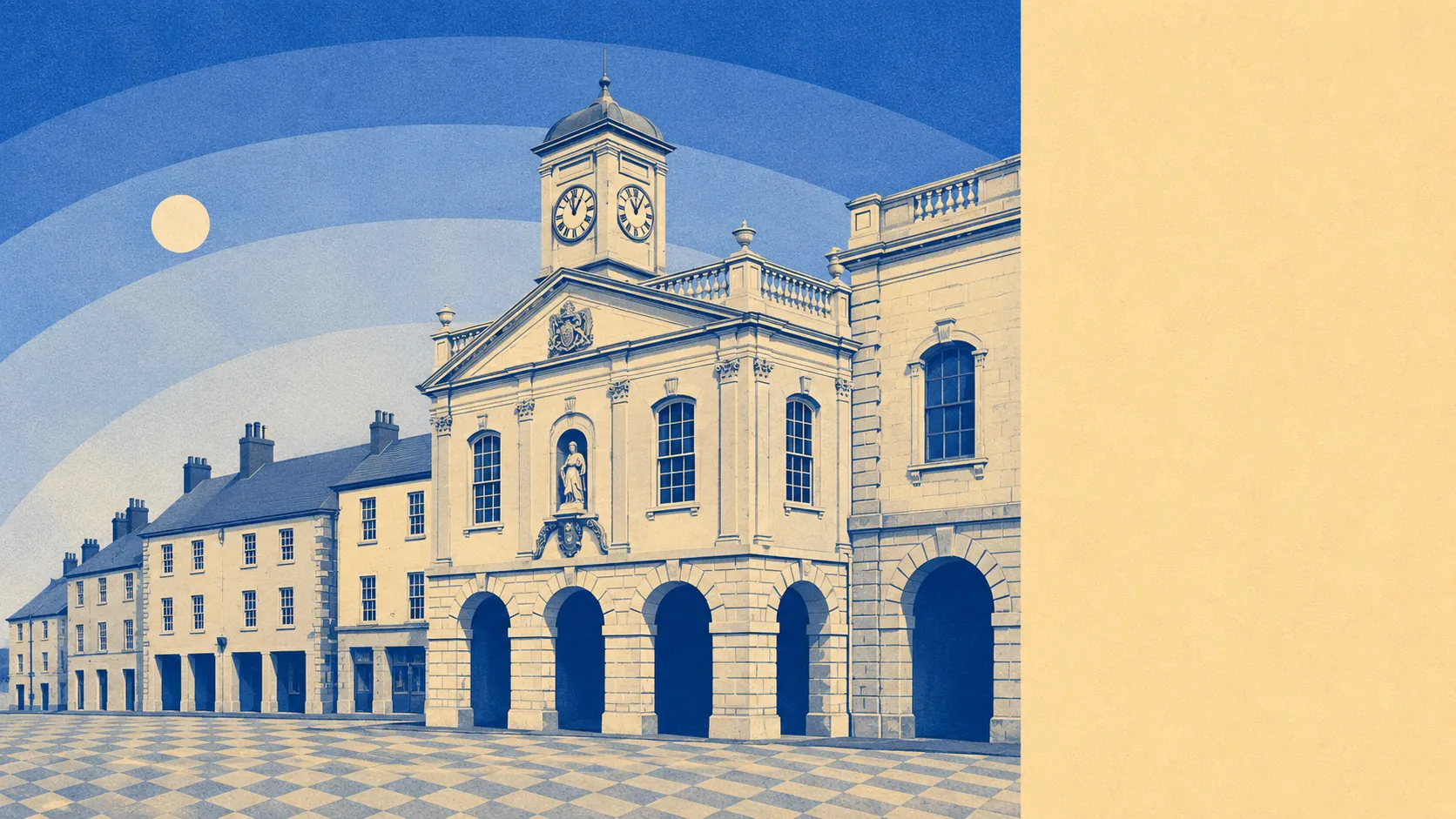
Heritage constraints are real and concentrated. There are 83 listed buildings in the area, three of them Grade One, one at Grade Two Star and 79 at Grade Two, and there is one conservation area covering South Molton itself. The Guild Hall with its borough museum and the Public Market and Assembly Room are among the listed set, and that gives you the character of the centre in two buildings. If you buy inside the conservation area or in a listed property, replacement windows, solar panels, extensions and even paint colour become conversations with the planning department rather than decisions. Buy outside it and none of that applies.
The character of the place follows from the tenure and the age profile. Around 64% of homes are owner-occupied, the typical resident is about 47, and household income across the area runs at roughly £45,000 a year before tax. That combination produces a town that is settled rather than transient, where people know each other and newcomers are noticed. This page also covers North Molton, the smaller village to the north, which is quieter again and even more dependent on a car.
Who it suits: anyone who wants a real working town rather than a preserved one, families who want space and green without paying coastal prices, remote workers who need proper broadband and do not need a platform, and retirees who want low council tax and a doctor within a short drive.
Who it does not suit: anyone whose life needs a train, anyone under thirty looking for a scene, anyone who wants anonymity, and anyone who imagines Devon means sea view. The coast is a drive, not a walk.
The town has a longer memory than its size suggests. Sir John Penruddock was captured here in 1655 after a three-hour street fight, ending the uprising meant to put Charles the Second back on the throne, which remains the most dramatic afternoon the high street has had. William Turner left South Molton in 1770 to become a barber and wig maker in London, and his son Joseph Mallord William Turner went on to paint the most famous skies in England. The town produced the painter's father and none of the credit. Sir John Doddridge, a judge of the King's Bench, and the actress Ethel Coleridge are on the same list, which for a town this size is a decent haul.
South Molton is a good place to live for the right person and a slow disappointment for the wrong one. Its real strength is the surrounding area and the green space, which is genuinely excellent and costs nothing to enjoy. The weak spot is the local community measure, where deprivation and health indicators sit below the national middle and the trend has moved the wrong way since 2019, and no amount of Exmoor makes that not true. Buy here because you want the town and the country around it, not because you want somewhere to sleep between drives.