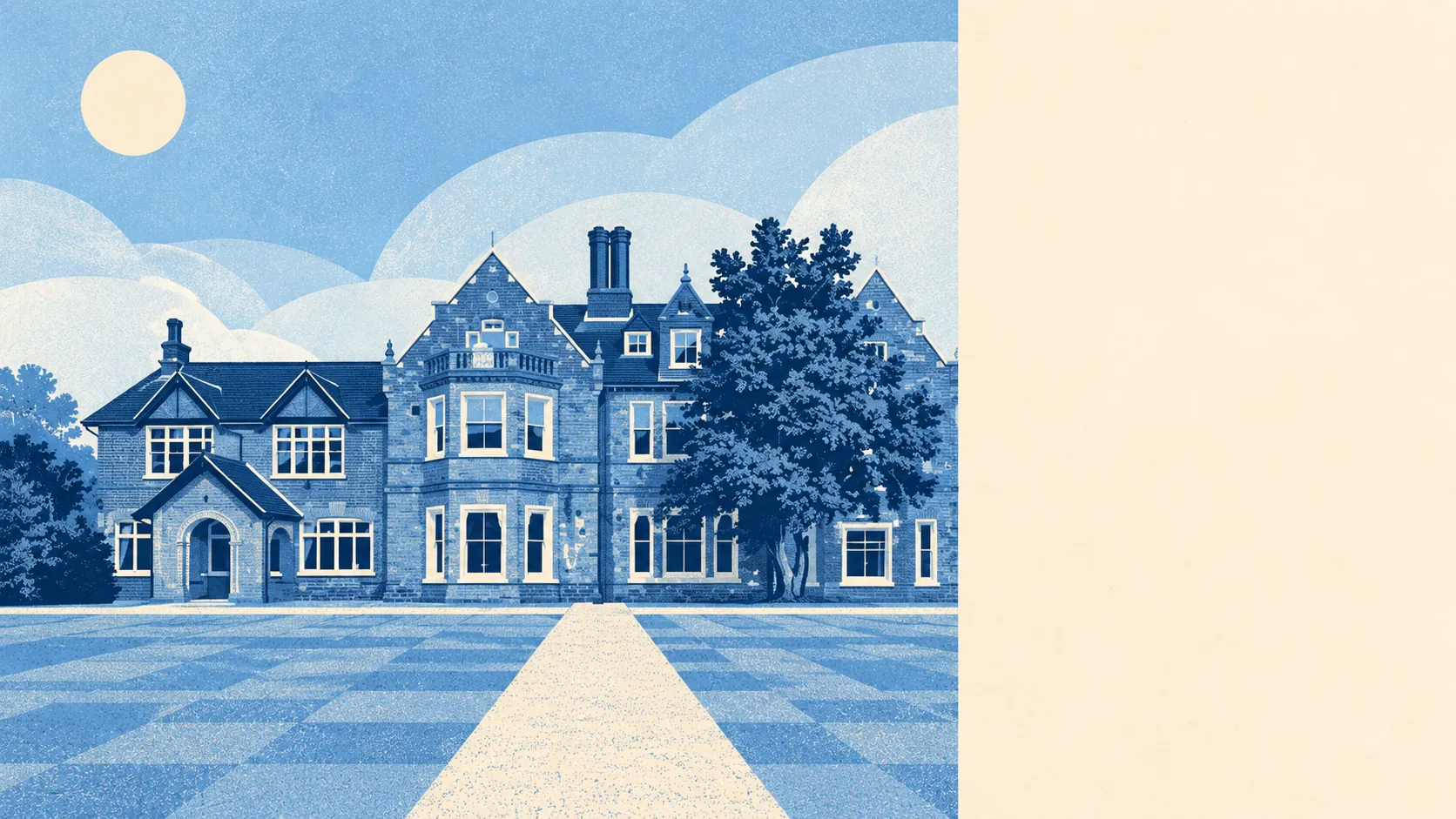
The area around Sidcup is suburban London with a lot of green space. There is a park or open space at the end of most roads. Water is a short walk away. The high street has shops and a handful of pubs. Past the last houses, the Green Belt starts.
On average, the nearest public green space is about 160 metres from a Sidcup home, and around 23 green spaces lie within a kilometre. Lamorbey Park and Foots Cray Place are the larger local ones, and Danson Park lies farther north towards Bexleyheath. For dog owners, it means a choice of walks without driving to any of them.
The nearest water, a pond, lake or stretch of river, is about 550 metres away on average, with around nine such spots within a kilometre. None of them is the sea, but most homes have a waterside walk within easy reach.
Cycling is harder. The nearest stretch of the National Cycle Network is about 6.8 kilometres away on average, and no postcode in the area is close to it. Anyone planning long rides will start by putting the bike in the car.
Sidcup's valuation list counts 195 shops, 7 pubs and 18 restaurants. In the eighteenth century, the historian Edward Hasted found "a small street of houses, among which is an inn of much resort". The inn has since gained a lot of company and very little extra competition among pubs.
Fine-particle pollution across the London Borough of Bexley averaged about 8.5 micrograms per cubic metre in 2024.
Sidcup's character comes from its in-between position. Chislehurst and Eltham are on one side, Ruxley and North Cray on the other, and Blackfen and Welling are to the north. Old manor houses such as Frognal House and Lamorbey House have been turned to new uses. Nearby, Eltham Palace and the conservation areas around Old Bexley and Chislehurst give the outlying areas more history than the town centre. Sidcup itself is post-war blocks and semis, and most of the older history lies a short trip away.
Private gardens matter here as well as public parks. Sidcup has about 95,000 square metres of private garden for every 1,000 residents. Even with flats making up a big share of the housing, a lot of households still have outdoor space of their own, and that is where much of Sidcup spends its weekends.
The business rates list holds 853 rateable premises in Sidcup. Shops are the largest group that can be named, at 195, followed by 93 offices. These are premises on the valuation list, so some may be empty at any given time. They still describe a working local centre with shops and a fair number of offices.
Of the 164 food outlets with a hygiene rating, 72% hold the top score of five, and about 4% are at the low end. Eating out in Sidcup carries little risk from the kitchen.
None of Sidcup's land falls in an area of outstanding natural beauty, a site of special scientific interest or ancient woodland. Its green space consists of parks, playing fields and gardens, with farmland at the edges. That makes it easy to use, without the rules a protected landscape brings.
The surroundings are one of Sidcup's real strengths. Green space is close to almost every home, with water within walking distance and countryside not much farther.