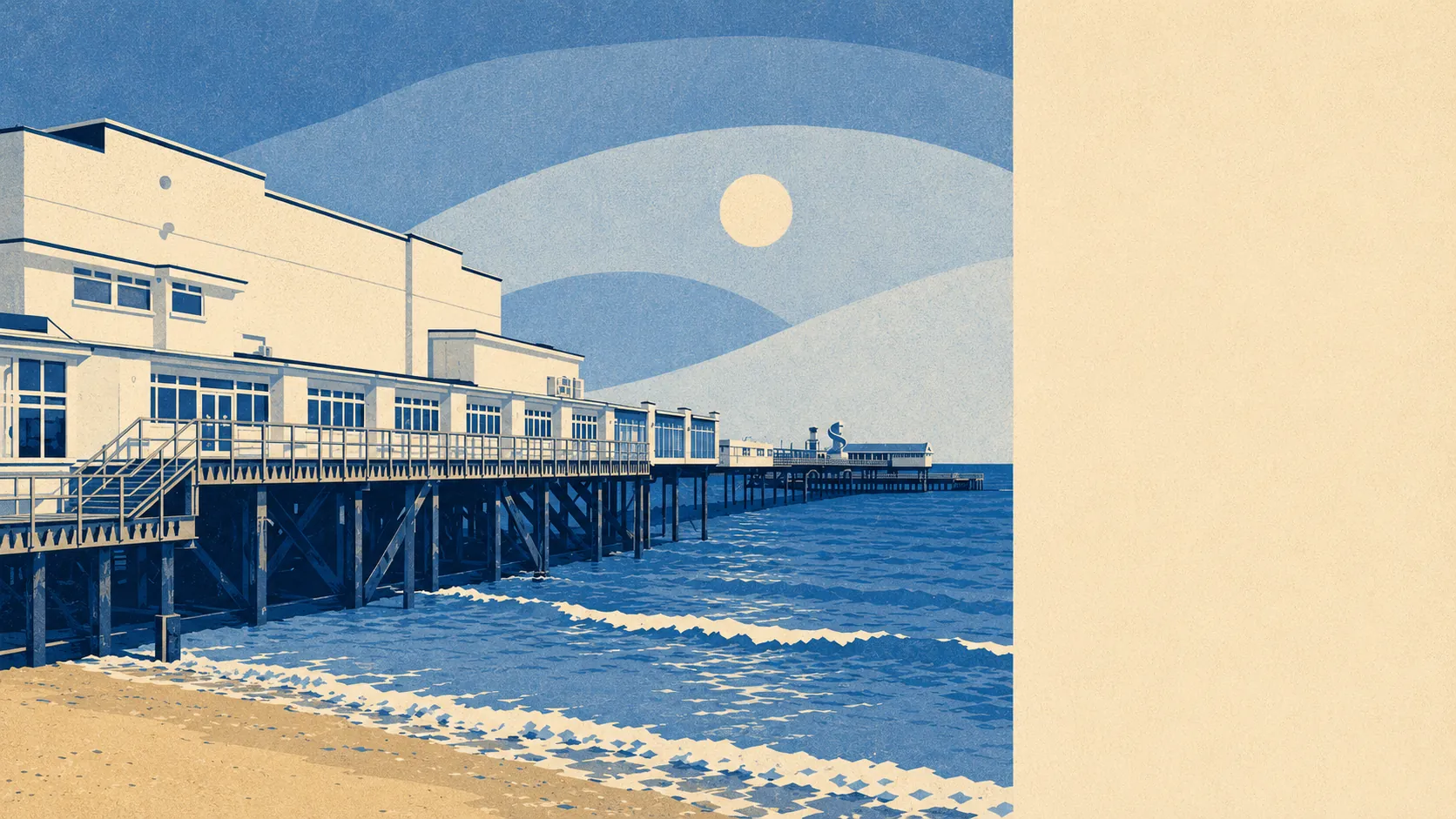
Sandown is Skegness with better geology. Five miles of unbroken bay. Median age fifty-two. Modal council tax band C, with the Grand Hotel sitting on demolition consent since 2014. Sandy hemmed-in land, with arcades to match.
The stock is what you would expect of a town that grew up around the railway and then kept building bungalows. About half is houses, a third is flats, and around one in six is bungalows, the seaside-retirement classic that quietly takes over after a town stops being aspirational. The bulk was built between 1950 and 1982, which means most of the housing predates double-glazing as a default. Around half the homes manage an energy-efficiency rating of C or better. The rest sit at D or below, which is what post-war seaside building looks like when it meets a modern survey.
Sale prices look like a bargain to anyone reading from the mainland. The typical home in the last year sold for around £235,500. A flat goes for about £133,000, a terraced house for around £209,000, a semi for £240,000, and a detached house for about £296,000. The modal council tax band is C, and more than four in ten homes sit in bands A or B. For a town with five miles of beach on its doorstep, those are prices that make you check whether the brochure lied. It hasn't. There are reasons.
Renting follows the same pattern. The typical private rent across the Isle of Wight area sits at about £940 a month, up around eight percent in the year just gone. That is the wider Island average rather than Sandown's own number, but it sets the frame: housing is cheaper here than the mainland by a margin large enough to make the spreadsheet suggest the seaside town is the rational choice, which is not normally a thing spreadsheets do.
Crime is the part of the brochure the estate agents skip. The published rate for Sandown is around 99 incidents per thousand residents, roughly eighteen percent above the Isle of Wight average. The Island figure itself is dragged upward by Newport, Ryde and Sandown carrying most of the local authority's recorded crime between them, so the comparison is the town measured against an average it helped set. Seaside-resort footfall generates incidents. The residential streets read very differently to the seafront. The headline is the headline.
Connectivity is honest about what an Island town can offer. Sandown Rail Station sits on the Island Line, the Isle of Wight's last surviving railway, which runs between Ryde Pier Head and Shanklin and connects no further than that. Lake, Brading, Shanklin and Smallbrook Junction are the other stops within reach. Fewer than one working resident in a hundred commutes by train, which is what happens when the line goes to Shanklin rather than Waterloo. The rest of the working population drives, walks or works from home; about one in six works from home full time. Broadband does better than the geography suggests, with gigabit available at nine in ten addresses and superfast at virtually all of them. The fibre is solid. The trains stop at Shanklin.
The surroundings are where Sandown earns its case. About one in ten addresses sits within the highest band of surface-water or coastal flood risk, with another one in seven in the medium band, which is what happens when a town is built on five miles of bay. The Environment Agency's strictest flood zone covers less than one percent of the area. Green space sits about 180 metres from the average door, with roughly seventeen patches of it within a kilometre. The Isle of Wight Biosphere Reserve runs around the town. Culver Down, Borthwood Copse, the Eastern Yar's wetlands and the bay itself are all within walking range. The geology gave Sandown more than the buildings deserved.
Heritage constraints are mild for a Victorian resort. The town has eleven listed buildings, all of them Grade Two, and no conservation areas at all. There is one scheduled monument, Sandown Barrack Battery, the surviving Palmerston fort on the western cliffs. That combination means most homeowners can alter, extend and replace windows without the kind of correspondence with English Heritage that ruins weekends in Lyme Regis. If you want to retrofit insulation, install a heat pump, or knock through, the planning department will not be the obstacle. The post-war housing makes the energy-efficiency case for it. The absence of conservation overlay means the work is yours to do.
The neighbourhood character is what the numbers imply. Around two thirds of homes are owner-occupied, which is high for a town of this kind and indicates a settled, often retired population. The median household income sits at around £41,000, below the English average and consistent with a place where more residents have stopped earning than have started. The typical resident is in their early fifties. There are children, there are families, there are working couples, but the demographic centre of gravity is people who have done their earning years elsewhere and arrived for the bay.
It is for the buyer who wants a Victorian-resort house with a sandy beach within walking distance, at a price the mainland cannot match, in a town where the council tax bill is manageable and the planning department won't fight them. It is for the retiree who wanted Eastbourne but priced themselves out twenty years ago and now finds Sandown does most of what Eastbourne does at a fraction of the cost. It is for the parent who values a school run measured in minutes rather than hours and is willing to live with one secondary catchment, the Bay Church of England School, which is what is left after the bay's previous secondary closed.
It is not for the buyer who wanted Lyme Regis. It is not for the commuter who needs to be in a mainland office before nine. It is not for the person who imagined Margate's regeneration story is about to repeat itself here, because nothing in the data, the demography or the planning pipeline suggests it is. Sandown is Eastbourne's quieter cousin reaching for Lyme Regis's coastline and landing on Skegness's price point. That is either exactly what you wanted or exactly what you didn't.
The town has a back-catalogue that does not match its current standing. John Wilkes, the former Lord Mayor of London, kept a holiday cottage here in the late 1700s and walked across the fields to Knighton on Sunday afternoons with David Garrick. Charles Darwin worked on the abstract that became On the Origin of Species while staying at the King's Head Hotel in July 1858. Lewis Carroll met Gertrude Chataway in the town. Queen Victoria came over from Osborne House to see the wreck of HMS Eurydice, which capsized in the bay in 1878 with the loss of 317 lives. The pier opened the same year. The list of who has stayed is impressive. The list of what is still standing is shorter.
Sandown is an average place to live across the board, with the surroundings doing the heavy lifting and the safety figures dragging it back. The bay, the green space and the biosphere reserve are excellent. The crime headline, the closed academy and the demolition consents are not. If you wanted Lyme Regis, Sandown will disappoint you. If you wanted Eastbourne at a third of the price, with five miles of beach you can actually walk and a planning department that won't fight you, Sandown is the honest version of what you were after. Skegness on the Solent, not Margate-on-Wight.