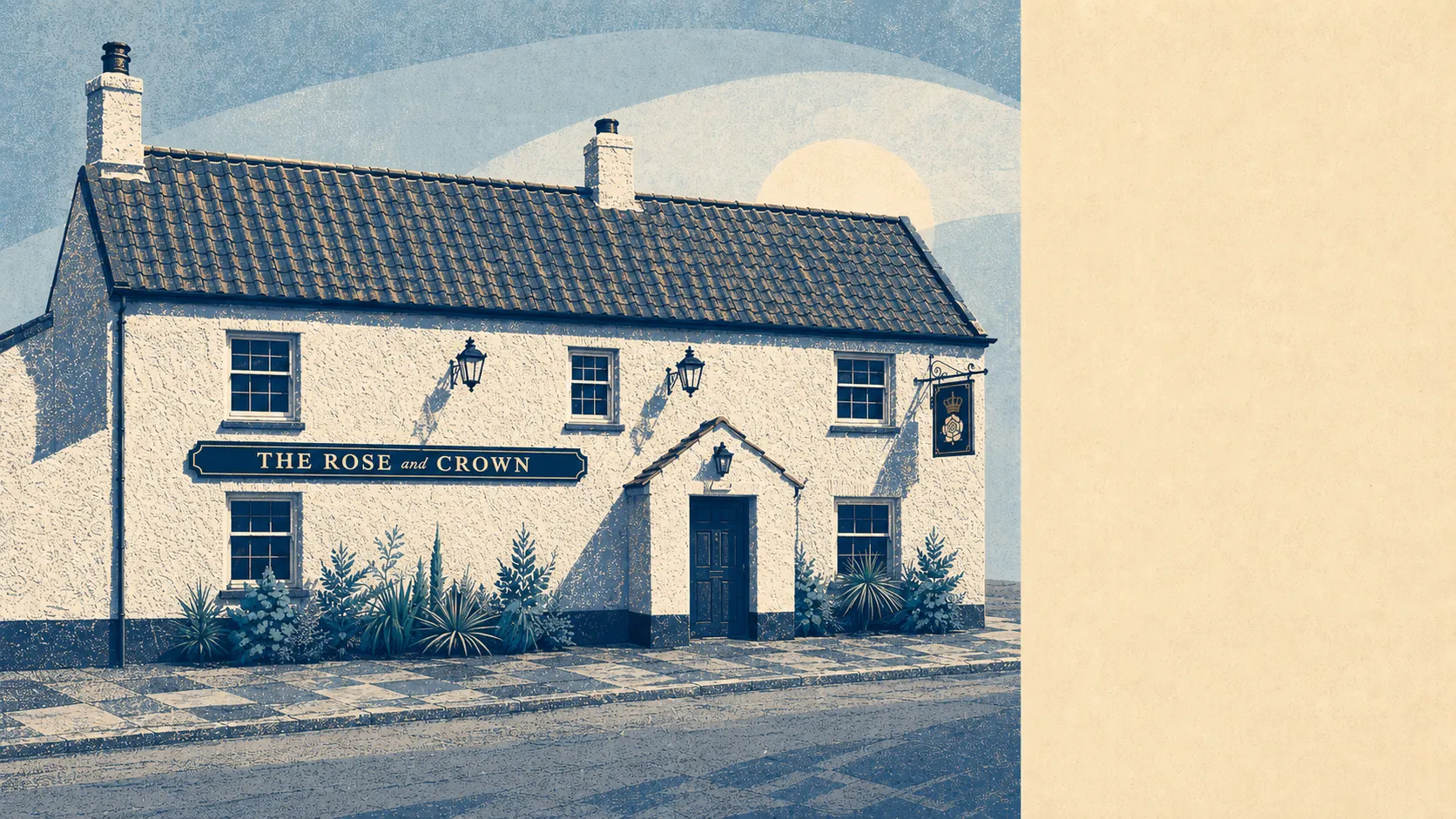
Pucklechurch murdered a king once and never topped it. Edmund the First, stabbed here in 946, back when the village was a royal hunting lodge on the edge of a forest. Four in five households own their homes. The median resident is 48, and more than half of working locals drive to a job somewhere else. A thousand years on, this is a car-dependent commuter village sitting beside a motorway it is not allowed to join.
The housing tells you who moved here and when. About three-quarters of homes are houses, only around one in ten is a flat, and most of the stock went up between 1950 and the early 1980s, which is to say Pucklechurch did its building in the decades when nobody was trying to be pretty about it. The energy ratings match the vintage. Roughly four in ten homes sit at band D, about the same share reach A to C, and nearly one in five come in at band E or worse, which is the surveyor's way of telling you the radiators have opinions.
Buying in costs about £285,000 for a typical home over the past year. A terrace runs to around £275,000, a semi to about £314,000, and a detached house to roughly £370,000, with the occasional flat changing hands near £125,000 for anyone who wants the cheapest way into the postcode. Council tax leans low for the area: the most common band is B, and about four in ten dwellings fall into bands A and B, which is one of the few sentences about Pucklechurch that ends in good news without a footnote.
Renting is a shorter conversation, because a village this owner-occupied barely has a rental market of its own. The only figure worth quoting is the wider one. Typical private rent across the South Gloucestershire area runs to about £1,450 a month. In a place where four in five people own, asking to rent is a bit like asking for the one dish the kitchen has run out of.
On safety the numbers are quietly good. Recorded crime runs at about 53 crimes for every thousand residents, roughly 35 percent below the South Gloucestershire average. The most violent thing that ever happened here is still filed under the tenth century, and the modern village has spent the intervening millennium being the kind of place where nothing occurs on purpose.
Getting anywhere is the weak spot, and it is a real one. A third of working residents skip the commute entirely and work from home, and just over half drive, because almost nobody here travels to work by train. Buses come through, roughly hourly, which is fine until the hour you need one and it is the wrong one. Broadband softens the blow: superfast speeds reach every postcode, though full gigabit connections cover only about seven percent, so the future is available in theory and postponed in practice. And the motorway, for all its noise, has no junction here. It thunders past the northern edge carrying everyone else somewhere while Pucklechurch waves them off.
The surroundings are where the village earns its keep. Green space sits under 200 metres from the average front door, with about four separate open spaces within a kilometre, and none of it is fenced off inside a national protection zone. Flooding is mostly a non-issue: no homes fall inside the top river and sea flood zones, and while around one in seven postcodes carry some high surface-water risk, that is a puddle problem, not a house-underwater problem. For a place with a motorway on its shoulder, it is easy to walk into something green.
Heritage comes with strings. There are 38 listed buildings, one conservation area covering the old core, and a scheduled monument, all watched over by the Grade One church of Saint Thomas à Becket, which has been standing since the 1200s and intends to keep standing. Buy one of the protected houses and your plans for a new window, a bit of cladding, or a tidy modern extension go through the conservation officer first. The rules are not there to help you get double glazing.
The people match the housing. Four in five own their homes, the median age is 48, and the typical household income sits around £61,000, which buys the specific brand of quiet that older owner-occupiers move here for. This is a settled village, not a churning one, and it likes itself that way.
It suits a particular buyer. If you drive, want a garden and green within a short walk, care more about a calm street than a late one, and treat the school run and the supermarket as things you do by car anyway, Pucklechurch fits you comfortably.
It does not suit everyone. If you cannot drive, the hourly bus and the missing station will wear you down inside a year, and you would be better served buying in Yate, where at least the buses turn up more than once. And if you want a village pretending to be more than a village, this is the wrong one. Pucklechurch has the royal murder and the ancient church, but day to day it is a commuter settlement like Coalpit Heath up the road, which at least has the decency not to dress it up.
The verdict lands above average, and honestly so. The surroundings and green space are as good as it gets, the crime figures are low, the prices are reasonable and the homes are solid. Set against that, the transport is poor, and no amount of superfast broadband fixes a village you can only really leave by car. It will never be Marshfield and never wants to be Bedminster. What it is instead is a car-owning family's compromise, and an honest one.