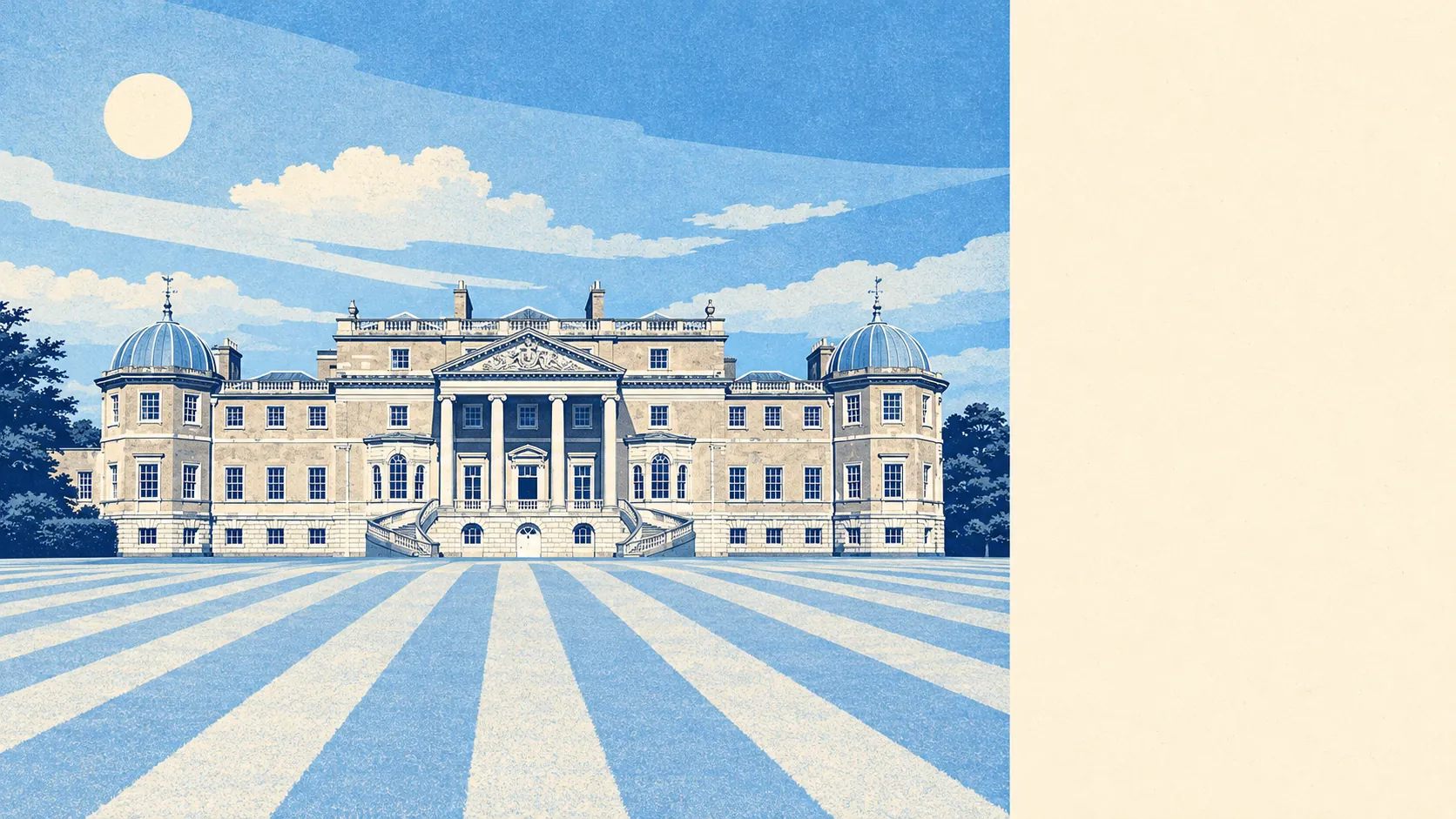
Potters Bar sells London leavers the thing they left for, a semi with a garden and a park at the end of the road, and charges them close to London money for it. Life runs on school runs, the M25 and a lot of people working from home, and it runs without much drama. The flood map is the blot, and it is a bigger one than a commuter town of lawns and cul-de-sacs leads anyone to expect.
The town is built for one buyer above all: a family moving out of London that wants space, good schools and a fast way back in, and is happy to pay for it. Everyone else should read the bill first.
The Land Registry's sales in the year to May 2026 put the typical price at about £594,000. That middle figure covers very different purchases. Flats went for about £300,000, terraces about £466,000, semi-detached houses about £629,000 and detached houses about £750,000. Council tax follows the same line, with band E the most common and only about 5% of homes in bands A or B. Nobody here ends up on a cheap bill by accident.
Renting is no softer. Hertsmere's typical private rent was about £1,800 a month as of April 2026, a borough-wide average from the Office for National Statistics' rent index, so it describes the wider council area and gives no reading for any one Potters Bar street.
The semi is the shape of the place. On the council-tax list, about 34% of homes are semi-detached, 23% flats, 16% bungalows, 14% terraced and 12% detached, and only 9% were built before 1930. Energy certificates split roughly evenly, with 44% in bands A to C, 43% in band D and 14% in E or worse. Mains gas heats 82% of homes and electric-only heating covers 8%. Anyone hunting cornicing and sash windows is in the wrong town; anyone hunting a driveway and a through-lounge has found the catalogue.
On safety, Hertfordshire Constabulary's records give about 92 crimes per 1,000 people in the year to May 2026, level with the Hertsmere average of about 91. Potters Bar is exactly as safe as the borough around it, which is about the most suburban result a town can post.
About 71% of homes are owned, the median age is 44, and household income averaged about £69,000 before tax in the financial year to March 2023, a figure the Office for National Statistics models across the area. This is a town of people who arrived with a mortgage and plan to see it out.
Potters Bar station is on the East Coast Main Line, with Brookmans Park and Hadley Wood stations close by, and the M25 is on the doorstep. Yet at the 2021 census only 4% of working residents took the train to work, 42% drove and 38% worked from home. Gigabit broadband reaches about 92% of premises and superfast reaches all of them. The town's 99 bus stops average about 59 departures each on a weekday. The main line gets the credit; the car and the home office do most of the commuting.
Flood risk needs two measures kept apart. In the Environment Agency's river-and-sea flood zones, about 1% of postcodes fall in the highest zone and fewer still in the next one down. The postcode flood indicators, which include surface water, are harsher: about 26% of postcodes show high risk on at least one indicator, and about half show low risk. No historic flooding is recorded across the area. The rivers barely register. Whatever pushes that indicator up arrives by other routes, surface water among them.
Heritage rules are light. The town has 41 listed buildings, three of them Grade II* and none Grade I, and two conservation areas, Darkes Lane (West) and The Royds. Outside those two areas, extending a semi is mostly a matter for ordinary planning. Edward Appleton, the Nobel Prize-winning physicist, lived on Darkes Lane, which now lends its name to one of them. A Nobel Prize may well be quicker to come by than a fast yes on new front windows in there.
Schools are where the money goes. Nine primary schools in the postal district averaged a maths score of about 106 at the end of primary school, and the two secondaries averaged an Attainment 8 score of about 63. Across Hertfordshire as a whole, Ofsted grades 203 of 227 inspected settings good or outstanding, which is a county figure and says nothing about any one gate. Oakmere Primary School and Little Heath Primary School serve the town, and Dame Alice Owen's School moved out from Islington, making it one of the earlier Londoners to take the trade.
The surroundings are the best of it. The average home is about 180 metres from public green space, with about 15 green spaces inside a kilometre and water about 440 metres away. Wrotham Park, the Byng family's estate, still holds much of the land around the town, and the page also covers Northaw and South Mimms on the edges. In 1916 the zeppelin L31 came down on the Oakmere Estate; Oakmere park now carries a sign about it and a steady supply of dog walkers.
Acker Bilk split his time between Somerset and Potters Bar, and the arrangement makes sense. You get the green belt at the end of the road and a fast way back to the city.
Potters Bar is better than average, and the reasons are easy to see. Green space is close to almost every front door, the schools perform and the streets are as safe as the borough's, while the flood indicators are the one part of the picture that should give a buyer pause. It is right for a London family that wants a semi, a garden and a decent school, and will drive to get the rest. Anyone after period character, a bargain or a flood map with nothing on it should keep looking up the line.