Peacehaven is Brighton at half the price, minus the parts of Brighton that anyone actually moved to Brighton for. It was founded in 1916 by an entrepreneur running a newspaper competition, sued by the Daily Express for running the competition as a scam, and renamed within a year because the first name (New Anzac-on-Sea) sounded like a marketing pitch even to people in 1916. About seven in ten households own their home. The median resident is 46. Roughly a fifth of households don't own a car. This is not Brighton. It's Brighton-adjacent, at a discount, with a bungalow.
The stock is mostly houses and bungalows, which is worth pausing on because you don't see this ratio anywhere near a city. About four in ten homes are houses, about a third are bungalows, and only about a quarter are flats. Most of it was built between the early fifties and the early eighties, on the developer Charles Neville's original American-style grid where the Roads run east to west and the Avenues run north to south. About half the stock has an energy rating in the top three bands. Just over a third sits at band D. About one in nine is band E or worse.
The typical sale in the last year came in around £340,000, across 239 transactions, which is a fair bit of trading for a town of this size. That figure hides real variation. A flat is more like £187,000, which for anywhere within a half-hour drive of Brighton counts as an anomaly. A terrace runs around £300,000. A semi about £352,500. A detached about £402,000. The modal council tax band is C, and roughly a quarter of dwellings are in bands A or B. Not a lot of Brighton money at any of those numbers, which is the whole point of Peacehaven and the reason it exists.
The typical private rent across the Lewes area is about £1,320 a month. That figure is not the town's own rent, because the local-authority sample averages across a wider patch, and Peacehaven sits at the cheap end of that patch. Rents in the wider area have moved about six percent in the last year, which is warm rather than hot.
The published crime rate is around 77 per thousand residents, which sits about seven percent above the wider Lewes district average of around 72 per thousand. That places Peacehaven effectively at the local-authority norm rather than dramatically above or below it. It's not a headline-crime town, and it's not a low-crime enclave either. The number lands where a coastal town of sixteen thousand people, half an hour from a bigger city, tends to land. What matters more than the average is where and when incidents happen, and the headline rate does not sort that.
The primary picture is respectable on paper, with a Key Stage Two maths average score around 108 across the three schools that publish results in the area. The secondary picture is thinner, with a single Key Stage Four attainment score around 40. No school in the area currently holds an inspection grade in the data used here, which is unusual and means the grade-based verdict is not available. Three schools in the wider vicinity have closed in recent years, which reshapes the local landscape without necessarily changing anyone's kitchen-table options.
Only about one in a hundred residents commutes by train, which is what happens when you live in a coastal town that does not have a station of its own. The nearest stations are Newhaven Town, Newhaven Harbour, Bishopstone and Seaford, all a short drive or bus. About one in ten uses the bus. About half drive to work. Just over a quarter work from home, which is high for a town this size and probably explains why the housing market did not fall apart when the London office trickle-back began. Broadband is very good: about 86 percent of premises can get gigabit, and 99 percent can get superfast.
About one in ten postcodes carries a high surface-water flood risk, about one in six sits at medium, and just under a third sits at low. The Environment Agency river-and-sea flood-zone figures for the town are effectively zero, because Peacehaven sits on chalk cliffs 40 to 50 metres above sea level. Green space is genuinely close: on average, a greenspace sits about 210 metres from the front door, and there are around eleven greenspaces within a kilometre. Blue water is around 437 metres away, if you count the drop.
Eighteen listed buildings sit in the wider area, one of them Grade One, alongside two conservation areas covering Telscombe Village and Piddinghoe. Neither conservation area is central Peacehaven, which means most of the housing stock is not wrapped in heritage protection. You can put in double glazing without asking anyone. You can extend the back of a post-war semi without a fight. That is a genuine practical benefit that period-heavy places along the coast cannot match.
About seven in ten households own their home, which is high. The median resident is 46, which is older than the national median but not extreme. The median household income across the local area is around £48,750, which sits comfortably middle-of-the-road. It is a homeowning, middle-aged, moderately-earning town rather than a young-renter town or a coastal-retirement fantasy. Around three in ten households are single-person, which is a lot of one-bedroom bungalows quietly finding their own equilibrium.
This page also covers Telscombe, which sits inland and up the hill from the coast road, has its own separate town council, and shares much of the same buyer profile.
It suits people who want a house or a bungalow with a garden, not a flat with a view, and who can accept a twenty-minute journey to Brighton for anything Brighton offers. Retirees who couldn't afford Saltdean. Families priced out of Brighton who still want their kids in Sussex schools. First-time buyers who look at the flat median and think, actually, that's a starter home.
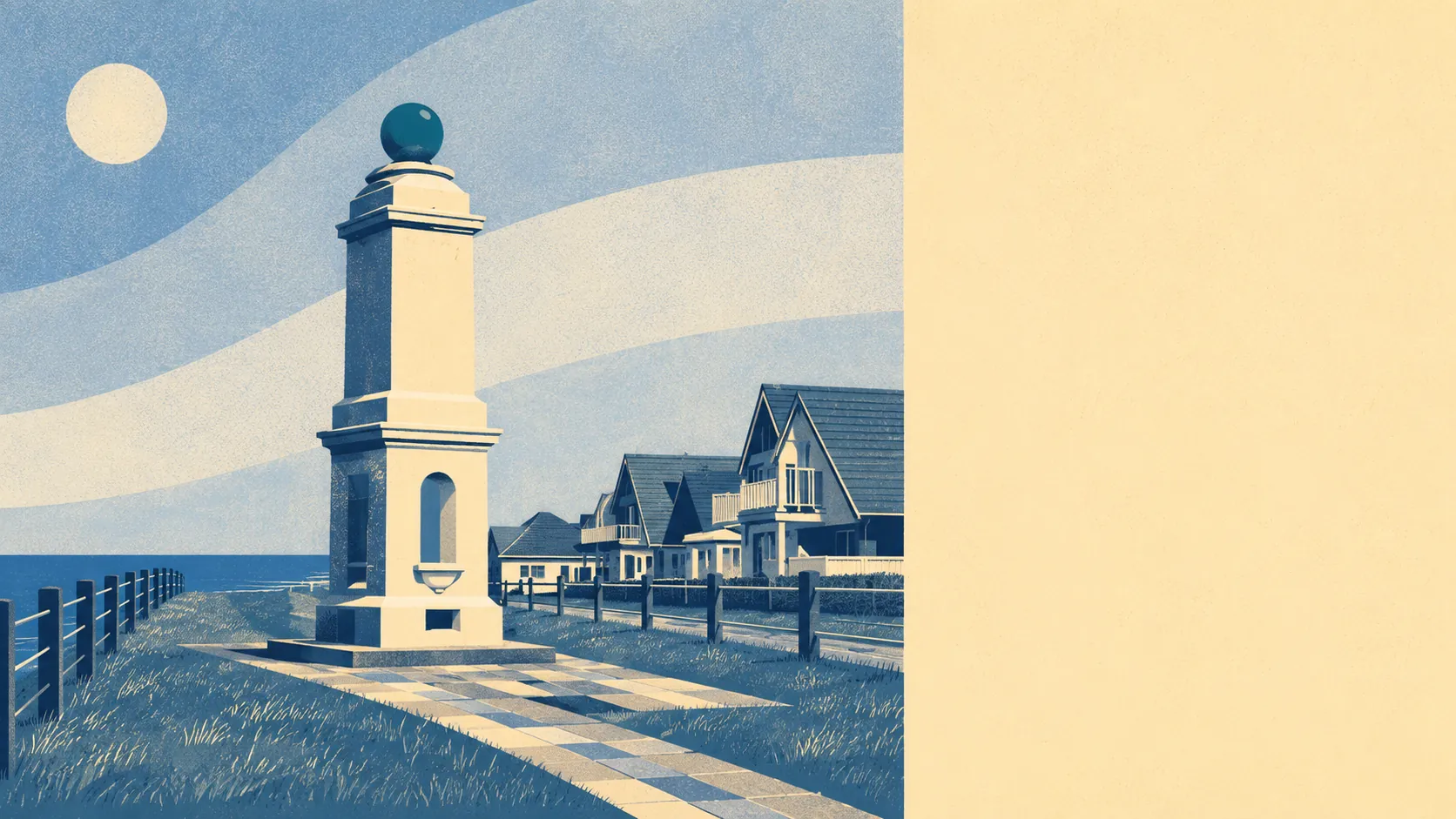
It does not suit people who need a mainline station within walking distance. People who wanted the seafront cafe scene and the boutique shopping. People who think a Victorian terrace is the minimum acceptable form of housing. People who moved to the coast for the coast and would be irritated by cliffs slowly eroding into the sea, which they do, and which is why the Greenwich Meridian obelisk on the cliff top has been moved twice.
Overall Peacehaven scores three and a half out of five, which is above average, sitting well below Brighton on price and effectively at the wider Lewes average on crime. The strongest dimension is the surrounding area and the green space, which scored four and a half out of five. The weakest is schools, because there are no current inspection grades to lean on. Not Brighton. Better than the estate agent will tell you.