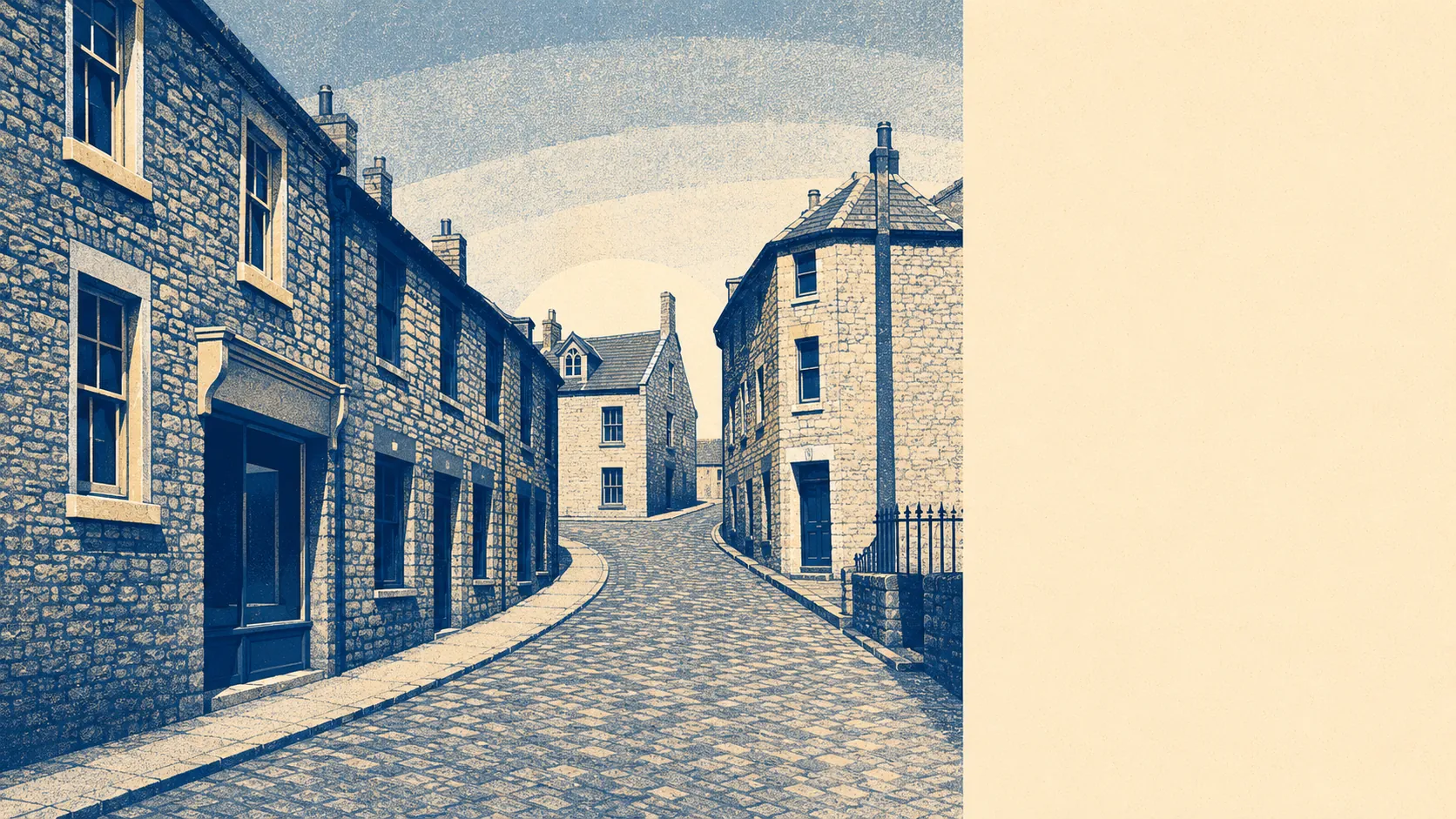
Paulton dug the coal that built Georgian Bath, then settled for a Wickes. The canal is derelict. The collieries are gone. The typical house sells for about £292,000, roughly seven in ten homes are owner-occupied, and nearly half the households keep two cars or more. This is the village that once powered a World Heritage city and now mostly powers its own commute.
The housing does what you would expect of a place people move to for space rather than status. About six in ten homes are houses, one in five is a bungalow, and fewer than one in five is a flat, which tells you everything about who buys here and why. Most of the stock went up in the post-war decades, with only around one in nine homes predating 1930, so the period-cottage fantasy is thinner on the ground than the coal history suggests. On energy, just over half the homes rate band C or better, a third sit at band D, and about one in eight land at E or worse, meaning a decent number of these houses will cost you at the meter before they cost you anything else.
On price, the £292,000 median hides the usual spread. A detached house runs to around £378,500, a semi to about £291,000, a terrace to roughly £267,000, and a flat to around £166,250, so the ladder is real and the bottom rung actually exists, which is more than Bath can say. Most homes fall in council tax band C, and around four in ten sit in bands A or B, the kind of low-band profile that quietly makes the monthly maths work for families who would drown on a Bath postcode.
Renting is harder to pin down at village level, but the wider picture gives the shape of it. Typical private rent across the Bath and North East Somerset area runs at about £1,880 a month. That is an area-wide figure pulled upward by the city, not a Paulton number, so treat it as the ceiling the district sets rather than the rent on the street. Renting is also beside the point in a place where a quarter of households rent and the rest own the roof over their heads.
Safety is where the village genuinely outperforms its postcode. The published crime rate is about 63 incidents per 1,000 residents, which sits roughly 28 percent below the Bath and North East Somerset average. That is not a rounding-error difference. It is the sort of gap that turns up in the reviews people write when nothing happens to them, and in Paulton, for the most part, nothing does.
Connectivity is the catch, and it is a big one. Almost nobody commutes by train, because there is no useful train to commute by, and around six in ten residents drive to work while a quarter now work from home. There are getting on for forty bus stops scattered about, which sounds generous until you look at how few people actually use the bus. Broadband softens the blow: every postcode can get superfast speeds and about six in ten can reach gigabit, so the working-from-home quarter are fine as long as they never need to physically be anywhere by nine.
The surroundings are the reward for the car dependence. Serious flood risk is limited, with only around one in twenty postcodes carrying a high surface-water rating and none of the village sitting in the highest river flood zone, so the water stays where it should for most people. Green space is the standout: the average home is about 135 metres from somewhere green, with close to nineteen separate green spaces within a kilometre, which for a former mining village is a quiet kind of luxury nobody put in the brochure.
Heritage sits lightly here. There are eighteen listed buildings and a single conservation area covering Paulton itself, which means most owners can change their windows, extend their kitchen, or ruin their frontage without a planning officer developing an opinion about it. If your house happens to be one of the eighteen, or inside the conservation boundary, the rules tighten and the paint colours get consultations. For everyone else, the freedom to alter your own home is close to total.
The character follows from the ownership. With roughly seven in ten homes owned outright or on a mortgage, a median age of about 40, and a typical household income near £55,000, this is a settled, middle-of-the-road, family-and-mortgage village rather than anywhere in transition. People arrive, buy, and stay, which is the whole appeal and also, if you find that stifling, the whole problem.
Paulton suits the family that wants space, low crime, and a garden more than it wants a station or a scene. If your commute forgives you for driving, if two cars in the drive reads as normal rather than defeat, and if a green space two minutes from the door matters more than a flat white four minutes from a platform, this is a good bet at a price the district's headline figures make look better than it is.
It is not for you if you need the train, and it is not for you if you were quietly hoping for artisan bakeries and a farmers' market with opinions. Frome got the makeover; Paulton got the parking. If Midsomer Norton feels too metropolitan and Radstock feels like a stretch, you are not the buyer here, and the village will not pretend otherwise.
Taken together, Paulton lands as a solid four out of five: above average, unglamorous, and honest about it. Its strongest card is the surrounding area and green space, which is as good as anywhere scores. Its weakest is transport and connectivity, dragged down by the missing railway and the assumption that everyone drives, which everyone does. Buy here if Bath is a day out rather than an address, and the sums, the space, and the quiet will keep making sense long after the beard oil in Frome has dried up.