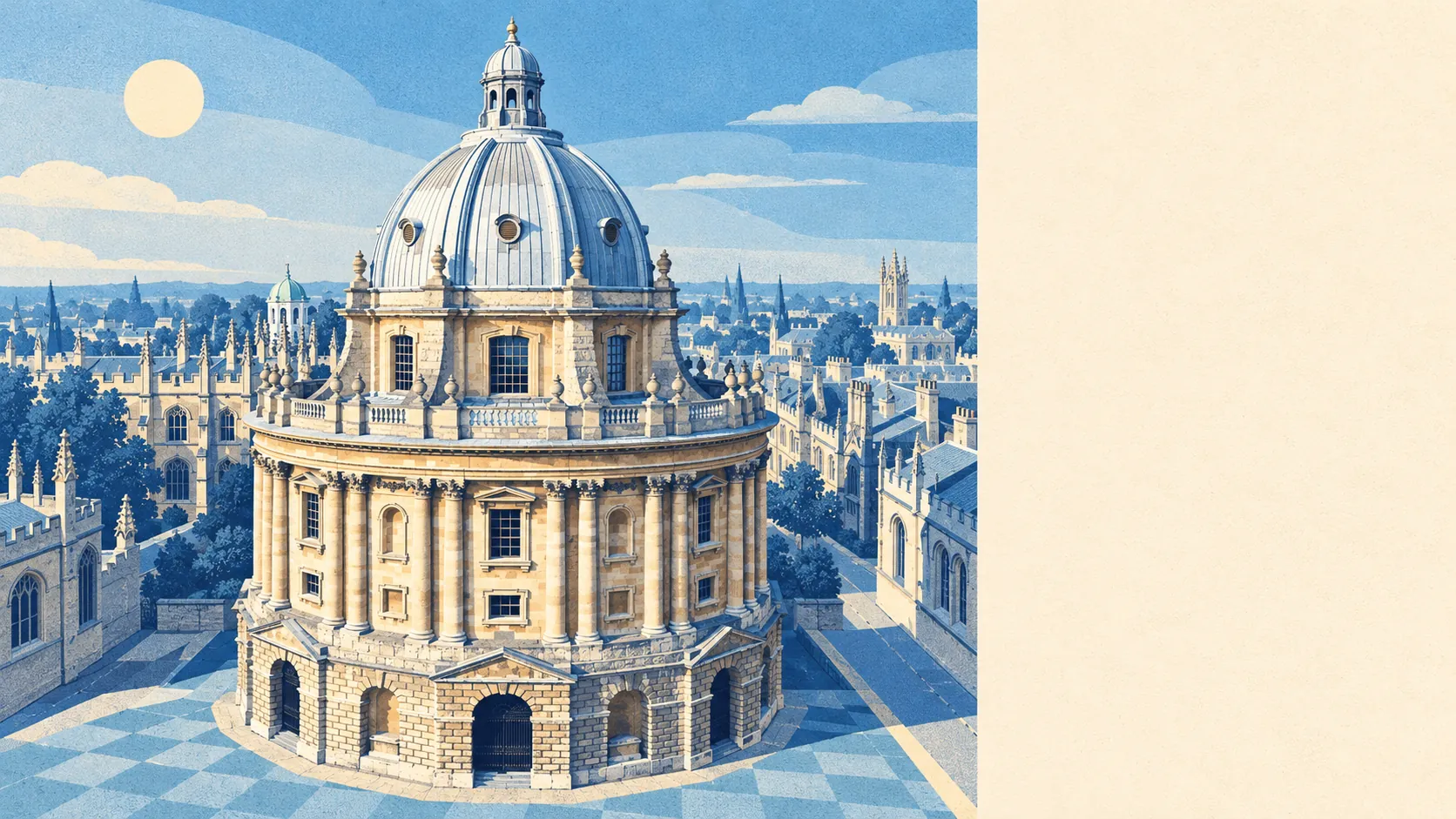
Oxford is a rewarding city to live in and a stubborn one to change, and a buyer should price in the second half. Its 1,314 listed buildings and 22 conservation areas mean the kitchen extension sketched on the train home is a planning conversation first and a building job second. Parks are a short walk from almost every front door. The house itself may stay roughly the shape it arrived in.
Historic England's list counts 200 Grade I buildings in Oxford, 88 at Grade II* and 1,026 at Grade II, plus 11 scheduled monuments. The 22 conservation areas include Jericho, Osney Town, Walton Manor, Headington Quarry, Iffley and the North Oxford Victorian Suburb, so whole streets of ordinary homes come under the same rules as the colleges. For a buyer, that means a dormer, a new window or a rear extension on a listed or protected house needs consent before a builder can start, and the answer can be no. The Bodleian Library is entitled to a free copy of every book published in the United Kingdom, and a listed house here gets a say over every window you change.
Just under half of Oxford's households own their home, at about 47%, and the typical resident is 32. That age is dragged down by the students. Of roughly 172,000 people inside the built-up area, about 21,700 live in communal establishments such as halls, and about 150,000 live in private homes, which is the settled city. The Office for National Statistics models typical gross household income at about £65,000 across Oxford for the financial year to March 2023. Town and gown last settled their differences in the St Scholastica Day Riot of 1355. These days they settle them by bidding for the same two-bed in Headington.
Getting about is mostly a bicycle-and-bus arrangement. At the 2021 Census, about 39% of working residents worked from home, 24% drove, 13% walked, 10% cycled and 9% took the bus, while under 1% went by train. There are 731 bus stops, the ones with timetable data average about 250 weekday departures each, and 98% of them have a weekend service. The Department for Transport's 2019 modelling puts the town centre about 15 minutes away by public transport. Oxford Rail Station and Oxford Parkway handle the longer trips. Gigabit broadband reaches about 71% of premises and superfast about 97%. The stations are for leaving. Getting around town is the bicycle's job.
Water defines the map, since the Thames and the Cherwell meet south of the centre and their flood plains set the edges of it. The Environment Agency's indicators flag about 22% of postcodes as high risk on at least one measure, surface water included. The river-and-sea zones are narrower: about 4% of postcodes fall in Flood Zone 3 and 5% in Flood Zone 2. The agency has 209 recorded flood events on file, the latest in January 2008, when a main river ran out of channel. The meadows along both rivers are called flood meadows, and nobody has tried to rebrand them.
Police published about 102 recorded crimes per 1,000 residents for the year to May 2026, around 6% below the average for the Oxford council area as a whole. The force covering the city is Thames Valley Police. Shoplifting takes a bigger share of crime than it does nationally, about 12% against 8%, while anti-social behaviour takes a smaller one, about 9% against 16%. For a city this full of students, that last figure will disappoint anyone who moved here to complain about them.
The Land Registry's last twelve months, to May 2026, put the typical Oxford sale at about £450,000. Flats went for about £321,000, terraces about £465,000, semis about £475,000 and detached houses about £800,000. The second party wall costs surprisingly little here. The detached house is where the money goes. Band C is the most common council-tax band, and about 20% of homes are in bands A or B.
Renting costs about £1,960 a month across the Oxford council area, according to the Office for National Statistics index for April 2026, and that typical private rent was up about 7% on a year earlier. Every landlord in the city is also pitching to the people who arrive each October with a reading list and a deposit.
Flats make up about 35% of homes on the council-tax list, terraces 29%, semis 24%, detached houses 10% and bungalows 3%, and about 24% were built before 1930. On energy certificates, about 56% of rated homes reach band C or better, 35% are band D and 9% are E or worse. About 76% of households heat with mains gas and about 12% rely on electric heating alone. The Radcliffe Meteorological Station has kept continuous records since 1815, so the older terraces have had plenty of warning about winter.
Ofsted has graded 108 of the 121 rated settings across Oxfordshire as good or outstanding, 11 of them outstanding. In Oxford's own districts, the 39 primaries average about 105 in Key Stage 2 maths, and the seven secondaries average an Attainment 8 score of about 48. Cheney School, The Cherwell School, Matthew Arnold School and Oxford Spires Academy are among the secondaries in the city. Living within sight of Christ Church gets a child no admissions priority whatsoever.
The green space is what Oxford does best. The nearest park or open space is about 130 metres from the average home, with around 30 within a kilometre, and water is about 350 metres away. That covers Port Meadow, Wolvercote Common, the University Parks, Cutteslowe Park and the towpaths. Punting on the Isis and the Cherwell is a summer habit here. Wytham, Boars Hill and North Hinksey put fields right at the edge of the city.
Oxford works for people who want the city on foot or by bike, can live with a house as it stands, and value a meadow at the end of the road over a garage. Summertown, Jericho, Iffley and Wolvercote reward that type, and so do Cowley, Marston and Botley for less money. Anyone planning to double the size of a period house in a conservation area should look elsewhere, or be prepared to wait. Here the house you buy is largely the house you keep, so judge it by its current walls. Accept that, and Oxford is a better place to live than most buyers' first-year rent receipts would suggest.