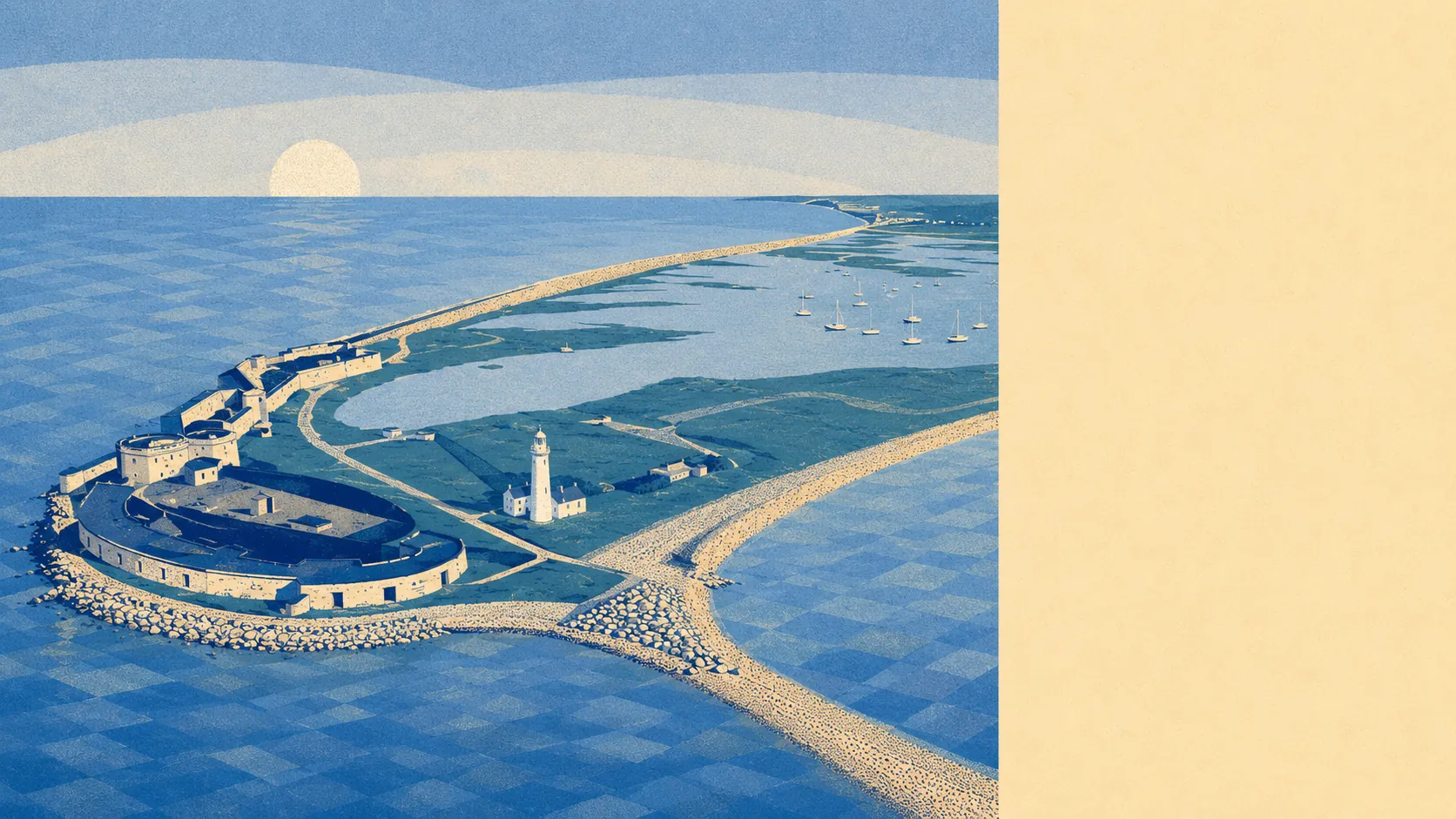
Milford on Sea is where you move when you've won and you want the Needles framed in your front window. The median resident is sixty-three. A detached house runs to roughly £810,000. Recorded crime sits about half the level of the wider district. This is not a Hampshire commuter village pretending to be coastal. It is the retirement coast, and the sea does most of the talking.
The stock is mostly houses, with roughly three in ten homes being flats, most of them clifftop blocks built to point at the Isle of Wight. The bulk of the village went up between the 1950s and the early 1980s, which is why it reads as comfortable rather than historic. On energy efficiency, about half the homes rate a C or better, roughly four in ten sit at a D, and one in eight lands at an E or worse. The sea air is free. The heating bills on the older places are not.
The typical sale over the past year came in around £545,000, off about ninety-five transactions, which is not much stock changing hands in a year. The spread is wide. A flat goes for about £335,000, a terrace around £430,000, a semi about £530,000, and a detached house roughly £810,000. Council tax tells the same story from the other end: the typical home sits in band D, and only about one in ten falls into the two cheapest bands. There is no bargain shelf here, and nobody in Milford is pretending there is.
Renting is close to beside the point in a place where more than eight in ten own their homes, but if you are looking, the typical private rent across the New Forest area runs about £1,240 a month. That is an area figure rather than the village's own, and Milford's slice of the coast tends to sit at the dearer end of it.
Published crime figures put the rate at about twenty-eight recorded offences per thousand residents, roughly fifty-two percent below the New Forest average. For a coastal village whose most dramatic regular event is the tide going out further than expected, that is about what you would guess. The people who worry about safety here are mostly worrying about erosion.
There is no railway station in the village. The nearest are New Milton, Sway, and the two Lymington stops, and almost nobody here commutes by train anyway. It is a thirteen-minute drive to the nearest town centre, and a car is assumed rather than optional. Broadband is the quiet win: superfast reaches every home, and gigabit lines reach about eight in ten of them, which is better coverage than plenty of places that think of themselves as modern.
The flood picture is real but contained. Under one in ten postcodes carry a high surface water flood risk, and about three percent of the area sits in the highest river and sea flood zone, which for a shingle-spit village facing the Solent is restrained. Green and blue space is the whole point of the address. The average home is around 325 metres from open green space and barely 200 metres from water. You are never far from something worth walking a dog along.
The village carries about forty-two listed buildings, one of them Grade I, and a single conservation area covering Milford-on-Sea itself. That matters the day you buy an old one and fancy new windows. The conservation designation is the polite way the council tells you your plans for plastic windows are a conversation, not a done deal.
More than eight in ten households own their home, the median age is sixty-three, and the typical household income sits around £55,000. That is the shorthand for a settled, older, comfortable village where the churn is slow and the neighbours have been the neighbours for a while. It is calm. Whether calm reads as peace or as boredom depends entirely on which end of sixty-three you are standing at.
This suits downsizers, retirees, remote workers who made their money elsewhere, and anyone whose idea of a good Saturday is a coast path and a decent café. More than a third of working residents already work from home, which tells you the place rewards people who do not need to be anywhere by nine.
It is a harder sell if you are under forty, on a first-home budget, or need a station platform within walking distance. The prices assume you are arriving with equity, not building it, and the nightlife is the tide.
The village has quietly collected an odd roster of residents. Clement Reid, the geologist who argued for the drowned land bridge of Doggerland, died here. William Morris, the first Viscount Nuffield, owned a clifftop house on Park Lane that is now a hotel, which is a very Milford way for a great fortune to end up. The aviation artist Frank Wootton was born in the village, and a seventeenth-century logician, Christopher Airay, was once its vicar. The name itself just means "mill ford", which is about as much fuss as the place has ever wanted to make about itself.
Overall Milford on Sea rates as an above-average place to live, and the split behind that number is honest. The community and the low crime sit at the top of the scale, and the sense of a safe, settled coast is the thing people are actually buying. What drags it down is value: at these prices, for this stock, you are paying a premium for the postcode and the view rather than the bricks. If you can afford it and you want the quiet, it delivers exactly what the estate agent promised, which almost never happens. If you cannot, the New Forest has cheaper ways to be near the sea.